
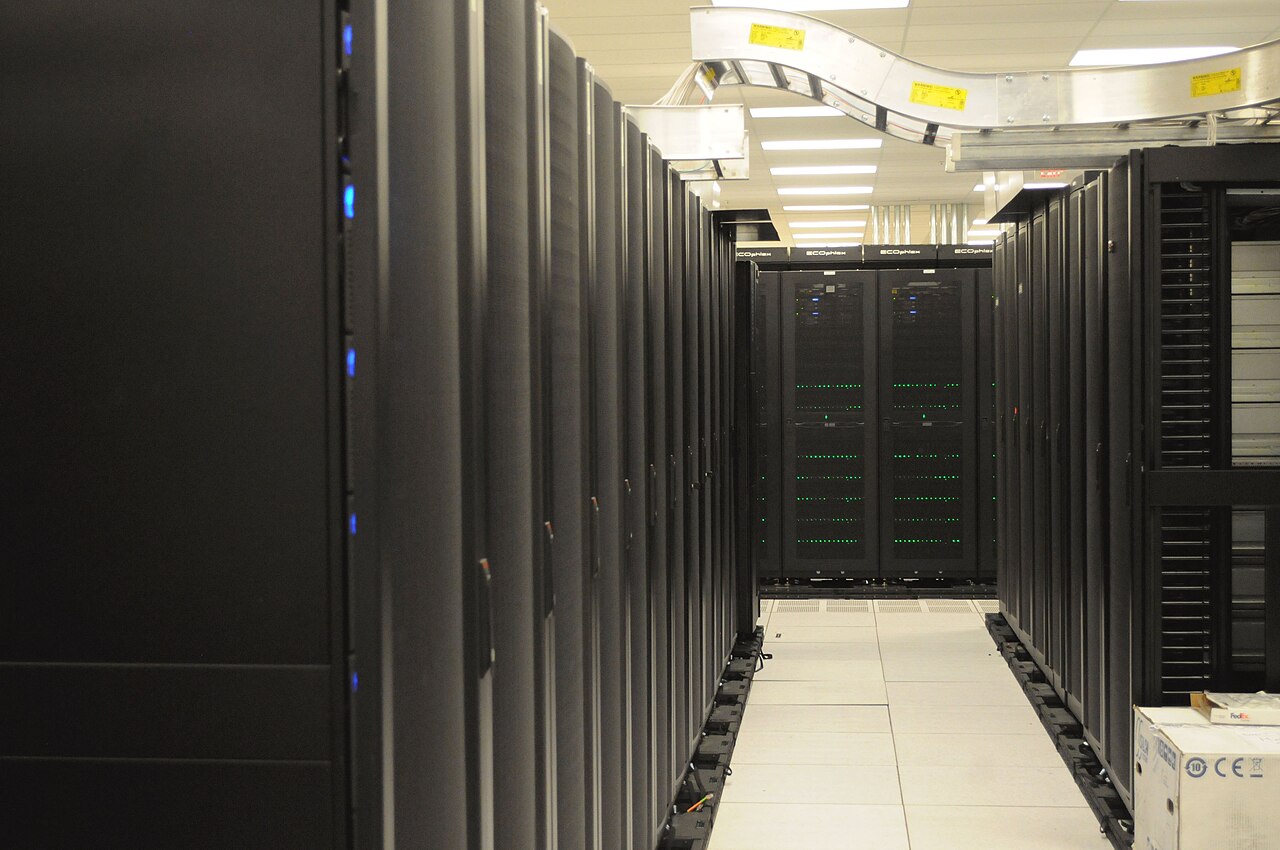
NEW YORK — On Friday, October 30, the Nasdaq Composite fell 2.86 percent to 25,437.00, its worst day since June 5. The Nasdaq-100 fell 3.46 percent, and its companies lost more than $1 trillion in a single session. October closed as the Nasdaq’s worst month since March 2025. The proximate cause, by every wire account, was artificial intelligence: investors looked at what the biggest technology companies on earth are spending to build it, and at what it is doing to their existing businesses, and they sold.
Alphabet is the cleanest case. On Thursday, the Google parent fell more than 12 percent — its worst day since it went public in 2004 — and lost an estimated $500 billion in market value, the second-largest one-day loss in American market history. Its third-quarter search revenue grew 12 percent to $63.4 billion, short of the 15 percent expected, and its chief business officer, Philipp Schindler, told investors plainly that the company’s own AI answers are drawing queries away from traditional search and pay less when they do. Alphabet spent $51.3 billion on capital projects in that one quarter and posted negative free cash flow of $9.1 billion. Amazon’s trailing twelve-month free cash flow is negative $42.4 billion, against a year-earlier positive $14.8 billion, while it holds to roughly $220 billion of planned 2026 capital spending. Four companies — Amazon, Alphabet, Microsoft and Meta — spent more than $200 billion in the third quarter alone. J.P. Morgan puts global AI capital spending at $900 billion in 2026 and $5.5 trillion by 2030.
That is the story Wall Street told. There is a second story in the numbers, and it is the one that explains whose interests are actually at stake.
What The Tool Does In Ordinary Hands
The U.S. Chamber of Commerce’s 2025 small business survey found 58 percent of American small businesses now use generative AI, up from 40 percent in 2024. Among firms with 10 to 100 employees, use jumped from 47 percent to 68 percent in a single year. They are stores, trades and one-person operations using it to write, design, answer customers, keep books and market — work that used to require staff a small operator could not afford, or hours a worker did not have after a shift.

The Census Bureau counts the same movement from the other side. Americans filed about 5.64 million new business applications in 2025, after 5.25 million in 2024, and nearly 4.93 million in the first nine months of 2026 alone — up 15.3 percent on a year earlier and the highest January-to-September total on record. An estimated 74.9 million Americans now do independent work, and the 2024 Shopify-Gallup study found more than 62 percent of American adults would rather be their own boss. For a century, the distance between that wish and the fact was capital — an office, a staff, an agency, a printer, a developer. A $20-a-month subscription now covers a working share of all five.
So the capability is loose in the population. What is not loose is the infrastructure it runs on — and this is where the map gets drawn.
The Gate Has Owners
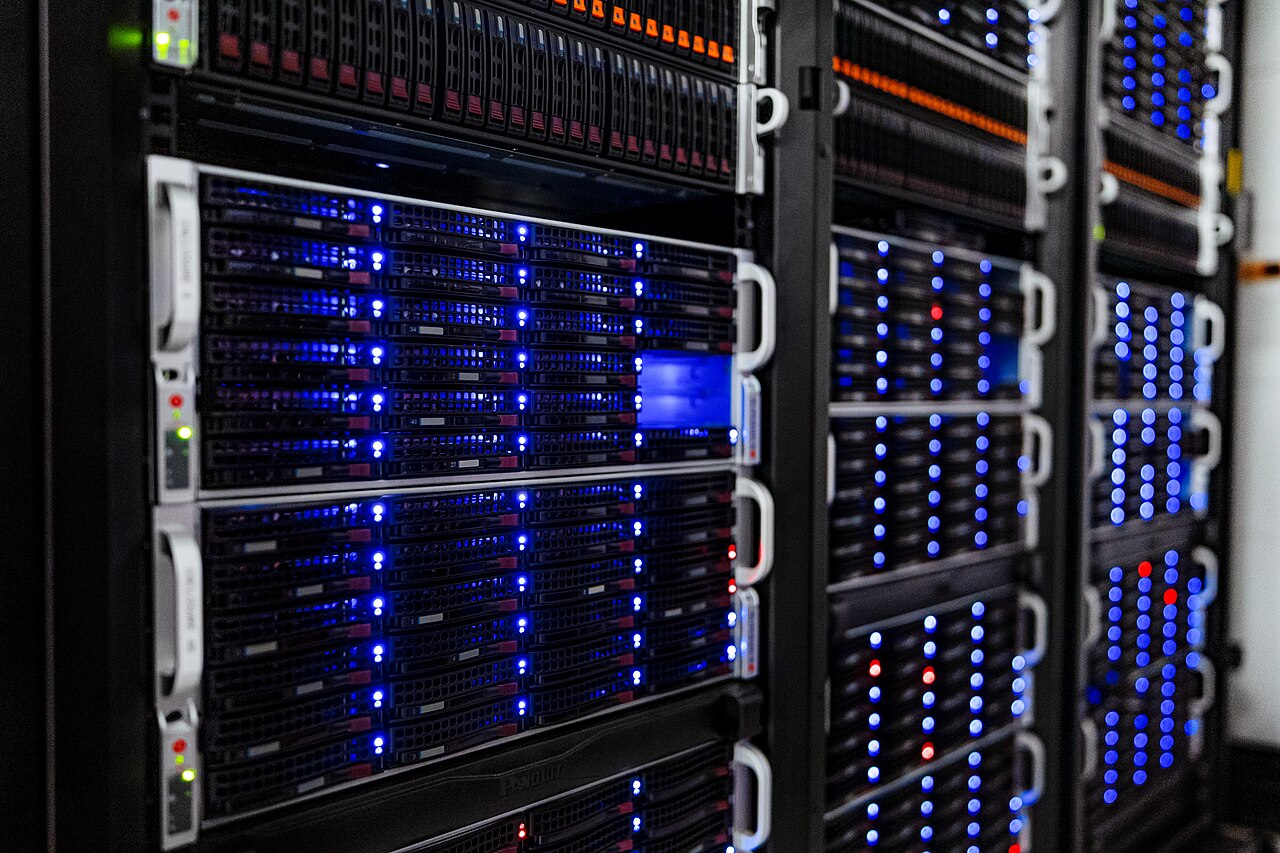
Three companies — Amazon, Microsoft and Google — took 63 percent of all enterprise spending on cloud infrastructure in the third quarter of 2025, per Synergy Research Group: Amazon 29 percent, Microsoft 20, Google 13. That share has crept up from 61 percent two years earlier, in a market that grew from $68 billion to $107 billion a quarter over the same span.
The models themselves are concentrating the same way. Stanford’s AI Index estimates the compute in a single training run of GPT-4 at about $78 million, and Google’s Gemini Ultra at about $191 million; Epoch AI, whose figures the Index uses, calculates that frontier training costs have been growing about 2.4 times a year. The 2026 Index reports that industry produced more than 90 percent of the notable frontier models released in 2025 — the universities have been priced out of the frontier entirely.

Access is then sold back down a ladder: $20 a month buys an individual a standard tier, $30 a seat buys a business the office-integrated version, and the top enterprise tier is not priced publicly at all — it is negotiated, with reported figures around $60 a seat and minimums in the hundreds of seats.
Arithmetic, Not Intent
None of that requires intent, and this paper does not claim any. It requires only arithmetic. A worker’s way out now runs through three companies’ servers, at prices those companies set, under limits those companies adjust, on models those companies can retire, throttle or reprice at will. The selloff does not close that gate; if anything, it pressures the gatekeepers to make the gate pay — and the people least able to absorb a price rise, a usage cap or a discontinued tier are the ones using the tool to climb, not the ones who own it. Reddit’s Friday is the small version of the whole picture: its stock fell 29 percent in a day after chief executive Steve Huffman told investors that Google’s AI summaries had cut the traffic Google sends his site by more than a million referrals a week. One company’s AI feature is another company’s vanished livelihood, and the company holding the feature answers to no one in the transaction.
The Number That Points The Other Way
There is one number in the record that points the other way, and it matters. DeepSeek, the Chinese laboratory, reported training its V3 model — a system benchmarked in GPT-4’s class — for $5.6 million, a figure Stanford’s Index carries as the developer’s own and flags as disputed. Even heavily discounted, it is evidence that the frontier’s price is a choice of method as much as a law of physics, and it is why open and cheaper models keep appearing no matter how much concrete the giants pour.
The facts, laid end to end, are these. A technology that substitutes for capital reached tens of millions of workers at the exact moment a record number of them were filing to work for themselves. The companies selling it spent $200 billion in one quarter building the only roads it travels on, lost $1 trillion in a day when investors blinked, and still hold 63 percent of the road network between them. Who keeps the power in that arrangement does not depend on what anyone intends. It depends on whether the gate stays cheap, open and boring — or becomes one more rent charged to the people trying to get out.
The Exclusive — In Short
Friday’s selloff: Nasdaq −2.86 percent, Nasdaq-100 −3.46 percent and more than $1 trillion lost in a session; Alphabet fell more than 12 percent on Thursday — an estimated $500 billion — after admitting its AI answers earn less than the search advertising they replace. The other ledger: 58 percent of U.S. small businesses now use generative AI (U.S. Chamber of Commerce, 2025); a record 4.93 million new business applications were filed in the first nine months of 2026; an estimated 74.9 million Americans work independently. The gate: Amazon, Microsoft and Google hold 63 percent of cloud infrastructure spending; a single frontier training run cost an estimated $78 million (GPT-4) to $191 million (Gemini Ultra); the top access tier is priced by negotiation, not posted. The counter-example: DeepSeek’s reported, disputed $5.6 million training run.
Sources: Reuters market and earnings reporting, October 29–31, 2026; U.S. Chamber of Commerce small business survey, 2025; U.S. Census Bureau Business Formation Statistics, via the Small Business & Entrepreneurship Council, October 31, 2026; Shopify-Gallup Entrepreneurship Study, 2024; Synergy Research Group, Q3 2025, via The Register; Stanford Institute for Human-Centered AI, AI Index (training-cost estimates via Epoch AI); published ChatGPT and Microsoft 365 Copilot pricing, checked October 2026; DeepSeek V3 technical report (developer-reported, disputed).
Comments
Loading comments…