
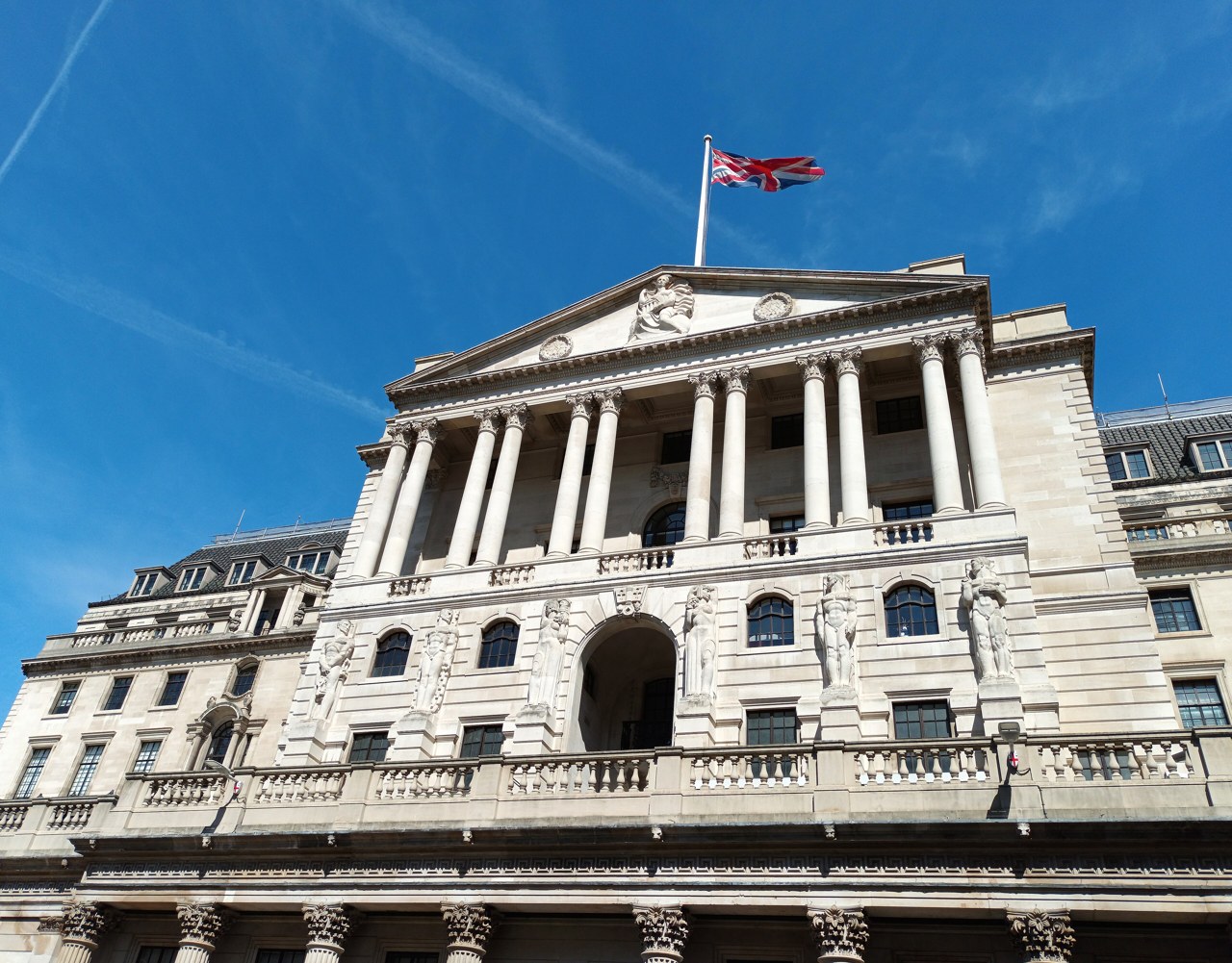
The Bank of England raised interest rates on Thursday for the first time in more than three years, voting 8–1 to lift Bank Rate to 4 percent from 3.75 percent — and its Governor warned, in terms, that the Iran war may force it to go again.
The increase is the first since August 2023. The lone dissenter, Catherine Mann, voted for a bigger rise to 4.25 percent, citing "non-linear inflation risks" after September's inflation reading hit 3.5 percent — already well above the Bank's 2 percent target before the latest energy shock has finished feeding through.
Governor Andrew Bailey set out the conditional path in his own words: "Today's increase should not be seen as the first in an inevitable long sequence of hikes… But unless the conflict in the Middle East is resolved, neither does it seem likely to be the last increase."
The Forecasts Behind The Vote
The Bank now expects UK inflation to peak at about 4.8 percent in the second quarter of next year — and published an adverse scenario in which it reaches 6.2 percent in the third quarter of 2027 if oil peaks near $130 a barrel, against roughly $100 now. On the Bank's central path, inflation does not return to the 2 percent target until the third quarter of 2028.
Growth, at least, was revised up: 1.6 percent this year and 1.3 percent next. The rate rise is not a response to an overheating economy; it is a response to a war.
What It Lands On
The decision is a direct cost-of-living blow to Prime Minister Andy Burnham's government, arriving through the mechanism no government controls: mortgage renewals, business borrowing and the price of money itself, all repriced by a conflict in the Strait of Hormuz. The Bank held out longer than its peers — the US Federal Reserve and the European Central Bank have already raised rates on Iran-war inflation — which makes Thursday's move read as the end of the holdout rather than the start of a panic.
Bailey's sentence structure carried the whole policy: not inevitable, not finished. Which of those two it becomes is being decided, as the Bank all but said, in the Gulf — the same place that decided the American election on Tuesday.
The vote also closes a chapter. For three years the direction of British interest rates, when they moved at all, was down or sideways; the cutting cycle that followed the post-2022 inflation peak defined the economic weather for two governments. Thursday's rise ends that weather. The Bank's own adverse scenario — inflation at 6.2 percent if oil reaches $130 — is not a forecast but a stress line, and the fact that the Bank chose to publish it alongside the vote tells its own story about which risk the Committee fears more: not tightening too much, but being seen to tighten too late. Mann's dissent pointed the same direction from the hawkish side — her argument, made last month and repeated in Thursday's minutes, is that the Bank has been slow to reassure markets it has a grip on inflation, and that a central bank which looks behind has to move further in the end.
For the government, the politics are arithmetic. Every quarter-point on Bank Rate moves through the mortgage market on a lag measured in months, landing on renewal letters through 2027. Burnham's ministers did not choose the rise, cannot reverse it, and will be blamed for its effects by voters who experience it as a bill — which is precisely why the Governor's conditional sentence matters in Westminster as much as in the City: if the conflict ends, the Bank has told the country, this sequence probably ends with it.
The Facts
- MPC voted 8–1 to raise Bank Rate to 4% from 3.75% — first increase since August 2023.
- Dissenter Catherine Mann wanted 4.25%, citing 'non-linear inflation risks'; September CPI was 3.5%.
- Bailey: not 'the first in an inevitable long sequence'… but unless the Middle East conflict is resolved, 'neither does it seem likely to be the last increase.'
- BoE sees inflation peaking ~4.8% in Q2 next year (adverse scenario 6.2% if oil nears $130); no return to 2% until Q3 2028.
Sources: Reuters (vote, forecasts, Bailey and Mann); Bank of England Monetary Policy Summary.

Comments