
A British doctor who tested positive for Ebola while working on the epidemic in the Democratic Republic of Congo has been flown home for specialist treatment in London, the UK government confirmed on Thursday. The doctor, whose identity has not been disclosed, is the first British patient evacuated from the current outbreak, and the third person who tested positive to have returned to Europe from it. The medical evacuation flight was arranged by the governments of Britain and Congo with their international health partners, and the patient is being cared for in the high-level isolation unit at the Royal Free Hospital in Hampstead, north London.
The official line, repeated at every step of the announcement, is calm. Dr Renu Bindra, deputy director for all-hazards public health response at the UK Health Security Agency, said that UKHSA and the NHS have “well-established and robust infection prevention and control protocols” to limit the risk of onward transmission, and that “the risk to the wider public remains low.” The Royal Free’s isolation unit is the country’s standing facility for high-consequence infectious diseases, designed so that a patient can be treated without contact with the public; the hospital treated three health workers evacuated from the West African Ebola outbreak in 2014 and 2015.
The Outbreak He Was Fighting
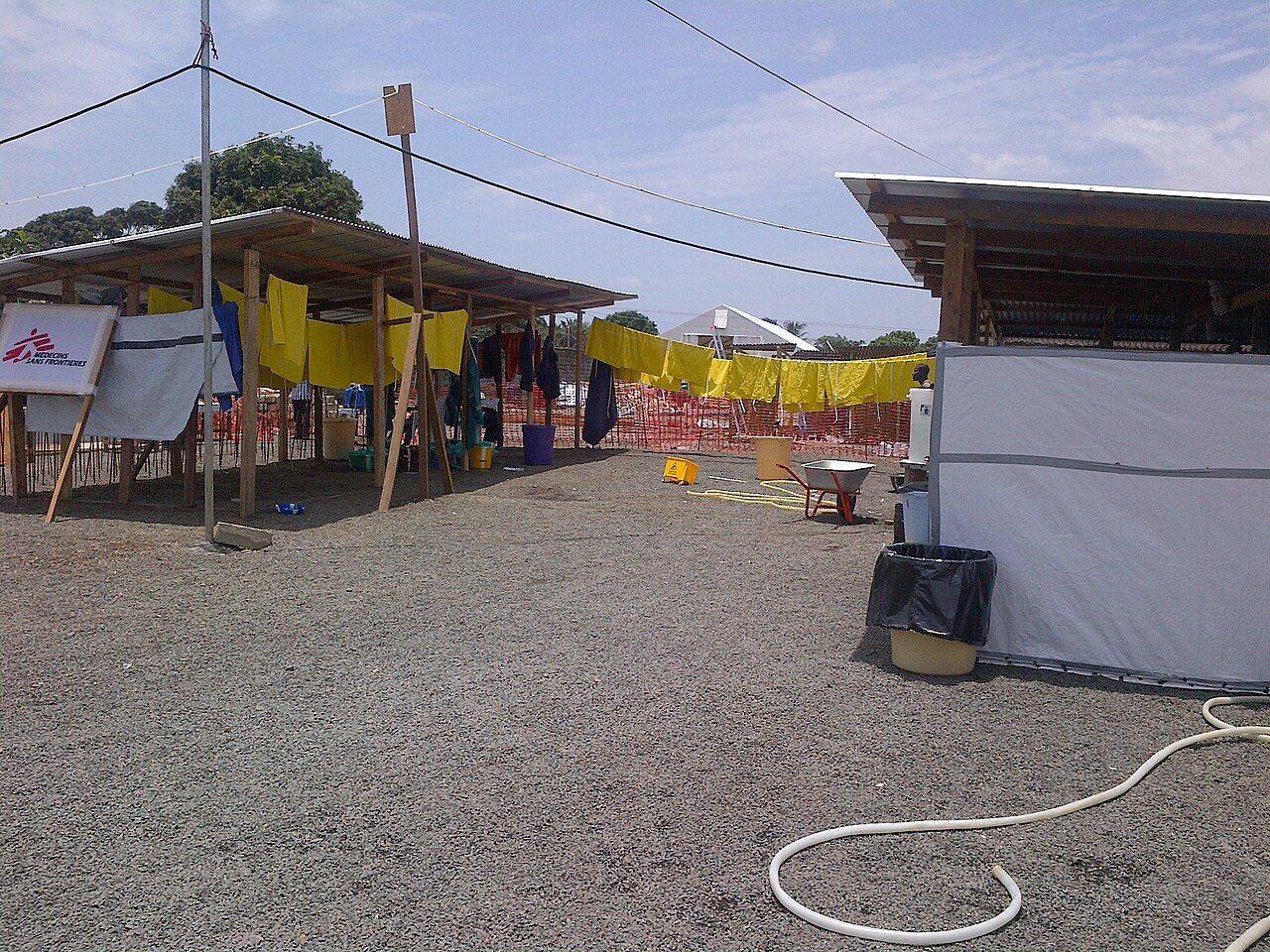
The current outbreak, declared by Congo’s health ministry in May, is caused by Bundibugyo virus, a species of Ebola, and the World Health Organization designated it a Public Health Emergency of International Concern on May 17, 2026. On the reported figures it has since passed 10,000 cases and 5,000 deaths — figures compiled from Congolese and UN reporting — making it one of the largest Ebola outbreaks on record, and the Daily has covered its spread across the region through the year. The doctor was deployed to Congo by a humanitarian organisation as part of the international response; he is, on the UK government’s account, the first British national to contract Ebola during this outbreak.
The government’s statement, titled “UK Citizen Returned from DRC for Specialist Ebola Care,” was published by the Department of Health and Social Care, and UKHSA has separately reminded healthcare providers in Britain about the outbreak and its Bundibugyo strain — the species of Ebola responsible for the Congo epidemic, and one for which the established isolation and contact protocols were written from hard experience in earlier African outbreaks. Any contacts of the patient are managed under those same protocols, which is why officials were able to describe the public risk in a single word — low — and repeat it without qualification.
For the British public, the practical position is the one UKHSA stated: an identified patient, moved on a planned medical flight, into a sealed specialist unit, under protocols written for this disease. Ebola spreads through direct contact with the bodily fluids of a symptomatic patient; it does not travel through the air in ordinary contact, and there is no suggestion of any exposure outside the treatment chain. The story to watch is not in Hampstead. It is in Congo, where the outbreak that infected him continues, and where the responders still treating it are the people most at risk — as the Royal Free’s newest patient, a doctor who went to help, now demonstrates from inside an isolation room.
The Facts
- A British doctor who tested positive for Ebola in the Democratic Republic of Congo was evacuated to the UK on Thursday and is in the Royal Free Hospital’s high-level isolation unit in London.
- He is the first British patient evacuated from the current outbreak, and the third person who tested positive to return to Europe from it.
- UKHSA’s Dr Renu Bindra said infection-control protocols are in place and the risk to the wider public remains low.
- The outbreak, caused by Bundibugyo virus and designated a Public Health Emergency of International Concern on May 17, 2026, has passed 10,000 cases and 5,000 deaths on reported figures.
Sources: The Associated Press; the UK Department of Health and Social Care; the UK Health Security Agency; AFP (via Telegraph Nigeria).
Comments