
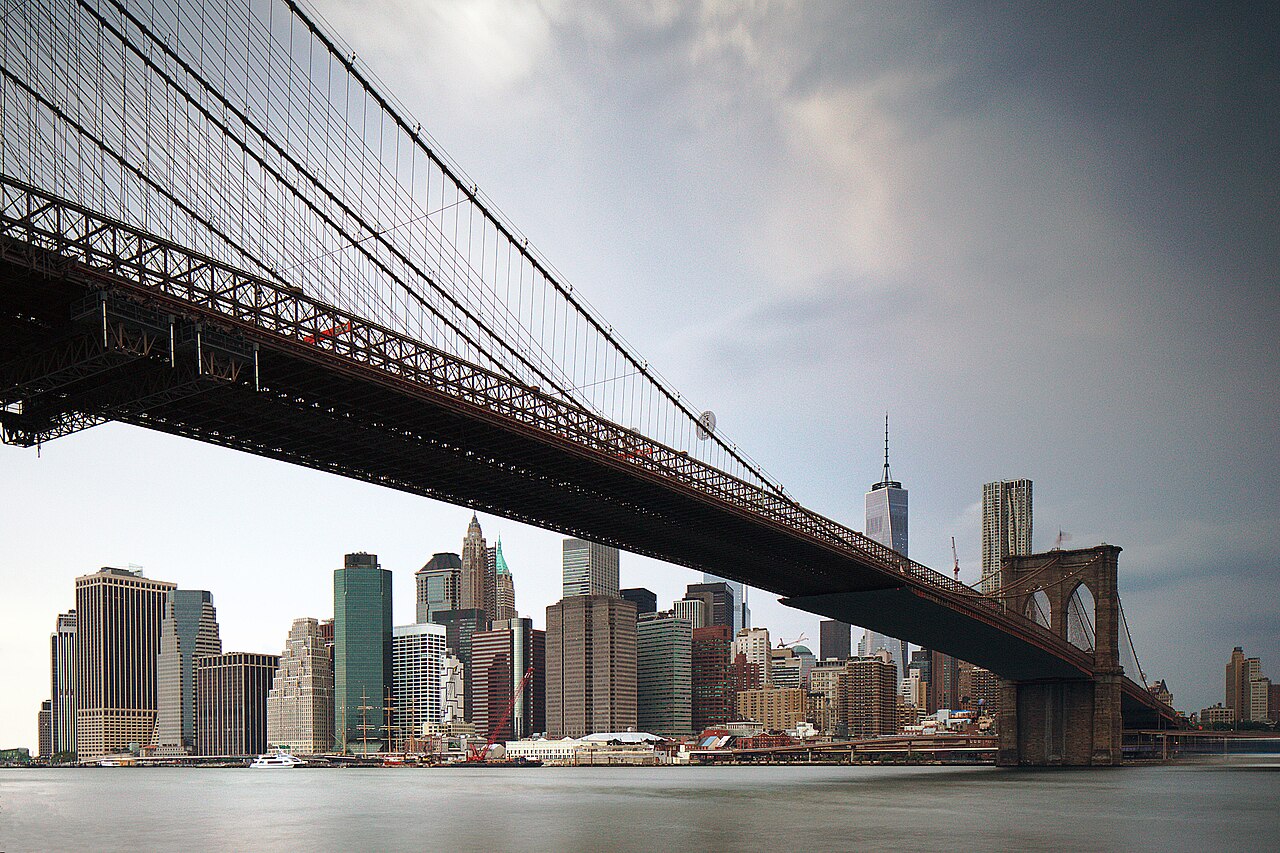
A British volcanologist’s warning that a Spanish island volcano will one day send a “megatsunami” across the Atlantic toward the United States was picked up on both sides of the ocean on Friday, with the New York Post and the Daily Mail carrying Professor Bill McGuire’s account of a collapse at Cumbre Vieja, on the Canary island of La Palma. In McGuire’s modelling, the worst case is a wave train up to 65 feet high reaching the American East Coast within about nine hours. In the US Geological Survey’s modelling, the same event produces waves of 3 to 7 feet. Both numbers are on the record. They do not agree, and this article prints them side by side rather than averaging them.
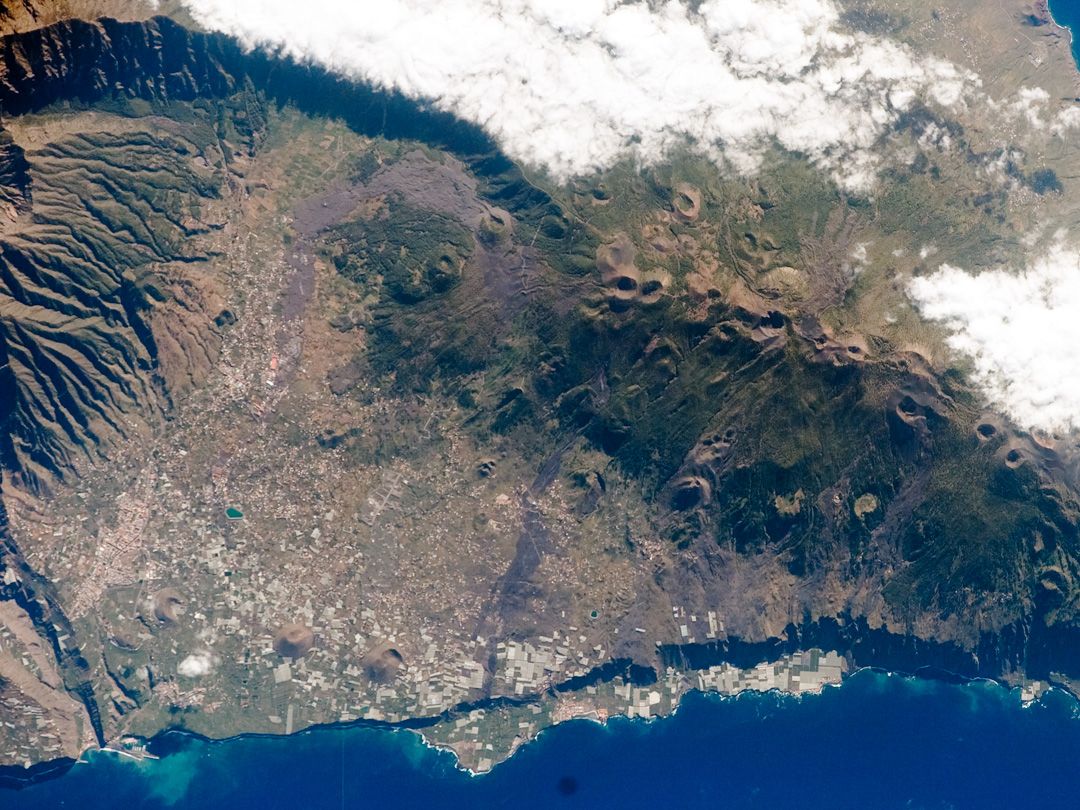
Cumbre Vieja is a volcanic ridge that forms the southern half of La Palma, off the northwest coast of Africa. It rises 1,949 metres above the sea, its spine and flanks pockmarked by dozens of craters and cones. It is one of the most active volcanic centres in the Canary Islands: it erupted in 1949 and 1971, and most recently in 2021, when the Tajogaite eruption ran for 85 days, sent lava flows down to the sea and forced thousands of residents from their homes. The volcano is continuously monitored, precisely because of the argument that follows.
The concern centres on the ridge’s western flank. During the 1949 eruption, a fault opened along the summit, and later studies identified a vast slab of the mountain as unstable — a wall of rock slowly inching toward the ocean. McGuire, a professor of geophysical and climate hazards who has studied the volcano for years, wrote in BBC Science Focus: “Based on extensive studies, I expect this part of the flank will eventually crash into the North Atlantic, launching a megatsunami in the process.”
His worst-case simulations describe an initial dome of water close to a kilometre high beside the island, settling into waves that cross the Atlantic at jetliner speed. Florida, in those simulations, takes waves of about 20 metres — the 65 feet of Friday’s headlines — within nine hours of the collapse, with dangerous water reaching the length of the Eastern Seaboard. It is the same scenario first modelled in a widely publicised 2001 paper by Steven Ward and Simon Day, which assumed a single block of some 500 cubic kilometres of rock sliding into the sea at once.
McGuire is explicit about the clock, and Friday’s headlines mostly were not. “I have no doubt this will be a cataclysmic event, but have no idea when it will happen — it could easily be centuries or even millennia down the line,” he wrote. Nothing has changed at Cumbre Vieja this week: there is no eruption under way and no new ground movement has been reported. The story’s trigger is a magazine article, not monitoring data.
Against the claim stands a quarter-century of follow-up research. Mapping of the ocean floor around the Canary Islands shows that prehistoric flank collapses there did not fall as single, coherent blocks; the debris trails indicate they came apart in stages, in pieces, over hours or days — a process that produces far smaller waves. Geological work on La Palma itself has found that the fractures in the ridge are not connected at depth, which means there is no single deep surface along which a 500-cubic-kilometre block could slide; the largest slab physically able to move at one time is far smaller than the 2001 model assumed. And if transatlantic megatsunamis had struck the Americas during the Canaries’ long volcanic history, the eastern coasts of North and South America would be expected to hold a geological record of them. No such deposits have been found.
Newer computer models, which account for how a wave spreads out and loses energy across an ocean basin, have shrunk the far-field numbers dramatically. The US Geological Survey’s assessment is that even a worst-case collapse at La Palma would most likely produce waves of roughly 3 to 7 feet on the US East Coast — comparable to a strong storm surge. The Survey states the position plainly: collapses of Canary Island volcanoes are rare, occurring on timescales of hundreds of thousands of years; they should be preceded by warning signs, including increased earthquakes and ground deformation; and slope-stability analyses at La Palma indicate the structure is currently stable, and would have to grow significantly before a collapse became likely.
What is not in dispute is the underlying phenomenon. Volcanic flank collapses are real, and they have generated tsunamis before — the USGS points to the 1883 eruption of Krakatau, whose collapse-driven waves killed tens of thousands of people in Indonesia. La Palma itself was built partly by ancient collapses, including the one that carved the island’s great northern caldera. The argument between McGuire and the majority of his field is not whether a piece of Cumbre Vieja can fall into the sea. It is about how much of it can fall at once, how far the resulting wave can carry, and on what timescale any of it might happen.
On the numbers, those are three different arguments with three different answers: 65 feet in McGuire’s simulations; 3 to 7 feet in the USGS’s; and a date that McGuire himself puts somewhere between next century and a thousand years from now. The volcano, watched around the clock by the scientists who disagree about it, is quiet.
The Facts
- Cumbre Vieja is an active volcanic ridge on La Palma in Spain's Canary Islands, 1,949 metres high; it erupted in 1949, 1971 and for 85 days in 2021.
- Professor Bill McGuire (BBC Science Focus): the western flank 'will eventually crash into the North Atlantic, launching a megatsunami'; his worst-case modelling gives waves up to 65 feet (20 m) reaching the US East Coast within about nine hours.
- McGuire on timing: 'it could easily be centuries or even millennia down the line.' No eruption or new ground movement at the volcano has been reported this week.
- The scenario originates in Ward & Day (2001), which modelled a single ~500 km³ block sliding into the sea at once.
- Later research: past Canary collapses came apart in stages; La Palma's fractures are not connected at depth; no prehistoric megatsunami deposits exist on American coasts.
- US Geological Survey: even a worst-case collapse would likely produce waves of roughly 3 to 7 feet on the US East Coast; the structure is currently assessed as stable, and collapses of this kind occur on timescales of hundreds of thousands of years.
Sources: Professor Bill McGuire, BBC Science Focus; New York Post; Daily Mail; Ward & Day, Geophysical Research Letters (2001); US Geological Survey.



Comments