
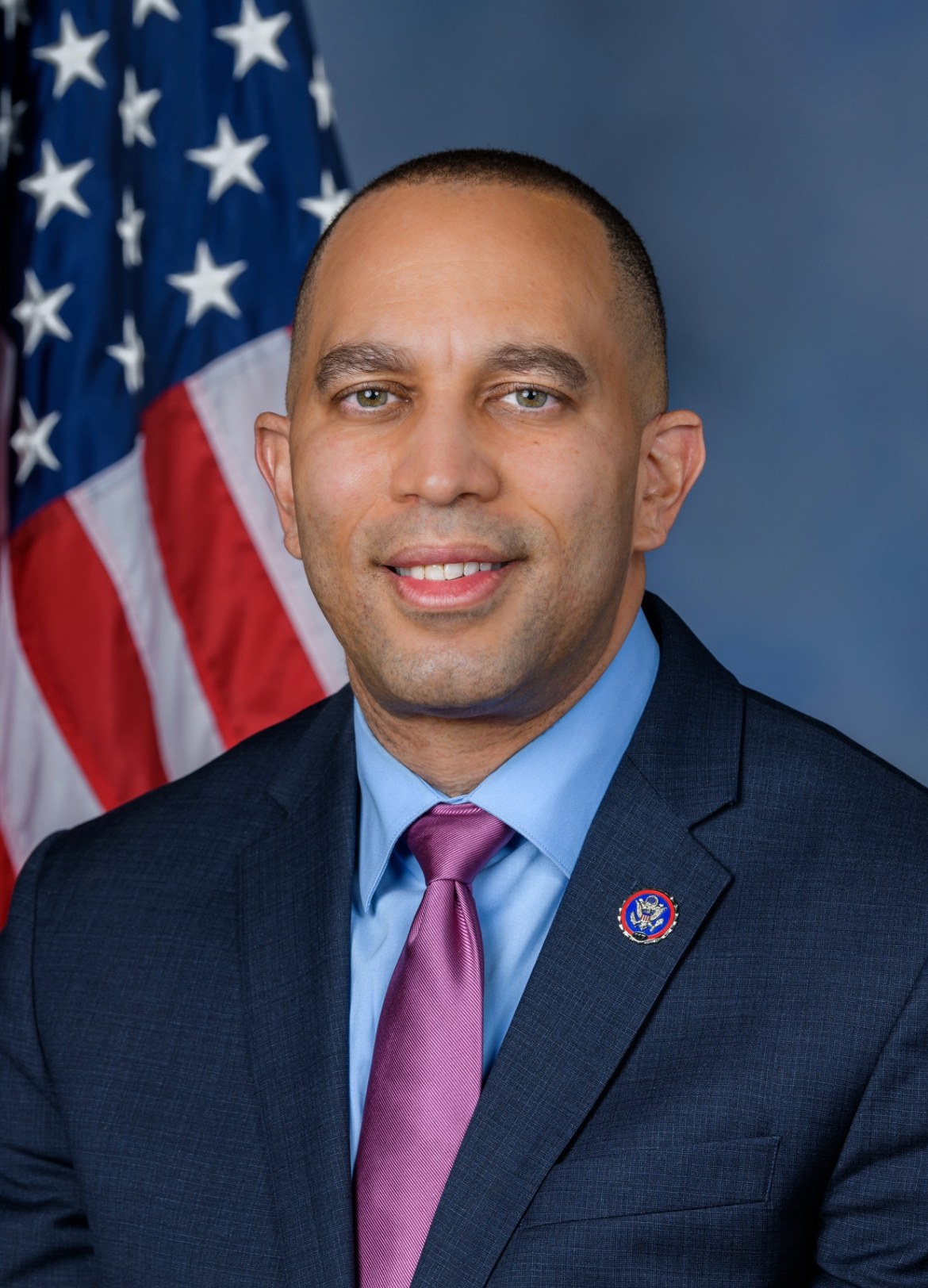
The incoming majority began describing what it intends to do with power on Wednesday and Thursday, and the description started with the institution itself. "We don't work for Donald Trump," incoming House leader Hakeem Jeffries said. "The days of the House of Representatives functioning like a wholly owned subsidiary of the Trump administration are over."
The numbers behind the vow: Democrats hold the Senate at least 54–44 with two races still uncalled, and gained at least 30 House seats on Reuters' count. Republicans lost ground in 99 percent of the roughly 2,100 counties counted as of Wednesday morning, on tallies reported by Reuters and USA Today — a map with almost nowhere the defeat did not reach.
Florida Governor Ron DeSantis, a Republican, gave the result its bleakest internal review: "This is close to an extinction-level event for Republicans."
The Impeachment Question
President Trump, asked at Wednesday's ballroom-site event about the impeachment talk already forming around his Defense Secretary, said he was "not even a little bit" worried — and turned the threat around: "I think it would destroy the Democrat party if they did that."
The threat is not hypothetical in form, whatever the majority decides in substance: Representative Thomas Massie, a Republican, has promised to reintroduce articles of impeachment against Secretary Hegseth next week. The new majority's oversight machinery — the hearings, subpoenas and investigations House Republican leadership candidates are already warning their chairmen about — starts January 3.
The First Test Is December
Before any of that, the outgoing majority has a bill to pass. Federal funding runs to a December expiry, and the lame-duck Congress — Republican-led, freshly defeated, and publicly split over why it lost — must pass it with a President who has said he would run the war the same way again. It is the first piece of governing the election's losers still own, and the first negotiation the incoming majority gets to watch from the front row.
Jeffries' formulation — subsidiary no longer — is a promise about posture. The December deadline is where posture meets arithmetic, six weeks before the new Congress is sworn in and the arithmetic changes hands.
The personnel are historic firsts as well as winners. Jeffries is set to become the first Black Speaker of the House when the new Congress convenes on January 3, 2027. The Senate flips that built the majority — North Carolina, South Carolina, Texas, Iowa, Ohio, Kansas and Maine — include the first Democratic senator from Kansas since 1932, and Michigan's hold made El-Sayed the first Muslim elected to the United States Senate. Seven flips and a governorship map that turned in Georgia and Texas are the raw material the "rein in" pledge will be executed with.
The same numbers are why the December fight matters. A majority that does not yet hold power cannot pass or block anything; the funding bill belongs to the Congress that just lost. How the outgoing majority handles it — and whether the President's party, publicly divided over the war that beat it, can pass a bill at all — is the first data point on whether the next two years run on confrontation or arithmetic.
The Facts
- Jeffries: the House will no longer function 'like a wholly owned subsidiary of the Trump administration.'
- Senate at least 54–44 Democratic; House Democrats gained at least 30 seats (Reuters).
- DeSantis: 'close to an extinction-level event for Republicans'; GOP lost ground in 99% of ~2,100 counties counted.
- First lame-duck test: federal funding expires in December.
Sources: Reuters (Jeffries, DeSantis, seat counts, county tallies, funding deadline, Trump remarks as reported).



Comments