
At least 25 flights across Europe were hit by bomb threats on Thursday, in the third wave of such threats in a week — and by Thursday evening, no explosive device had been found on any aircraft. The Guardian's tally, drawn from Flightradar24 data, counted 25 flights affected by 15:00 UTC; a later-updated industry count put Thursday's total at 27. The two figures are snapshots taken hours apart, and both are carried here.
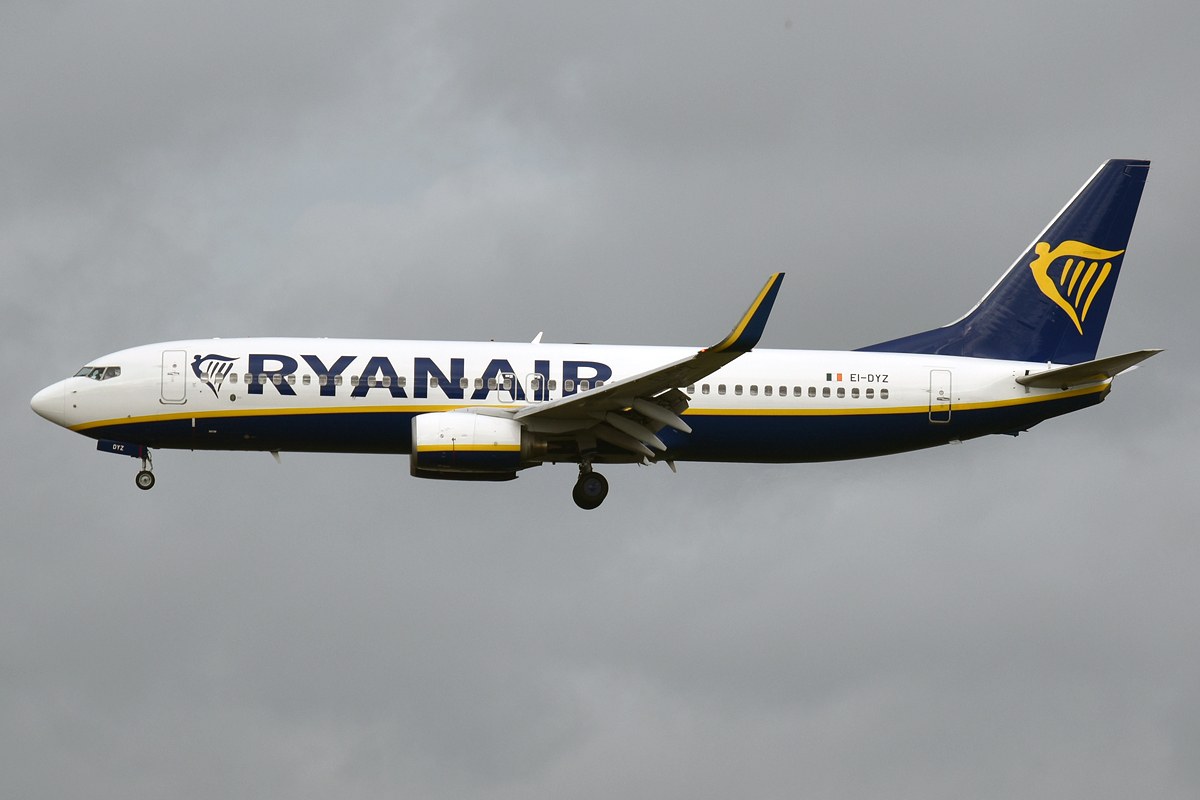
Three flights diverted. Aer Lingus flight EI402, from Dublin to Rome with 151 passengers and six crew, diverted to Évreux-Fauville air base in Normandy. Ryanair flight FR1730, from London Stansted to Sofia, landed at Plovdiv under Bulgarian fighter escort. Wizz Air flight W46387, from Milan to Warsaw, diverted to Vienna.
Ryanair was the most-targeted carrier, with at least ten of its flights threatened. Finnair's Helsinki–Rome flight was escorted into Rome Fiumicino by two Italian Eurofighters. The pattern across the day was uniform: a threat received, a diversion or escort, a search, nothing found.
Hoaxes, Say The Officials — Attribution, Not Yet
UK Transport Secretary Heidi Alexander called the threats "malicious hoax threats." EU Transport Commissioner Apostolos Tzitzikostas said it is "too early to draw conclusions on whether the reported incidents are linked."
European officials have accused Russia and Iran of conducting "hybrid attacks" against the continent; both countries deny it. That is an accusation by officials, reported as such — no authority has publicly attributed Thursday's threats to any state, and the evidence made public so far establishes the threats, the diversions and the empty searches, not their origin.
Thursday was the week's third wave: at least seven flights were hit on November 3 and more on November 2. The operational cost is measurable — fuel, diversions, fighter scrambles, grounded aircraft and searched cabins — and it is incurred in full whether or not a single device exists. That, officials argue, is the point of a hoax campaign; whether Thursday was one campaign, several, or copycats feeding on coverage is precisely what Tzitzikostas declined to conclude.
For passengers the day ended the way each individual incident ended: late, searched, and safe. For the airlines and air forces of a continent already paying for a war's inflation, the bill for the threats is still being added up.
The British thread ran through the day's timetable. FR1730 departed from London Stansted — a UK airport, a UK minister fronting the government's response within hours, and British passengers among the hundreds diverted, held and searched across the continent. The UK's own carriers and airports have been through the earlier waves this week, and Alexander's choice of words — "malicious hoax threats," with the emphasis on hoax — was aimed at two audiences at once: passengers deciding whether to fly this weekend, and whoever is placing the threats, being told the state has already classified their weapon as a nuisance rather than a terror.
The economics of the nuisance are not trivial. A wide-body diversion burns fuel, strands crews out of position, and takes an aircraft out of the network for a search cycle; a fighter escort costs an air force a scramble. Multiplied by 25 or 27 in a single day, and by three waves in a week, the tactic — if it is one tactic — imposes costs entirely out of proportion to the effort of making a threat, which is exactly the asymmetry the phrase "hybrid attack" was coined to describe. The investigations now under way in several countries will decide whether that phrase survives contact with evidence.
The Facts
- 25 flights affected by 15:00 UTC (Guardian/Flightradar24 tally); a later updated count put Thursday's total at 27 — both printed.
- Diversions: Aer Lingus EI402 to Évreux-Fauville (151 passengers, 6 crew); Ryanair FR1730 to Plovdiv under fighter escort; Wizz Air W46387 to Vienna.
- No explosive device found on any aircraft; UK Transport Secretary Heidi Alexander: 'malicious hoax threats.'
- Third wave in a week (at least 7 flights hit Nov 3); Russia/Iran 'hybrid attack' accusations are officials' accusations, denied, not attribution.
Sources: The Guardian tally via Flightradar24 (25 flights by 15:00 UTC); Aerospace Global News updated count (27); AP and Reuters (diversions, official statements, hybrid-attack accusations).



Comments