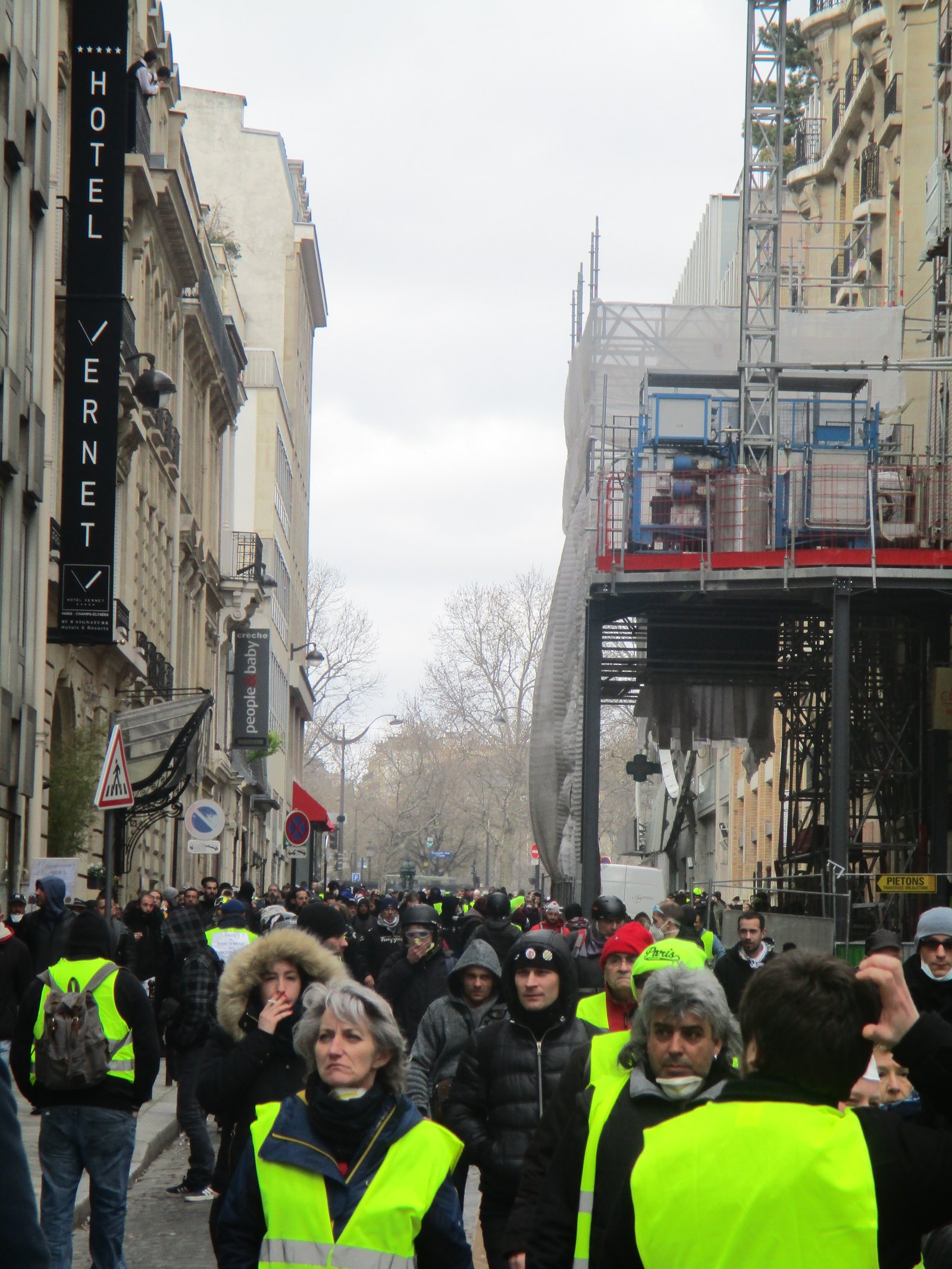
French security forces fanned out across Paris on Saturday, October 24, ahead of protests that authorities feared could turn violent. Interior Minister Laurent Nuñez urged police to be “hyper-reactive” against troublemakers and looters. Soldiers from an anti-terrorism military unit patrolled the Champs-Élysées, and police vans circled the Arc de Triomphe.
Nuñez mobilized 70,000 police nationwide — 10,000 more than the 60,000 deployed on Saturday, October 17 — including elite counterterrorism and hostage-rescue units, helicopters, armored vehicles, water cannons, drones and mounted police. “Today’s key words will be mobility, responsiveness and adaptability,” he said. “We must be absolutely uncompromising and hyper, hyper, hyper-responsive.” On Friday he had promised: “We are ready tomorrow to be extremely firm and not tolerate anything.” Nuñez had been heavily criticized for underestimating the previous Saturday’s protests.
The movement began in September, when high school students blockaded schools near Paris over learning conditions — staff shortages, overcrowded classes and dilapidated buildings. Student organizations are demanding 250,000 more university places and an overhaul of Parcoursup, the national admissions platform. From the schools it spread nationwide, carried by wider anger over the rising cost of living. Last weekend’s marches, on October 17 and 18, were marred by vandalism, looting and arson; courts have since jailed 217 offenders linked to that weekend.
President Emmanuel Macron blamed “ultra-left” groups he said want to “bring down the republic,” and said protests called by “individuals or groups with no legitimate authority” would be banned. He instructed local authorities to ban Saturday’s protests except those organized by unions, whose requests prefects would examine, with alternative routes proposed. Macron cancelled a planned trip to Nigeria and Senegal, met student representatives on Friday, and promised more teachers and a deep overhaul of Parcoursup. Nathanael Combary of Renouveau Lycéen, who attended the meeting, said afterward: “We are calling for continued mobilization.”
The bans landed anyway. Police rejected permit requests from the student union UNEF and from the Yellow Vest movement; both said they would march regardless. A union-led march from Bastille to Nation was approved and then had its permit revoked; the unions vowed to march the original route. The Ecologists, France Unbowed, the Socialist Party, the Communist Party and others filed a joint emergency appeal with the Council of State on Friday. Amnesty International called the bans “serious restrictions of the right to protest” and warned of a “slide toward authoritarian practices.” Manon Aubry, a France Unbowed member of the European Parliament, said: “Power prefers to barricade itself behind armored vehicles rather than listen to the legitimate demands of citizens.”
The shutdown list for Saturday ran long: nighttime curfews around Place de la République and Les Halles in Paris, from 11 p.m. to 6 a.m. through the weekend, with similar curfews in Lyon and northern towns, some extended to Monday; demonstration bans in central Lyon, Nice, Lille and Toulon; the Louvre, the Musée d’Orsay and the Picasso museum closed for the day; 24 Paris Metro stations shut; the Paris edition of the Art Basel fair ended two days early; and Ligue 1 moved Toulouse–Troyes from Saturday to Sunday and Paris Saint-Germain–Lyon to Monday. Sunday’s NFL game at the Stade de France remains scheduled. Shops were urged to close or hire security.
Those marching include students, workers and unions — the CGT joined the Paris demonstration — farmers, climate activists and Yellow Vests. In Orléans, more than 10,000 people joined an authorized march against the far right while Marine Le Pen’s National Rally holds its party conference in the city; Le Pen formally launches her presidential bid on Sunday, when a banned protest is also expected there.
France On Saturday, In Short
- The deployment: 70,000 police nationwide (60,000 on October 17), including counterterrorism and hostage-rescue units, helicopters, armored vehicles, water cannons, drones and mounted police.
- The movement: began with September school blockades over learning conditions; demands include 250,000 more university places and a Parcoursup overhaul; anger over living costs spread it nationwide.
- The bans: Macron limited Saturday protests to union-organized ones; UNEF and Yellow Vest requests were refused, and an approved union march had its permit revoked. Rights groups and opposition parties appealed to the Council of State.
- The closures: the Louvre, Musée d’Orsay and Picasso museum shut; 24 Metro stations closed; curfews in Paris, Lyon and northern towns; two Ligue 1 matches moved.
- The backdrop: 217 people have been jailed over last weekend’s vandalism, looting and arson.
Sources: Reuters; Politico Europe; The Guardian; CNN.
Comments
Loading comments…