
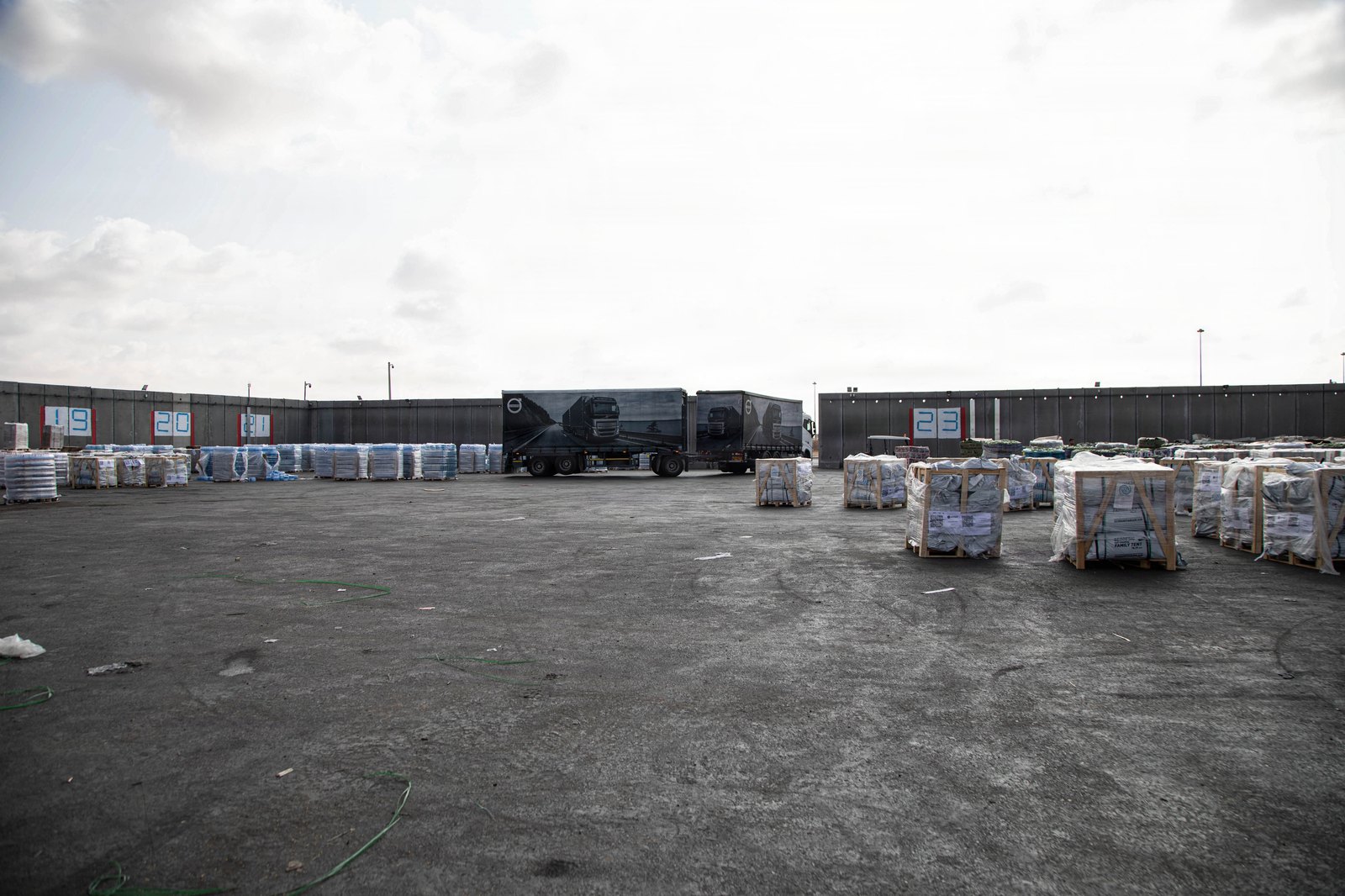
Commercial goods are no longer entering Gaza, COGAT, the Israeli military body that oversees humanitarian affairs in the territory, announced on Wednesday, October 14. COGAT said the halt was the merchants’ own decision: Hamas, it said, had imposed a fee of 10,000 shekels — about $3,220 — on every truck, and demanded that 30 percent of sales be paid in cash.
Lt. Daniel Kantorovich, COGAT’s deputy spokesperson, said Israel remained prepared to coordinate imports as usual, but the merchants had cancelled because of “Hamas’s taxation mechanism and threats against them.” The decision, he said, is reversible whenever the merchants choose. No private vendor, he added, had tried to import since the merchants alerted Israel on Tuesday, October 13.
Hamas gives a different account of the money. It says the 10,000 shekels is a voluntary payment by wealthy Gazans into a national fund for widows and orphans, and that cash payments are encouraged because Gaza faces an acute shortage of cash. Gaza’s Government Media Office rejected the claim that the government taxes or charges fees on trucks at all.
A representative of the merchants told the Associated Press something else again: that the halt was an Israeli decision. The three accounts cannot all be right, and the Davies Daily is printing each of them as its source stated it.
The arithmetic matters more than the argument. COGAT said the halt cuts the total number of trucks entering Gaza each day to about 300 — roughly half the usual flow. Diplomats say far fewer than 600 trucks normally enter. Nahed Shhaibar, the head of Gaza’s private transport union, put the real figure closer to 300 trucks in total, two-thirds of them commercial. On Thursday, October 15, Shhaibar said, not one commercial truck entered from Israel — but humanitarian aid trucks did enter, and commercial goods from Egypt crossed through an Israeli-controlled crossing.
The distinction between the two flows is the point. Aid groups bring in staples such as flour. It is the merchants who bring in perishables — fruit, meat and fresh food. “The humanitarian sector on its own cannot meet the needs of all the people. The markets need to be functioning,” said Shaina Low of the Norwegian Refugee Council.
UNICEF’s spokesman, Ricardo Pires, warned in Geneva on Friday, October 16, that recent gains against malnutrition in Gaza are fragile. “We can’t go back to a situation where children and families are not getting all the supplies, goods, and services that they require,” he said, arguing that all crossings must stay open. In Jabalia, a resident reported the price of a carton of eggs rising from 35 shekels to 60 or 70 shekels within days of the halt.
Some two million Gazans are living through the aftermath of three years of war, most of them in makeshift shelters. The global food security monitor confirmed famine in Gaza in August 2025. Conditions improved after the ceasefire of October 2025 but remain at crisis levels, and aid agencies warn that even small disruptions to access can rapidly reverse the gains.
The Halt, In Short
- The announcement: COGAT, Israel’s Gaza humanitarian-affairs body, said on October 14 that commercial goods were no longer entering Gaza.
- Israel’s account: Hamas demanded 10,000 shekels (about $3,220) per truck and 30 percent of sales in cash; merchants stopped coordinating in response.
- Hamas’s account: the 10,000 shekels is a voluntary payment by wealthy Gazans to a fund for widows and orphans; Gaza’s media office denies any tax or fee on trucks.
- A merchants’ representative told the AP the halt was an Israeli decision.
- The effect: total trucks down to about 300 a day, roughly half; humanitarian aid continues to enter, per Gaza’s transport union.
Sources: Reuters; The Associated Press.
Comments
Loading comments…