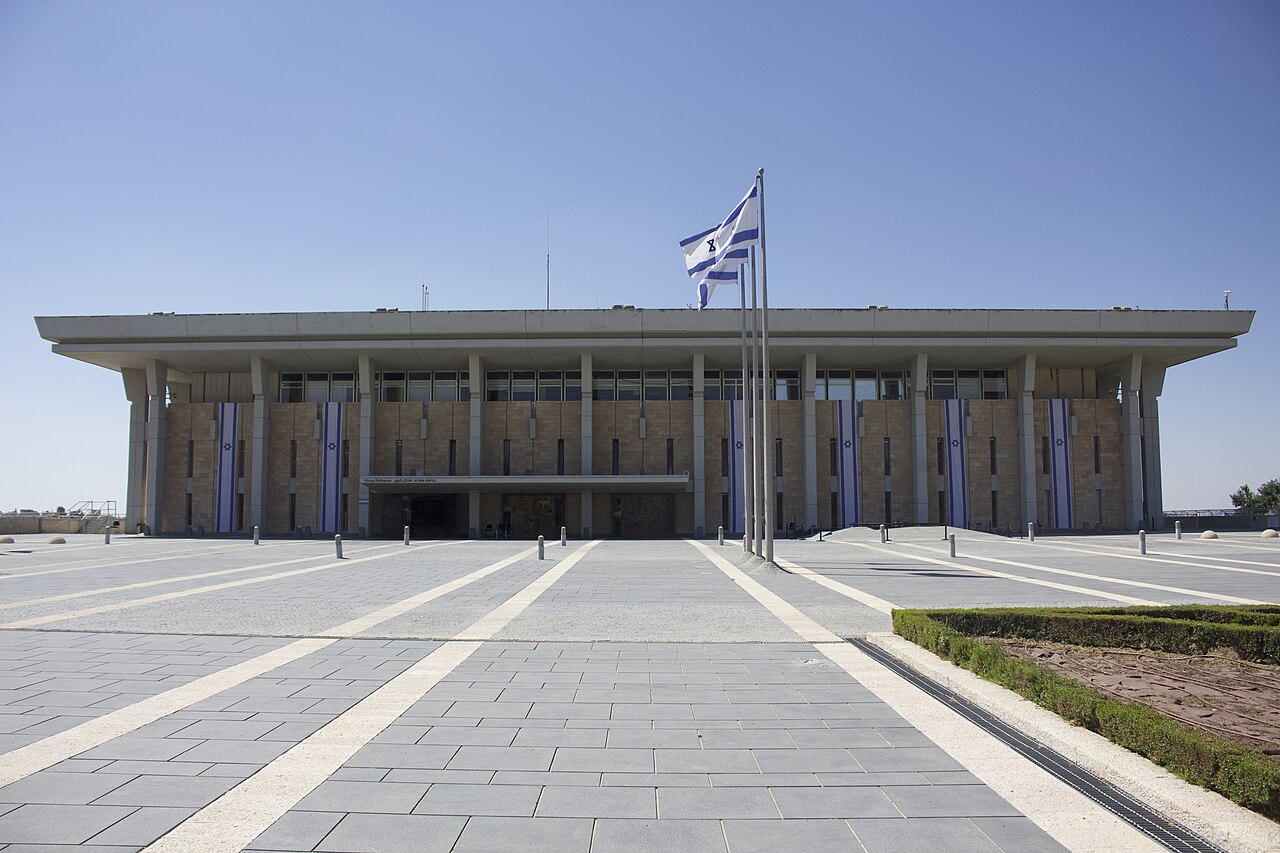
Israelis vote on Tuesday, October 27, to elect the 120 members of the 26th Knesset, the country’s first election since the Hamas-led attack of October 7, 2023. About 7.3 million citizens are on the voter roll — 7,331,981 by the official count. The outgoing Knesset served out its full four-year term and was dissolved on July 17, 2026. Voters choose a party list, not a prime minister: the whole country is a single district under proportional representation, each party’s seats follow its share of the national vote, and the leader who can assemble a coalition governs. No party has ever won a majority alone, and every Israeli government has been a coalition. The number that decides this election is 61.
The final polls were published on Friday, October 23, before Israeli law’s blackout on new surveys took hold until election day. In the three main television polls — Kan 11, Channel 12 and Channel 13 — Gadi Eisenkot’s Yashar was the largest single party in all three, projected at 22, 23 and 22 seats respectively, with Benjamin Netanyahu’s Likud second at 20, 21 and 19. Naftali Bennett’s B’Yachad list, run jointly with Yair Lapid, was third in all three at 14 to 15 seats. The bloc arithmetic was tighter still: parties loyal to Netanyahu took exactly 50 seats in all three surveys, while the opposition “change bloc” took 52 in Kan’s poll, 56 in Channel 12’s and 54 in Channel 13’s, with the predominantly Arab parties at 14, 14 and 16. Haaretz’s summary of the three put Eisenkot’s camp ahead by two to six seats. A fourth survey cut the other way: the i24NEWS poll conducted by Direct Polls on October 22 gave Likud 26 seats and the Netanyahu bloc 59, against 21 for Yashar and 47 for the opposition. A Channel 14 survey published on October 22 — a pollster whose results have leaned further right than the other surveys — projected 62 seats for Netanyahu’s bloc, the only poll of the final week to give either camp a majority. A Maariv poll by the Lazar Research Institute put the coalition at 48 seats and the Jewish opposition bloc at 54, with Likud at 19 and Yashar at 21. In Maariv’s head-to-head question on who should be prime minister, Eisenkot led Netanyahu 49 percent to 41.
The Two Men
Netanyahu, Israel’s longest-serving prime minister — in office 1996–1999, 2009–2021 and again since 2022 — is campaigning on his security record: the campaigns in Gaza, Lebanon and Syria, the war with Iran and his relationship with U.S. President Donald Trump. He rules out a Palestinian state while he is prime minister. He faces ongoing corruption charges in three cases, which he denies, and continuing demands for a state commission of inquiry into the failures around October 7. His bloc is the outgoing coalition’s core: the ultra-Orthodox Shas (polling about 8) and United Torah Judaism (about 8), Itamar Ben-Gvir’s Otzma Yehudit (7 to 8) and Bezalel Smotrich’s Religious Zionism–Zehut (about 6 to 7). Shas and United Torah Judaism formally quit the government in July 2025 over the conscription of ultra-Orthodox men but continued to support it in parliament.
Eisenkot was chief of staff of the Israel Defense Forces from 2015 to 2019. He entered politics in 2022, sat as an observer in the war cabinet formed after October 7, and resigned from it in June 2024 over disagreements with Netanyahu. He founded Yashar in 2025. The party opposes a Palestinian state, and campaigns on universal military conscription with limited exemptions and a state inquiry into October 7 reaching back over the preceding decade. Eisenkot has ruled out depending on the Arab parties to govern and has said Shas would be welcome in his coalition if it signs up to his principles. Around him, four opposition parties signed a coordination pact on September 26: Yashar, Bennett and Lapid’s B’Yachad, Yair Golan’s Democrats (polling 8 to 10) and Avigdor Liberman’s Yisrael Beitenu (5 to 9). Liberman rules out sitting with Netanyahu, the ultra-Orthodox parties or the Arab parties.
The Line That Decides It: 3.25 Percent
A list needs at least 3.25 percent of valid votes to enter the Knesset — on 2022 turnout, roughly 165,000 to 170,000 votes. Votes for lists that fall short are discarded, and the 120 seats are divided among those that cross. Thirty-eight lists are on Tuesday’s ballot; only about a dozen are expected to clear the line. Two fights at the threshold carry the election. On the right, retired general Ofer Winter’s Amcha Yisrael (People of Israel) is polling at about 3 percent — below the line in all three final television polls, according to The Times of Israel — and Netanyahu’s camp has publicly pressed him to withdraw so right-wing votes are not wasted. Winter refused: “We are running all the way, and we will cross the electoral threshold.” Yoaz Hendel’s Reservists list, which has committed to neither bloc, crossed in only one of the three final polls. Benny Gantz’s Blue and White, polling at about 1 percent, has withdrawn — too late to leave the ballot, so votes cast for it will be discarded.
The predominantly Arab parties — the Joint List alliance and Mansour Abbas’s Ra’am — are projected at 13 to 16 seats combined. Both main camps have pledged not to bring Arab parties into a coalition, though both Arab lists have signalled they could support a government from outside. Ra’am sat in the Bennett–Lapid coalition of 2021, the first Arab party to join an Israeli government. Israelis living abroad have no absentee ballot — only diplomats and certain officials vote overseas — and the AID Coalition’s Fly&Vote initiative estimates more than 50,000 expatriates are flying home to vote.
What Voters Are Deciding On
The campaign has been dominated by the war’s domestic aftermath. An Israel Democracy Institute poll in early September found 68 percent of Jewish Israelis calling October 7 a central factor in their vote; the opposition demands a state inquiry, which the government has resisted. Security ranked as a top-two issue for 39 percent of Jewish voters and the economy for 38 percent, with conscription of ultra-Orthodox men a top-two factor for 27 percent. For Arab voters, crime is the leading issue at 53.5 percent, ahead of the economy. The parties also divide over the outgoing government’s judicial changes, which the opposition seeks to reverse and the right to extend.
After Tuesday
Election night will not name a government. The Central Elections Committee publishes official results by November 4. President Isaac Herzog then consults each party and hands the mandate to form a government to the member he judges best placed to build a coalition; that nominee has 28 days, which the president can extend by 14. If the first attempt fails, a second candidate gets 28 days; after that, any member backed by 61 signatures has 14 days. If every attempt fails, the Knesset dissolves and Israel votes again within 90 days, with Netanyahu remaining caretaker prime minister in the meantime. It has happened before that the largest party does not govern: in 2021 Likud won 30 seats but could not reach 61, and Bennett became prime minister with a party of seven.
Tuesday’s Vote, In Short
- The system: 120 seats, one nationwide district, closed party lists, a 3.25 percent threshold — and 61 seats to govern. No party has ever won a majority alone.
- The final polls (published Friday, October 23): Kan 11, Channel 12 and Channel 13 all make Eisenkot’s Yashar the largest party (22–23 seats) over Netanyahu’s Likud (19–21); the Netanyahu bloc sits at 50 in all three, the change bloc at 52–56, the Arab parties at 14–16. The i24NEWS/Direct Polls survey of October 22 dissents: Likud 26, its bloc 59.
- The threshold fights: Ofer Winter’s Amcha Yisrael polls below the line and refuses to quit; Hendel’s Reservists cross in only one final poll; Gantz’s withdrawn Blue and White is still on the ballot.
- The issues: a state inquiry into October 7, ultra-Orthodox conscription, security, the cost of living, crime in Arab towns, and the judicial changes.
- The process: official results by November 4, then President Herzog assigns the mandate — 28 days plus a possible 14 — and if all attempts fail, another election within 90 days.
Sources: The Times of Israel; Haaretz; Kan 11; Channel 12; Channel 13; i24NEWS/Direct Polls; Maariv/Lazar Research Institute; AIJAC election fact sheet; Israel Democracy Institute.
Comments
Loading comments…