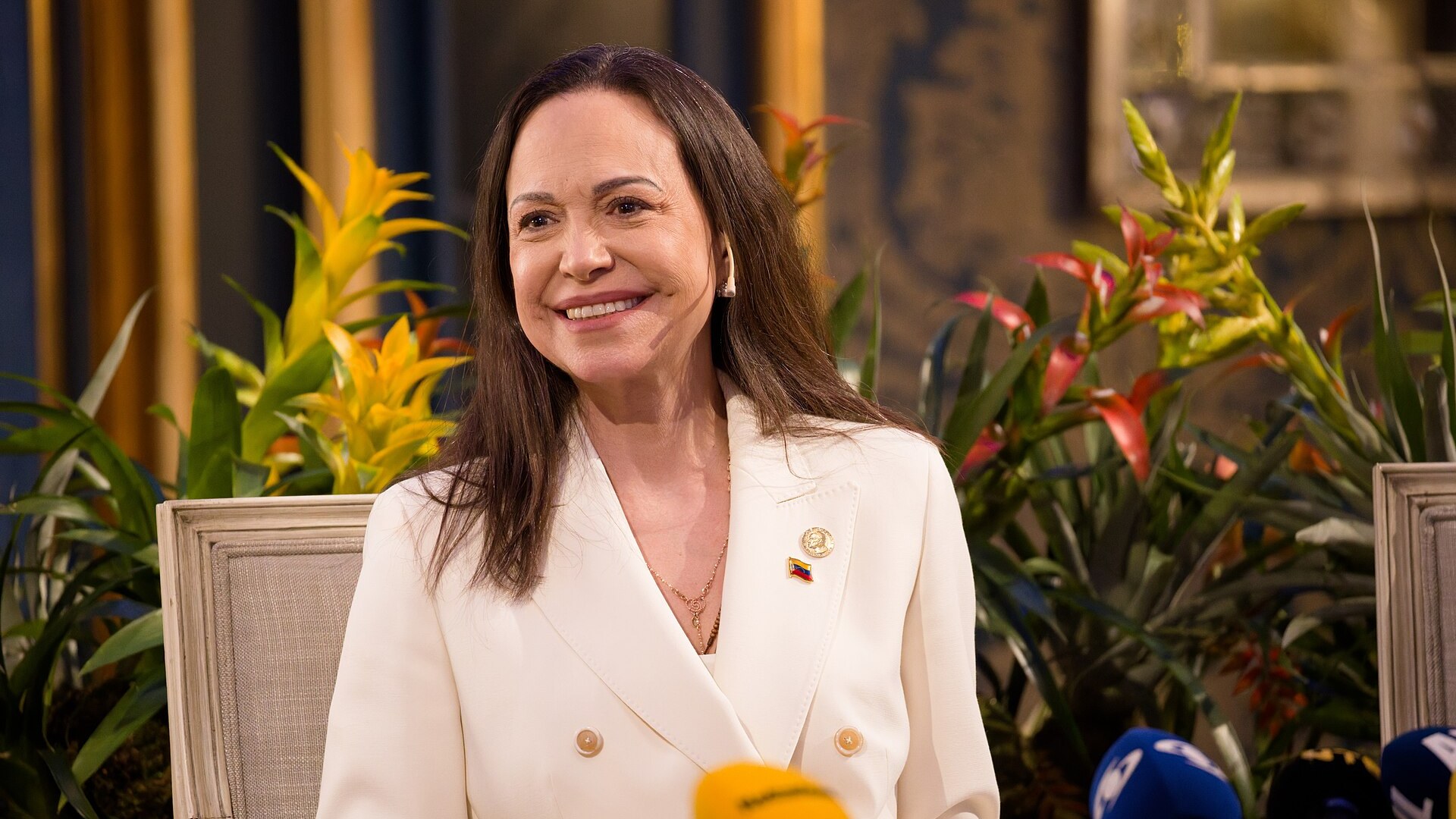
María Corina Machado is back in Venezuela. The opposition leader and Nobel Peace Prize laureate announced her return early on Sunday, October 25, in a post on X: “I’m here. With you all.” She crossed the border from Colombia, and by the time her caravan reached Caracas, thousands of supporters had turned out along the route. She gave no details of how she entered the country. It is her first time home since she slipped out last December to receive the Nobel Peace Prize in Oslo, ending more than ten months in exile.
The Return
Her press team shared images of her in the central-western state of Lara, at the church of Santa Rosa in Barquisimeto, where she had gone to give thanks before the Divina Pastora, one of Venezuela’s most revered images of the Virgin Mary. Videos on social media showed crowds pressing in around her, chanting her name. On reaching the capital she posted again: “Here.” Edmundo González Urrutia, who ran in her place in the 2024 presidential election and remains in exile in Spain, confirmed the return. “Today is a very important day for Venezuelans,” he wrote. “Our sovereign voice returns with her to lead and guide this process.” He said he would join her soon.
The Road Out
Machado was banned from running in the 2024 election. Her stand-in, González, won by a landslide according to the opposition’s tallies, a result several countries including the United States recognized; Nicolás Maduro claimed victory anyway and stayed. Machado was briefly detained after a protest in January 2025 and went into hiding inside Venezuela. Late last year she left the country in a clandestine escape and reappeared in December in Norway, where she was awarded the Nobel Peace Prize for her campaign against Maduro’s rule.
The Venezuela She Returns To
The country she left is not the country she re-entered. In January, U.S. forces captured Maduro, and his vice president, Delcy Rodríguez, was installed as interim president with Washington’s backing. Rodríguez has since signed oil and mineral deals with U.S. officials, and the Trump administration discouraged Machado from going home; the president said in September that it was too soon to consider democratic elections in Venezuela. Machado has called for elections to be held soon. Washington says the country must first stabilize.
Washington’s Reaction
Speaking to reporters on Sunday, President Trump seemed surprised by the return. “I don’t know anything about it, but I think she’s a very nice woman,” he said. “She gave me her Nobel Prize, so how can I say anything else?” He also said, “I hope she’s safe,” and suggested the United States would continue to back Rodríguez. On Fox News the same day he said the U.S. had “total control of Venezuela” and was “taking out millions of barrels of oil a week.” Secretary of State Marco Rubio took a different line on X, calling her safe return “the direct result of the U.S. supported reconciliation talks which has already seen hundreds of political prisoners freed and hundreds of political opposition figures return from exile,” and adding: “The United States expects the freedoms of all sectors of Venezuelan politics to continue to be respected.”
What She Does Next
Her top foreign affairs adviser, David Smolansky, told Reuters she plans to meet victims of the deadly earthquakes that struck Venezuela in June, the families of political prisoners, the international community and leaders of the democratic movement. “She will work proactively for a date for free and fair elections,” he said. Neither the White House nor Venezuela’s communications ministry responded to requests for comment on her return.
Machado’s Return, In Short
- María Corina Machado announced her return to Venezuela on Sunday, October 25, crossing from Colombia and drawing crowds in Lara state and Caracas.
- She had been abroad for more than ten months, after a clandestine escape that took her to Oslo to receive the Nobel Peace Prize.
- She returns to a country run by interim President Delcy Rodríguez, installed after U.S. forces captured Nicolás Maduro in January and backed by Washington.
- Trump said he knew nothing about the return; Secretary of State Rubio credited U.S.-supported reconciliation talks and said freedoms must be respected.
Sources: Reuters; NPR (reporting by John Otis); USA Today — reporting of October 25–26, 2026.
Comments
Loading comments…