

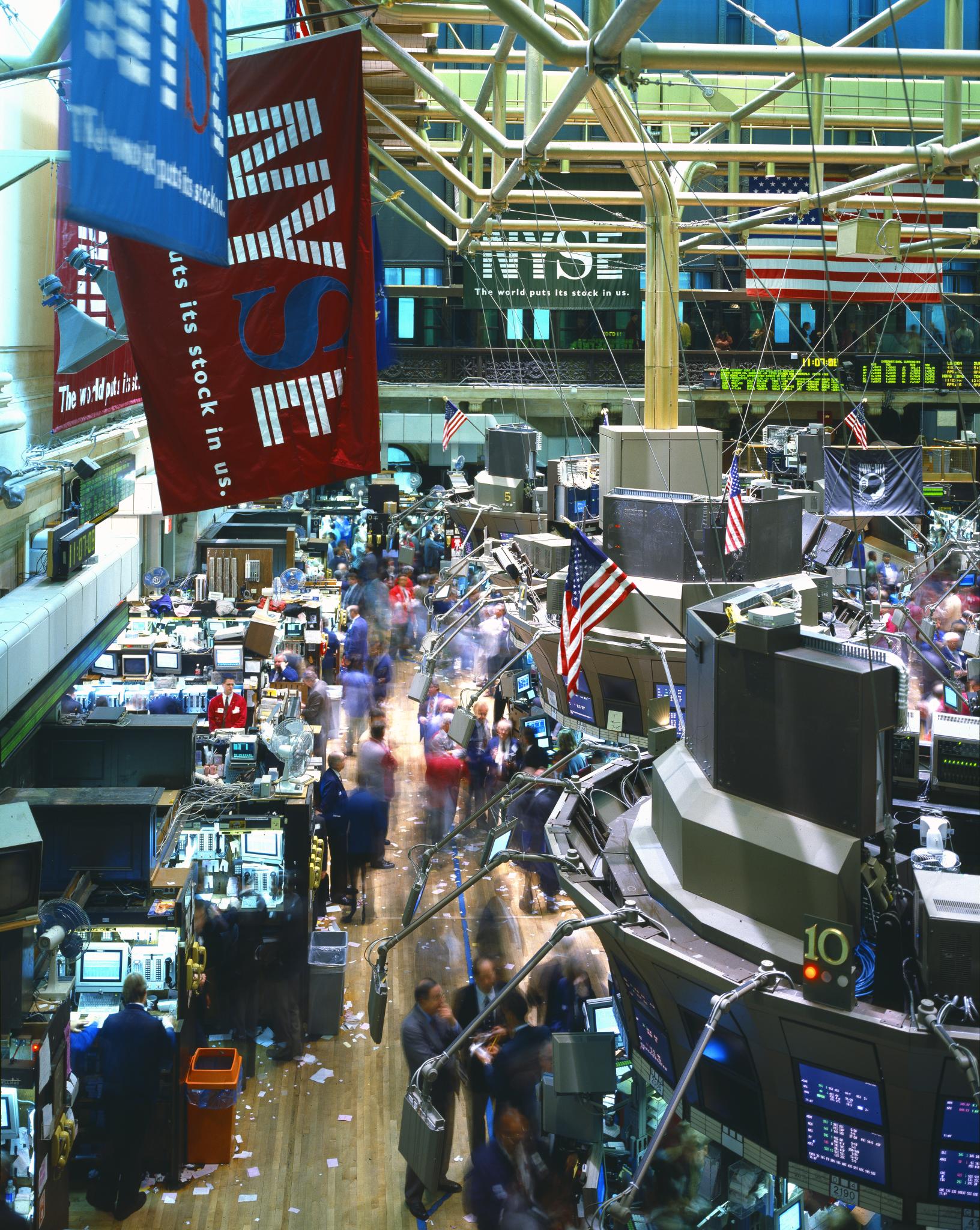
Wall Street closed in correction territory on Friday, as a bruising sell-off in artificial intelligence stocks pulled the S&P 500 down 3.7 per cent, dragged the index to its worst weekly loss in more than 18 months, and knocked the Nasdaq composite into the red for the year.
The S&P 500 fell 265.44 points to 6,910.39. The Dow Jones Industrial Average dropped 949.73 points, or 1.9 per cent, to 48,147.33, and the Nasdaq lost 1,261.47 points, or 5.3 per cent, to close at 22,617.73 — the second-largest one-day points drop in the tech-heavy index’s history. All three indexes finished the week deep in the red: the Dow fell 8 per cent, its worst week since March 2020, the S&P 500 fell 8.6 per cent, and the Nasdaq fell 10 per cent.
The S&P 500 is now in what professional investors call a correction, having fallen more than 10 per cent from its October 6 all-time high. The Dow also closed in correction, more than 10 per cent below its August 5 record close. The Nasdaq, which closed in correction earlier this month, is now down 18 per cent from its October 6 record and down 2.7 per cent for 2026, having been up as much as 18.7 per cent at its peak. The Nasdaq 100 closed almost 20 per cent below its record high last month, having touched bear-market territory during the session.
Friday was the S&P 500’s seventh consecutive day of losses, its longest losing streak since February 2020, when Wall Street was bracing for what became the Covid pandemic. The Dow posted its fifth straight day of losses of more than 1 per cent. The VIX, Wall Street’s ‘fear gauge’, closed at 35.89, its highest level in 19 months, after surging 86 per cent over the week.
Chips Bear The Brunt
Chip stocks, the biggest beneficiaries of the build-out of AI data centres, bore the brunt of the selling. Advanced Micro Devices sank 13.3 per cent, Micron Technology slid 13.9 per cent and Broadcom fell 12.1 per cent. The PHLX Semiconductor Index sank 10.7 per cent. Other companies connected to the AI build-out fell with them: the optical products company Corning slid 10.9 per cent and the energy provider Bloom Energy gave up 15.3 per cent.
Nvidia, considered by many to be the poster child of the AI boom, fell for the ninth day in the last ten, closing 13.8 per cent lower. The stock has dropped more than 25 per cent since the downfall of its former chief executive and co-founder, Jensen Huang, earlier this month. On Friday, Reuters reported for the first time that the US Securities and Exchange Commission’s probe of Nvidia is focused on potential accounting issues, citing two people briefed on the matter; Reuters could not determine when the inquiry opened or exactly what it is examining. Nvidia’s earnings report on Tuesday had done little to stem the selling.
Anthropic’s Second Day
The biggest stock offering in history could not hold the market up. Anthropic, the maker of the Claude AI tool, tumbled 9.1 per cent on Friday to $88.30 in its first full day of trading — still above its $83 IPO price, but down about 23 per cent from the brief peak of $115.10 it set on Thursday, a bigger post-debut drop than Facebook’s in 2012. The company said on Friday that its offering had grown to $93.5 billion after its underwriters exercised their full overallotment option. Reuters reported that Morgan Stanley, the bank tasked with stabilising the share price after the debut, had closed the position meant to do that, removing one potential source of buying support. Retail investors who bought at a near-record pace after the debut were left facing losses, LSEG data showed.
The selling spread around the globe. Japan’s Nikkei and South Korea’s Kospi each fell more than 5 per cent overnight, and European indexes fell sharply as well.
What Drove The Slide
AI stocks carry hefty market values and have an outsized impact on the market’s direction. They were responsible for Wall Street’s big gains this year, and they are now behind the slide. The trade has been losing steam partly over worries that AI stocks’ big values and heavy spending are unjustified. Fears of a bubble in the sector have also been sharpened by the recent midterm elections, in which candidates advocating a slowdown in data centre construction won at both the federal and state level.
‘The whole notion that AI can continue to spend unlimited amounts of money and support the stock market, I think the notion of that is ending as we speak — that’s what’s being priced right now,’ said Michael Antonelli, a market strategist at Baird. ‘But I don’t think that means that the overall bull market that started in October 2022 is over.’
Outside technology, most stocks were gaining ground: Cheerios maker General Mills rose 3.7 per cent and homebuilder Lennar gained 1 per cent. Gold fell about 3 per cent, and Bitcoin broke below $60,000. In the bond market, the yield on the 10-year Treasury fell to 4.93 per cent from 5.04 per cent late Thursday. Brent crude rose 0.6 per cent to settle at $92.57 a barrel, amid continued tension near the Strait of Hormuz.
Consumer sentiment, meanwhile, moved the other way. The University of Michigan’s latest index rose sharply from last month, slightly ahead of economists’ expectations, with consumers citing relief from easing gas prices and improved expectations for business conditions after the midterms. Sentiment remains below where it was in February, before the start of the US war with Iran.
The last time the S&P 500 entered a correction was March 2025, as the Trump administration’s trade war rattled the market. Markets now turn to the Federal Reserve’s December 8–9 meeting, where a quarter-point rate increase is widely expected, and to whether the AI trade can find a floor after its worst week in years.
Sources: The Associated Press, November 20, 2026; Reuters, November 20, 2026; The Wall Street Journal, November 20, 2026; CNN, November 20, 2026.


Comments