
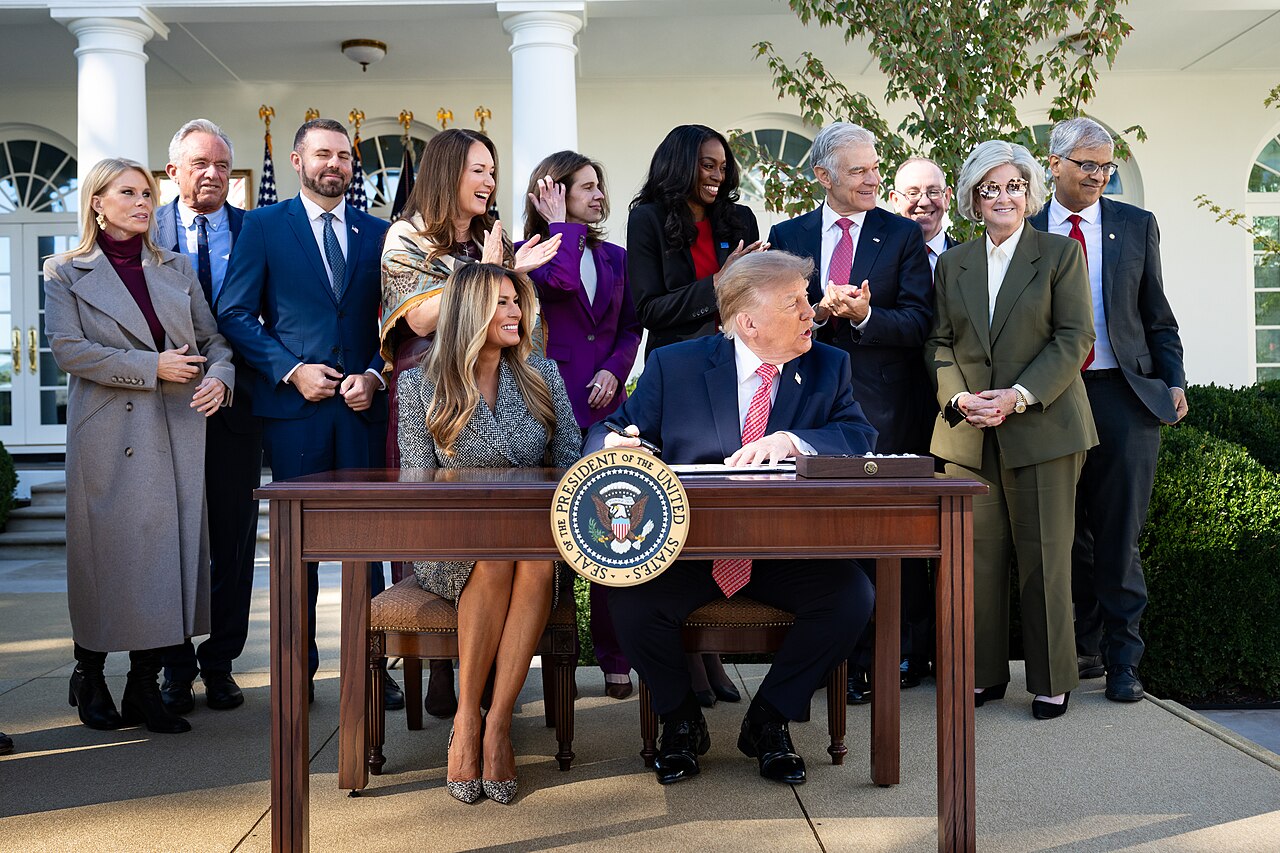
The White House announced Friday that First Lady Melania Trump has secured a localized ceasefire between Russia and Ukraine in Oleshky, a Russian-occupied city in Ukraine’s Kherson region, to allow humanitarian aid to enter and civilians to evacuate. “Both nations agreed to temporarily stop all military action in Oleshky to allow for humanitarian aid to enter and to prepare a civilian evacuation through a designated safe passageway,” the White House statement said. The ceasefire is set to begin Thursday, October 29; its duration was not specified.
The announcement came in a written statement from the first lady’s office, which said she initiated the discussions and worked directly with Russian and Ukrainian leadership, in a formal role styled “Exclusive Intermediary.” “The situation in Oleshky is dire,” she said. “Oleshky is a front-line war city on the brink of disaster. Oleshky’s remaining population is comprised primarily of elderly residents who urgently need medical attention, medicine, food, and clean water.” She added: “It was abundantly clear that without my intervention, the possibility to bring humanitarian aid into the city and to evacuate the elderly would be impossible.”
The Agreement, In Short
- The deal: all military action in Oleshky stops from October 29 (White House) to let humanitarian aid in and prepare a civilian evacuation through a designated safe passageway. Duration not specified.
- The broker: First Lady Melania Trump, in a formal role styled “Exclusive Intermediary”; she and a representative worked directly with Russian and Ukrainian leadership (White House).
- The terms: civilian teams from both countries visit homes and assess needs; de-mining of roads; evacuees transported to their choice of Russia or Ukraine; an unnamed “impartial American media organisation” documents it.
- The confirmations: the Kremlin, on the record (Peskov: her contribution was “significant”; dates still being fixed by the militaries). Kyiv: confirmed through an unnamed senior official; no public statement yet.
- The town: occupied since 2022, across the Dnipro from Kherson. Pre-war population ~24,000; the White House says 1,700–2,000 remain, Ukraine estimates ~6,000 in the city and nearby areas.
Under the terms, non-military civilian teams from both countries will visit residents in their homes to assess needs and coordinate evacuations; preparatory work includes de-mining the roads; and residents who wish to leave will receive transport to their preferred destination. “I anticipate some will want to go to Russia, and some to Ukraine,” the first lady said. An “impartial American media organisation” will accompany the teams to document the operation; the White House did not name it. Newsmax reported that its cameras would be granted exclusive access — that identification is the outlet’s own claim.
Russia confirmed the agreement on the record. Kremlin spokesman Dmitry Peskov said: “We welcome the efforts of the First Lady of the United States, Mrs Melania Trump, who has made a significant contribution to the coordination of the humanitarian operation.” He said the military is working to coordinate the ceasefire, that the evacuation itself is expected to take at least several days, and that the two militaries are still fixing the dates for implementing it — a slight tension with the White House’s firm October 29 start. Peskov also said the topic was discussed in a recent phone call between Presidents Putin and Trump. Ukraine has confirmed the arrangement only through an unnamed senior official; Kyiv had made no public statement as of Friday.
Oleshky sits on the left bank of the Dnipro River, directly across from Ukrainian-held Kherson city, and has been occupied since the first weeks of the full-scale invasion in 2022. It held roughly 24,000 people before the war. The White House says 1,700 to 2,000 remain, primarily elderly, along with about 50 children; Ukraine estimates roughly 6,000 remain in the city and nearby areas, including 200 children. About 90 percent of the city was flooded after the destruction of the Kakhovka Dam in June 2023, per the White House. The town has had almost no access to food or humanitarian supplies since late May, its roads are mined, and vehicles leaving are targeted by first-person-view drones; Moscow and Kyiv accuse each other of blocking supplies. The crisis had drawn international attention in recent weeks, including from Pope Leo XIV; President Putin told the pope last Friday that he supported a Vatican initiative to deliver supplies to the town.
Children in conflict are the first lady’s signature issue, and the Oleshky agreement follows a documented channel with Moscow over Ukrainian children taken to Russia. In August 2025, President Trump hand-delivered her letter to Putin at the Alaska summit, appealing for the children. On October 10, 2025, she announced an “open channel of communication” with Putin and said eight children had been rejoined with their families in the previous 24 hours; her office said she helped with seven additional cases in December, and in February 2026 she announced a third reunification. Earlier this year she chaired a U.N. Security Council meeting on children in conflict.
What happens next rests on the two militaries: implementation dates are still being coordinated, and the evacuation is expected to take at least several days once it begins. Still to come: a public statement from Kyiv, and the naming of the media organization that will document the operation.
Sources: The White House statement; Reuters; The Associated Press; CNN; BBC.
Comments