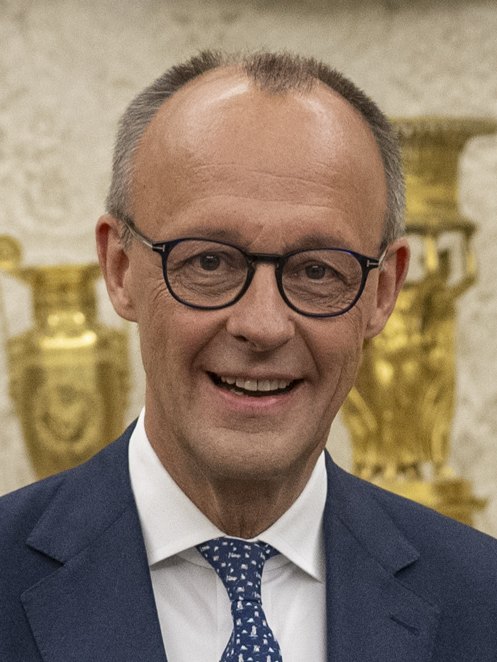
Chancellor Friedrich Merz called for unity in his struggling coalition on Saturday, telling a conference of the Christian Social Union — the Bavarian sister party of his Christian Democrats — that Germany faces “extraordinarily serious challenges” from political extremists at home and from Russia’s daily efforts to destabilize the country.
“How do we safeguard our freedom and our security in Europe, in the face of growing threats from extremists within and foreign powers from without?” Merz asked the delegates. Russia, he said, is seeking “to destabilise Germany on a daily basis.”
Relations between Berlin and Moscow are at their lowest point since the Cold War, following Russia’s full-scale invasion of Ukraine in 2022. Germany accuses Russia of running a hybrid campaign against it and other European countries; Russia rejects the accusations.
The speech came after weeks of visible tension inside the governing coalition, following heavy regional election defeats in eastern Germany, where the far-right Alternative for Germany came first in two states and the far-left Left Party topped the poll in Berlin. Merz’s approval ratings have fallen to record lows, and the strain has shown both between the coalition partners and between the CDU and the CSU themselves.
The venue was part of the message. Merz did not deliver the unity call in Berlin, or to his own party, but at the conference of the CSU — the Bavarian sister party of his CDU, led by Markus Söder — and he used it to praise the CSU ministers serving in his government and to pay tribute to Söder personally. A chancellor whose two-party Union is one of the fault lines in his government went to the sister party’s hall to be seen standing with it.
His appeal, in substance, was that a government pressed by the far right in the east, the far left in the capital and a hostile Russia abroad cannot spend its strength on itself. The threats he named — extremists within, foreign powers without, and a Russia he accuses of working to destabilize Germany every day — were his argument for why the coalition’s internal fights have to stop.
The warmest moment of the speech was not about Merz at all. Delegates broke into loud applause when he mentioned Ilse Aigner, the CSU politician the party has proposed as the successor to President Frank-Walter Steinmeier, who is due to step down next year. The CDU has so far stopped short of endorsing Aigner, and party sources say it has not abandoned hopes of putting forward its own candidate for the largely ceremonial post.
Merz entered the conference hall to a Bavarian brass band playing “The Eye of the Tiger.” He praised the CSU ministers serving in his government and paid tribute to CSU leader Markus Söder.
The presidency question will not wait for the coalition’s other problems. Steinmeier is due to step down next year, the post is largely ceremonial, and the two Union parties have not settled on a name: the CSU has put Aigner forward and its hall made its preference plain on Saturday, while Merz’s CDU has not endorsed her and, party sources say, has not given up on a candidate of its own.
Merz In Munich, In Short
- The speech: Merz addressed the CSU party conference on Saturday, calling for coalition unity against “extraordinarily serious challenges.”
- The warning: Russia seeks “to destabilise Germany on a daily basis,” Merz said; Berlin–Moscow relations are at their lowest since the Cold War.
- The strain: regional defeats in the east (the AfD first in two states, the Left first in Berlin) and record-low approval ratings for the chancellor.
- The succession: CSU delegates applauded Ilse Aigner, their proposed successor to President Steinmeier; the CDU has not endorsed her.
Sources: Reuters.
Comments
Loading comments…