

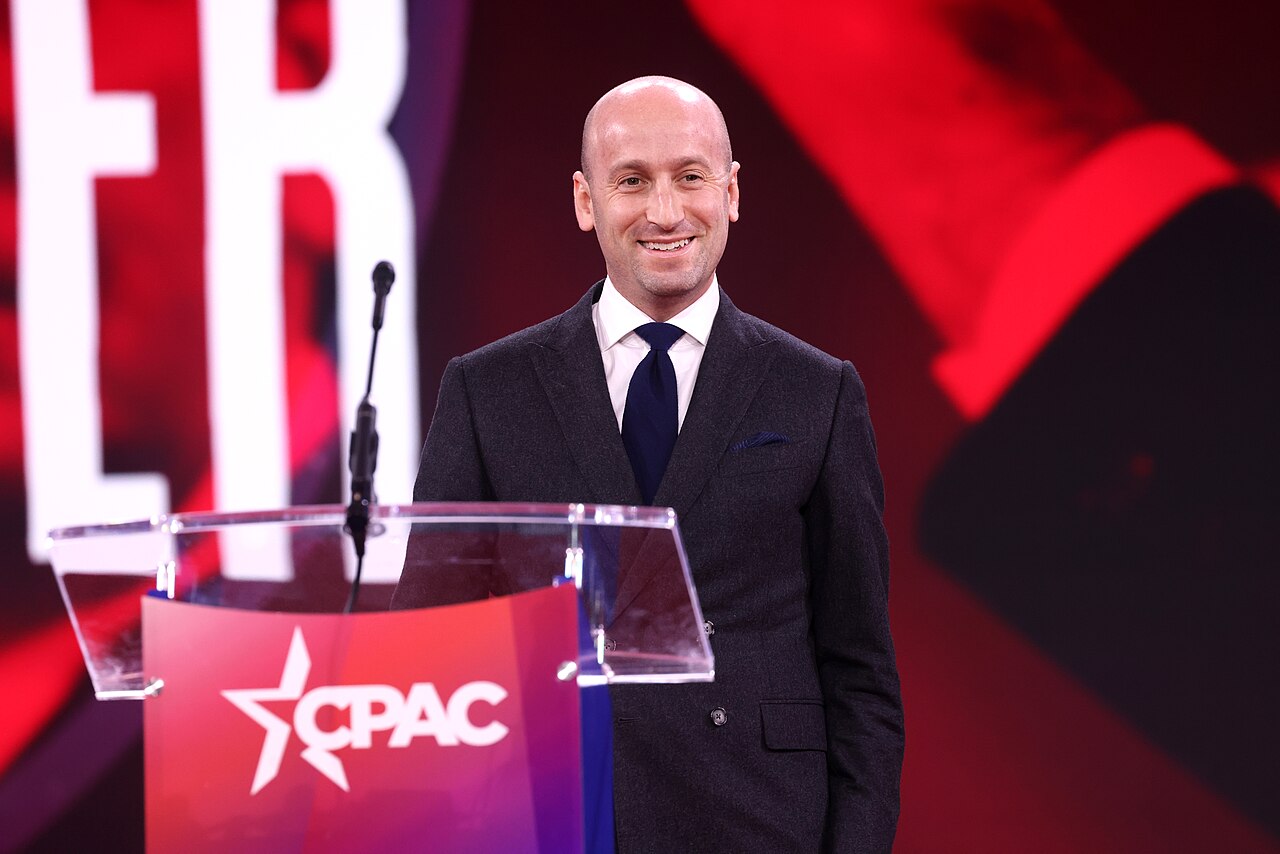
President Donald Trump announced on Friday that Stephen Miller will become White House chief of staff on Monday, replacing Susie Wiles three days after Republicans lost both chambers of Congress in the midterm elections. It is the most significant shake-up at the top of his administration since he returned to office, and the first senior departure of the post-election reckoning.
Trump made the announcement on Truth Social. “I am pleased to announce that Mr. Stephen Miller, the current Deputy Chief of Staff of the Trump Administration, and one of my most trusted advisors, will become the Chief of Staff starting Monday, November 9, 2026,” he wrote. “Susie Wiles, who has done an outstanding job, will be moving over to the Trump Political Operation. I want to thank her for her service as Chief of Staff — She has done a great job!”
Wiles said in a post on X that Friday would be her last day in the job. She has served as chief of staff from the first day of this presidency, and she was the first woman ever to hold the post. A veteran Florida operative who worked on Trump’s 2020 campaign in the state, she was one of the key figures in his return to the White House in 2024. Her tenure spanned the opening phase of the second term and the run-up to a midterm election her party lost heavily. NPR has reported that Wiles was diagnosed with breast cancer earlier this year, and that it was announced this fall that she was cancer free.
The Man Taking Over
Miller, 41, has served since January 2025 as deputy chief of staff for policy and as the president’s homeland security adviser. CNN described him on Friday as the polarising mastermind of Trump’s hardline immigration agenda, and noted that over the past year he has widened his portfolio to include wide swaths of domestic policy, advocating an expansive view of executive power. He is a holdover from the first Trump term, where he served as a senior adviser for policy and as White House director of speechwriting. Where Wiles was the operation’s manager — a campaign professional brought in to run a disciplined West Wing — Miller is its ideologue, and his promotion puts the administration’s most hard-edged policy instincts at the centre of its daily machinery.
Three Days After
The timing is the story’s sharpest edge. On Tuesday, Democrats seized the House and the Senate in what amounted to a decisive rejection of unified Republican control. On Thursday, Vice President JD Vance said the quiet part out loud — “the reason we lost is the war” — blaming the eight-month Iran war for the defeat, a judgment Trump rejected twice in 24 hours. By Friday the blame had acquired a personnel decision. Former White House adviser Steve Bannon said on Friday that Wiles should be “removed immediately” over the party’s loss, The Hill reported; former chief of staff Mick Mulvaney had already said publicly that he expected Wiles to leave the position after the midterms.
Nor was Wiles the only departure of the week. Harmeet Dhillon, the head of the Justice Department’s civil rights division, resigned on November 5, and on Friday the New York Post reported further senior Justice Department exits, including Jason Reding Quiñones, the top federal prosecutor in South Florida, and John Eisenberg, the assistant attorney general in charge of the department’s national security division. Taken together, the week reads as an administration re-sorting itself after a verdict it did not expect — and choosing, as its new centre of gravity, the aide most associated with its hardest lines.
What changes on Monday is a live question. Miller takes over a White House that must decide, in the president’s own words this week, whether to resume military action in Iran now that the elections are over — the Associated Press reported on Friday that Trump is weighing his next move in the war that contributed to the defeat — while a Democratic Congress prepares to take its seats in January and the two uncalled Senate races in Alaska and Mississippi finish counting. The chief of staff’s job is to decide what reaches the president’s desk, in what order, with whose fingerprints on it. From Monday, those fingerprints are Stephen Miller’s.
The Facts
- President Trump announced on Friday, November 6, that Stephen Miller becomes White House chief of staff on Monday, November 9, replacing Susie Wiles.
- Wiles, the first woman to hold the job, has served since the first day of this presidency; she moves to the Trump Political Operation, and said Friday was her last day as chief of staff.
- Miller, 41, has been deputy chief of staff for policy and homeland security adviser since January 2025, and was a senior adviser and speechwriting director in Trump’s first term.
- The announcement came three days after Democrats seized the House and Senate in the midterm elections.
- Other post-election departures: the Justice Department’s civil rights chief Harmeet Dhillon resigned November 5; the Post reported further senior DOJ exits on Friday.
Sources: NPR; CNN; USA Today; The Hill via WCIA; People; the New York Post (Justice Department resignations).
Comments