WELLINGTON — New Zealanders are voting on Saturday in a general election that the final polls describe, in unusual unison, as too close to call — even as they disagree about who is actually ahead. More than 2,300 voting places opened at 9 a.m. and close at 7 p.m., when the Electoral Commission begins releasing preliminary results. By the end of the night the country will know the shape of its next Parliament. Who governs it may take longer.
The last poll of the campaign, published Friday by The Post and Freshwater Strategy, put Labour on 30.7 percent and National on 26.4 percent, with Chris Hipkins leading Christopher Luxon 49 to 38 as preferred prime minister. The final 1News Verian poll had it the other way round: National 29.5 percent, Labour 28.8. An RNZ-Reid Research survey in late October put Labour clearly ahead; Roy Morgan’s modelling had the governing bloc in front. Four pollsters, four slightly different elections — and one common finding: neither of the two old parties is anywhere near governing alone.
Three years on trial
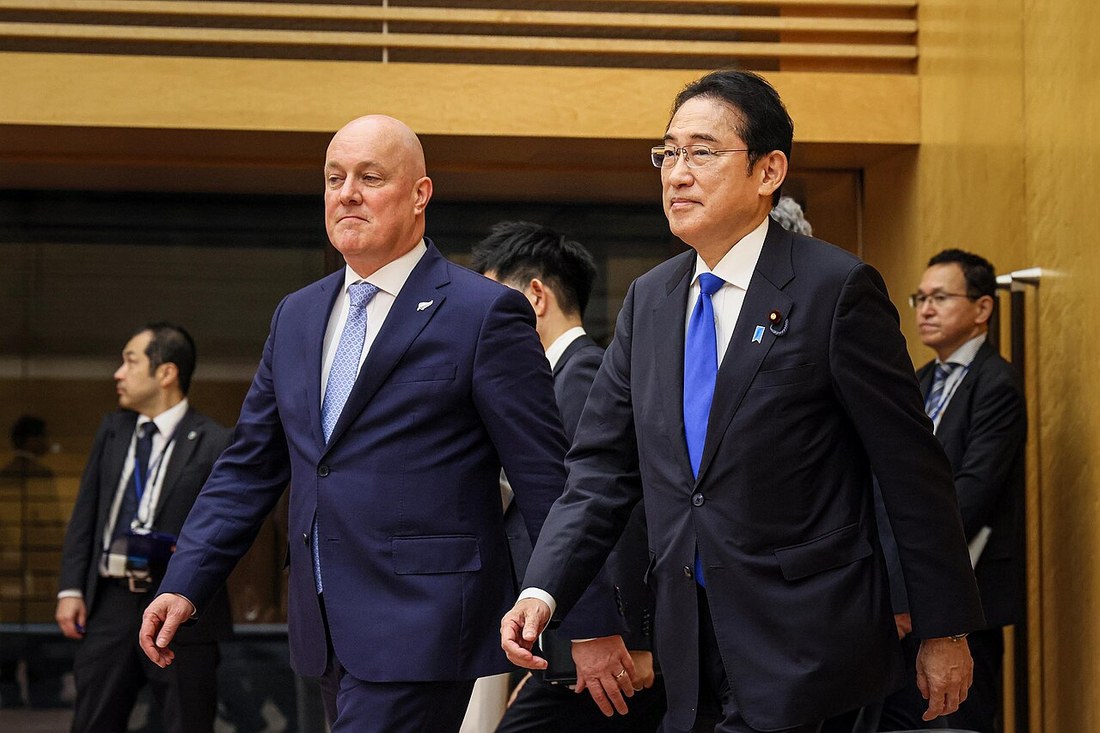
Luxon, who became prime minister in 2023 at the head of a three-party coalition of National, ACT and New Zealand First, is asking for a second term on the strength of the first effective income tax cuts in 14 years and a promise of no new taxes. His year has not been smooth: he survived two confidence challenges inside his own camp, most recently in August. Hipkins, who held the job for nine months in 2023 after Jacinda Ardern’s resignation and lost it at the last election, has campaigned on the cost of living and staked his leadership on a promise of no new taxes beyond a capital gains tax. Luxon’s closing argument was arithmetic: that Hipkins could only govern by assembling Labour, the Greens, Te Pāti Māori and others — “nine new taxes,” in his phrase.
The party that may decide it
The hinge of the night is a party that has never held power: the Opportunity Party, a centrist newcomer polling between 5.1 and 8 percent. Under New Zealand’s proportional system, a party that clears 5 percent of the party vote takes seats roughly in proportion — on current numbers, between seven and ten seats in a 120-seat Parliament where 61 are needed to govern. Modelling on the final polls gives the National-led bloc between 57 and 59 seats and the Labour-led bloc about 55 — both short, both looking at the same small party. Luxon has ruled out working with at least one of the parties he may need; the negotiations that follow election night are a New Zealand tradition, and this year they look unavoidable.
More than 1.67 million people — over a third of those eligible — had already voted in advance voting by November 5, a figure that will blunt the drama of the count without changing its closeness. Preliminary results will flow from 7 p.m.; the official result, including special votes cast overseas and outside home electorates, is not declared until November 27, and in a Parliament this tight those votes could yet move a seat that moves a government.
The Facts
- Voting places are open 9 a.m. to 7 p.m. Saturday; preliminary results are released progressively from 7 p.m.
- Final Post/Freshwater poll: Labour 30.7%, National 26.4%; final 1News Verian poll: National 29.5%, Labour 28.8% — the polls disagree on the leader
- Neither bloc is projected to reach the 61 seats needed in the 120-seat Parliament without support arrangements
- The centrist Opportunity Party polls between 5.1% and 8%, at or above the 5% threshold for seats — the likely kingmaker
- More than 1.67 million people — over a third of eligible voters — had voted in advance by November 5; official results are declared November 27
Sources: Reuters election-day briefing; Electoral Commission of New Zealand; final polls by 1News Verian, The Post/Freshwater Strategy, RNZ-Reid Research and Roy Morgan, as reported by New Zealand media.

Comments