
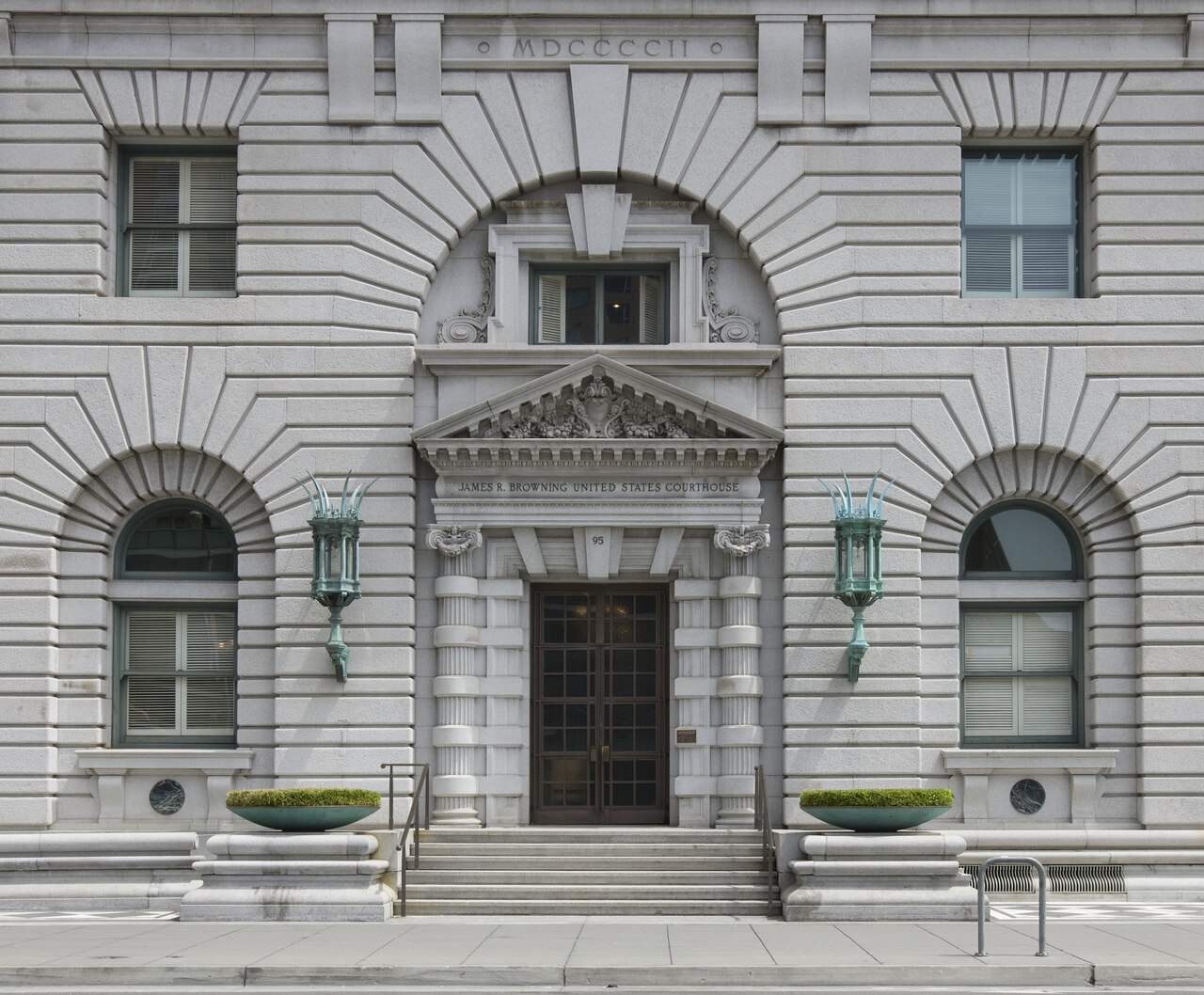
A panel of the U.S. Court of Appeals for the Ninth Circuit heard argument for nearly two hours on Sunday in the Justice Department’s bid to make California set aside mail ballots tied to a list of about 20,000 voters the department says are likely noncitizens. The hearing, held remotely, was a rare Sunday session for the court, and the judges’ questions centered on two points: whether the appeals court has the power to intervene before the trial judge has ruled, and how the government built the list on which its case depends.
The panel was made up of Judge Mark Bennett and Judge Patrick Bumatay, both appointees of President Donald Trump, and Judge Gabriel Sanchez, an appointee of President Joe Biden. Matthew Donnelly argued for the Justice Department. Samuel Siegel, a California deputy attorney general, argued for the state and Secretary of State Shirley Weber, and Seth Waxman argued for Los Angeles County Registrar Dean Logan.
“I Don’t See How We Have Jurisdiction”
Judge Bennett pressed Donnelly on jurisdiction almost immediately. “I don’t see how we have jurisdiction,” Bennett said, noting that U.S. District Judge David O. Carter has not yet ruled on the department’s request and has a hearing scheduled in the case for Tuesday, October 27. Bennett also questioned the timing of the lawsuit. The department sued California and Los Angeles County on October 15, about a week after mail ballots went out to every registered voter in the state, and Bennett observed that the government chose when to file and could have acted weeks earlier if it believed there was a problem.
Bennett also questioned whether the injunction the department wants could be reconciled with the Constitution’s Elections Clause, which gives state legislatures authority over the times, places and manner of congressional elections, subject to regulation by Congress. “It seems to me that you want us to issue an injunction that is entirely inconsistent with the law that the California legislature has adopted pursuant to the Elections Clause,” he told Donnelly. “How can we do that?” Bennett further questioned whether a 1996 criminal statute relied on by the government allows a federal court to change how a state counts ballots. Donnelly argued that speed was essential, saying hundreds of thousands of California ballots could be tabulated each day while the dispute remains unresolved.
The List of 20,000
Judge Sanchez pressed the government on the list itself — the roughly 20,000 names the department says belong to likely noncitizens on California’s voter rolls — and on the part an outside vendor played in putting it together. “If you take a step back, you are not able to explain who these third parties are that form some part in the chain of analysis over this list,” Sanchez said to Donnelly. “Your claims very much depend on the reliability of that list.” Donnelly said the administration had not fully processed the list of 20,000 voters before it filed the lawsuit, and answered Bennett’s question about the earlier filing date this way: “We could have filed a complaint, but we wanted to file the complaint that we filed.”
Some early headlines about the case rounded the figure up to “tens of thousands” of ballots. The number in the department’s request, and the one used throughout Sunday’s argument, is about 20,000. The department wants California election officials to set aside ballots associated with the people on the list while their eligibility is reviewed, rather than allowing those ballots to be processed alongside other votes.
The Other Side of the Bench
Judge Bumatay, the second Trump appointee on the panel, directed his heaviest questioning at California, pressing Siegel on how the state verifies citizenship and on its handling of challenges involving suspected ineligible voters. Siegel said California has attestation rules requiring voters to certify that they are U.S. citizens and meet the other eligibility standards before casting their ballots. He said the urgency in the case was “an emergency of their own making,” and warned that the department’s request would confuse voters and risk shutting eligible people out of the process. In a brief filed Saturday, California also told the panel that if the court blocks it from counting ballots, it will seek en banc review — that is, a rehearing before the full appeals court.
How the Case Reached the Appeals Court
The department filed its lawsuit on October 15 and asked Judge Carter to rule by noon on October 22. When Carter did not rule by that deadline and instead set a hearing for Tuesday, October 27, the department appealed, arguing that the missed deadline amounted to a denial of its request. The Ninth Circuit agreed on Saturday to hear the case on an emergency basis and ordered the department to respond by noon Sunday to an emergency motion by Los Angeles County to dismiss the lawsuit.
The panel took the case under submission at the close of argument and issued no immediate order. Bennett said the court would “try to decide this case as quickly as possible, commensurate with the issues and interests involved.” As of Sunday evening, nothing had been decided. The hearing before Judge Carter remains scheduled for Tuesday, October 27, and Election Day is Tuesday, November 3.
Sources: Fox News; Democracy Docket; Washington Sun; QNC News; AshTalks court reporting.
Comments
Loading comments…