
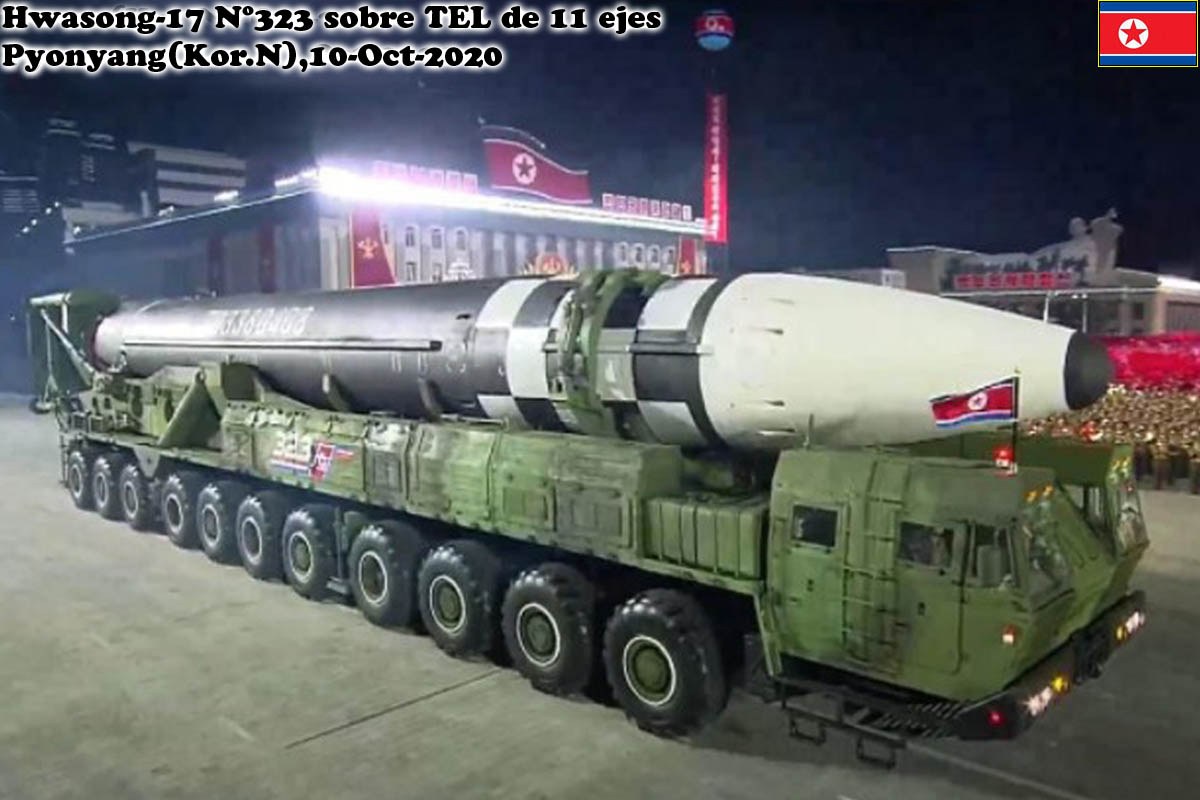
North Korea test-fired a newly designed air-defence missile system on Wednesday and the same day ran a strike drill with a long-range strategic cruise missile against a mock airport target, the state-run Korean Central News Agency reported on Thursday. The launches were, by Reuters’ count, the fourth North Korean weapons launch in a month, and they came a day after South Korea’s military said it had detected the firings from the Sondok area of South Hamgyong Province toward the sea, with the projectiles flying less than 300 kilometres. Sondok, on the country’s east coast, is an established test area with an airfield and missile facilities, used repeatedly for short-range launches in recent years. The pairing of Wednesday’s tests was pointed: one system designed to shoot aircraft and missiles down, and one designed to strike the airfields they fly from — the two halves of the air-war problem North Korea’s military planners have spent a decade working on, displayed on the same day.
The air-defence test, conducted by the North’s Missile Administration, was described by KCNA in the agency’s technical language: the test-fire “proved the technical specifications and reliability of the new material and intelligent multiple guided mode of the projectile, target identification and tracking capability of the air-defense missile system and its detection information processing device.” Reuters’ rendering of the same account said the test confirmed “the technical specifications and reliability of the missile’s new materials and multiple guidance modes” and the system’s ability to identify and track targets. KCNA gave the system no name. A South Korean analyst, Shin Jong-woo of the Korea Defense & Security Forum, told Reuters the air-defence missile was first unveiled in November 2025 and that its guidance section resembles Russia’s S-400 air-defence system — the comparison South Korean analysts have drawn repeatedly as North Korea modernises the air defences that would face American and South Korean aircraft in a war. Separately, KCNA said a firepower sub-unit of the long-range strategic cruise missile unit in the east struck a “virtual airport” target in its drill; released images appeared to show the cruise missile carrying a cluster warhead, Shin said.
Two absences in the reporting are worth noting. KCNA did not report that Kim Jong Un attended either test — a contrast with the drone exhibition on October 29 and the 600mm rocket-launcher demonstration on October 30, both of which the agency said he attended; KCNA normally publicises his presence at major tests, though its silence is not proof he was absent. And no South Korean, Japanese or American government statement reacting to these specific tests had been issued in Thursday’s reporting — only South Korea’s Joint Chiefs of Staff detection report, which left open whether the projectiles included a close-range ballistic missile alongside the announced systems. The week’s other North Korea file ran in parallel: Kim Yo-jong, the leader’s sister, issued statements rejecting an American investigation that blamed North Korea for stealing more than $6 billion in cryptocurrency from the exchange Binance — a separate dispute, but part of the same picture of a North Korea testing weapons on one channel and arguing about money on another.
The Facts
- The tests (Wednesday, reported Thursday by KCNA): a newly designed air-defence missile system and a long-range cruise-missile strike drill against a mock airport.
- South Korea’s military detected the firings from Sondok toward the sea; range under 300 km.
- KCNA reported no attendance by Kim Jong Un — a contrast with the October 29-30 tests it said he attended.
- No allied government reaction statement to these tests had appeared in Thursday’s reporting.
- An analyst told Reuters the air-defence missile’s guidance section resembles Russia’s S-400.
Sources: Reuters, November 5, 2026, reporting KCNA and South Korea’s Joint Chiefs of Staff; Yonhap via Qazinform.



Comments