
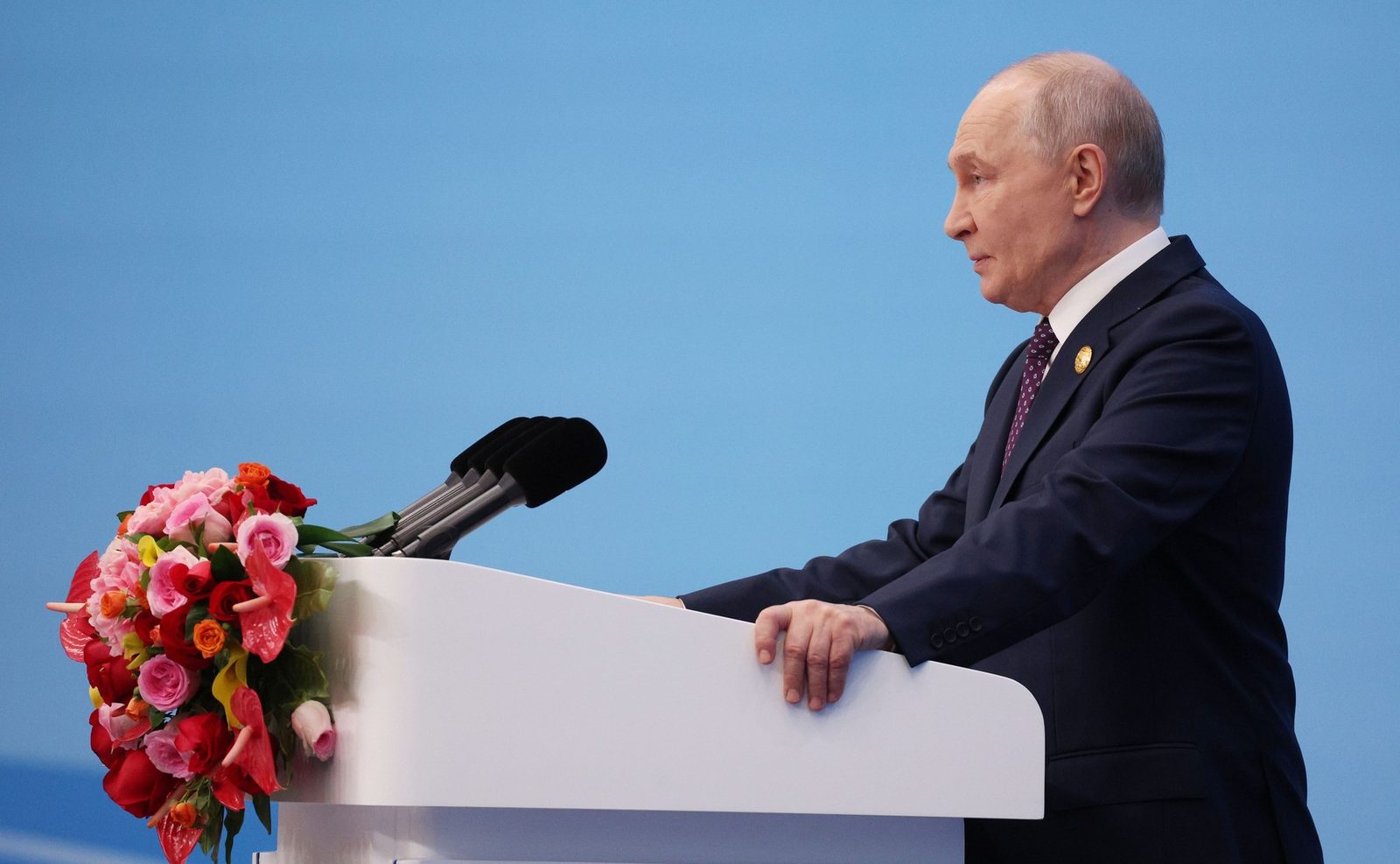
President Vladimir Putin said on Thursday that Russia would no longer consider a moratorium on strikes in the Black Sea or on energy infrastructure, after Ukraine struck the bridge linking Russia and annexed Crimea for the third time this week. “We will respond to these strikes,” he said. “And I want everyone to know this: I believe our response will be far more painful than what the Kyiv regime did to the bridge.”
Putin was speaking at a press conference in Shenzhen, hours after his three-way meeting with President Donald Trump and President Xi Jinping. Reuters described him as visibly angry. Moscow has cast the Shenzhen summit as a geopolitical win that exposed Europe’s failure to isolate Russia over its war in Ukraine, and the bridge strikes formed an awkward backdrop to it.
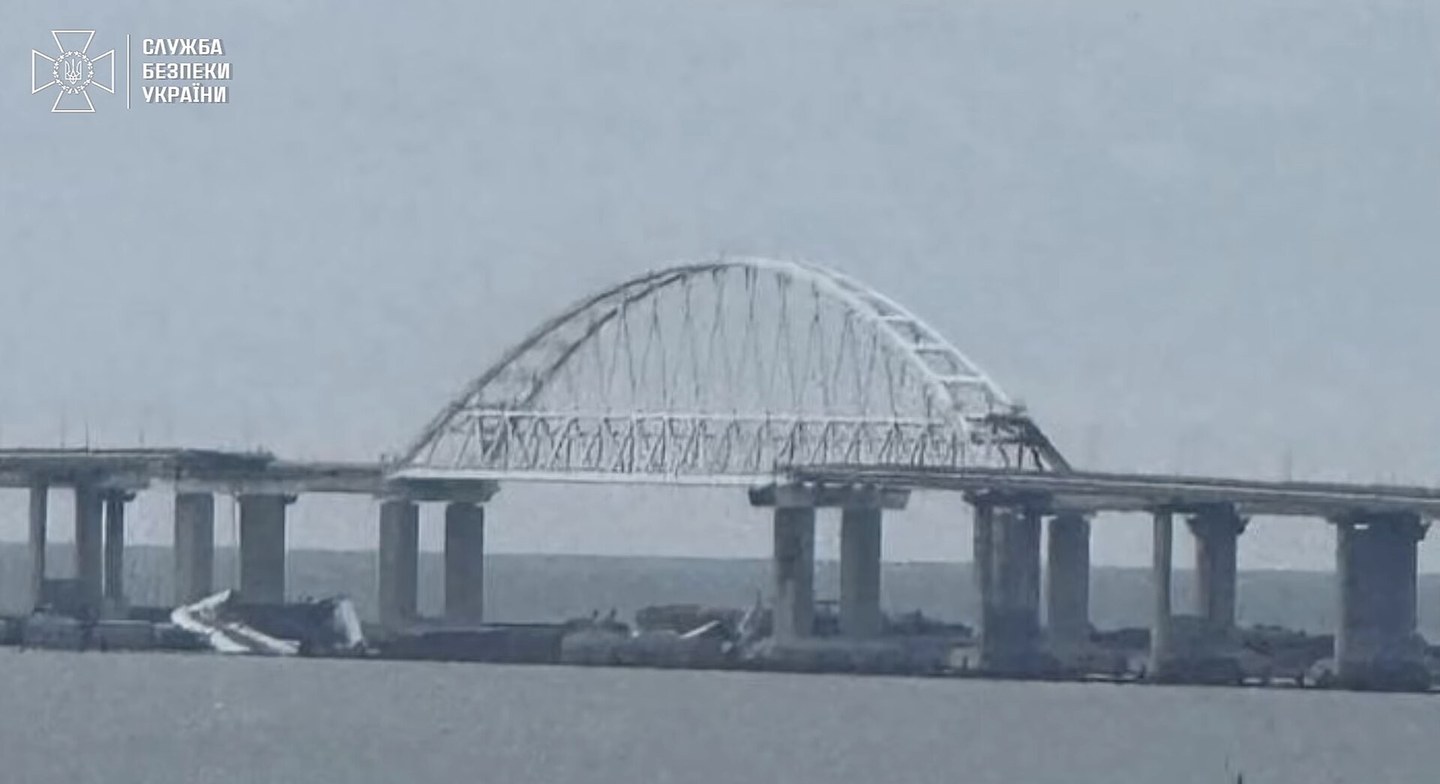
The third strike of the week had come overnight, while Putin was in Shenzhen for the summit. Ukraine’s General Staff announced early on Thursday that its forces had hit the bridge’s railway section. The road section had been brought down on Tuesday. By the time Putin faced reporters, the crossing he opened in 2018 had been attacked three times in a week.
The Russian leader said he had asked his Security Council to consider a possible agreement to halt attacks at sea and on energy facilities. Russia had received calls from several sides to halt such attacks as part of a broader peace agreement, he said. “But after the strikes on the Crimean Bridge, there will be no agreements,” he said. The moratorium idea is now dropped.
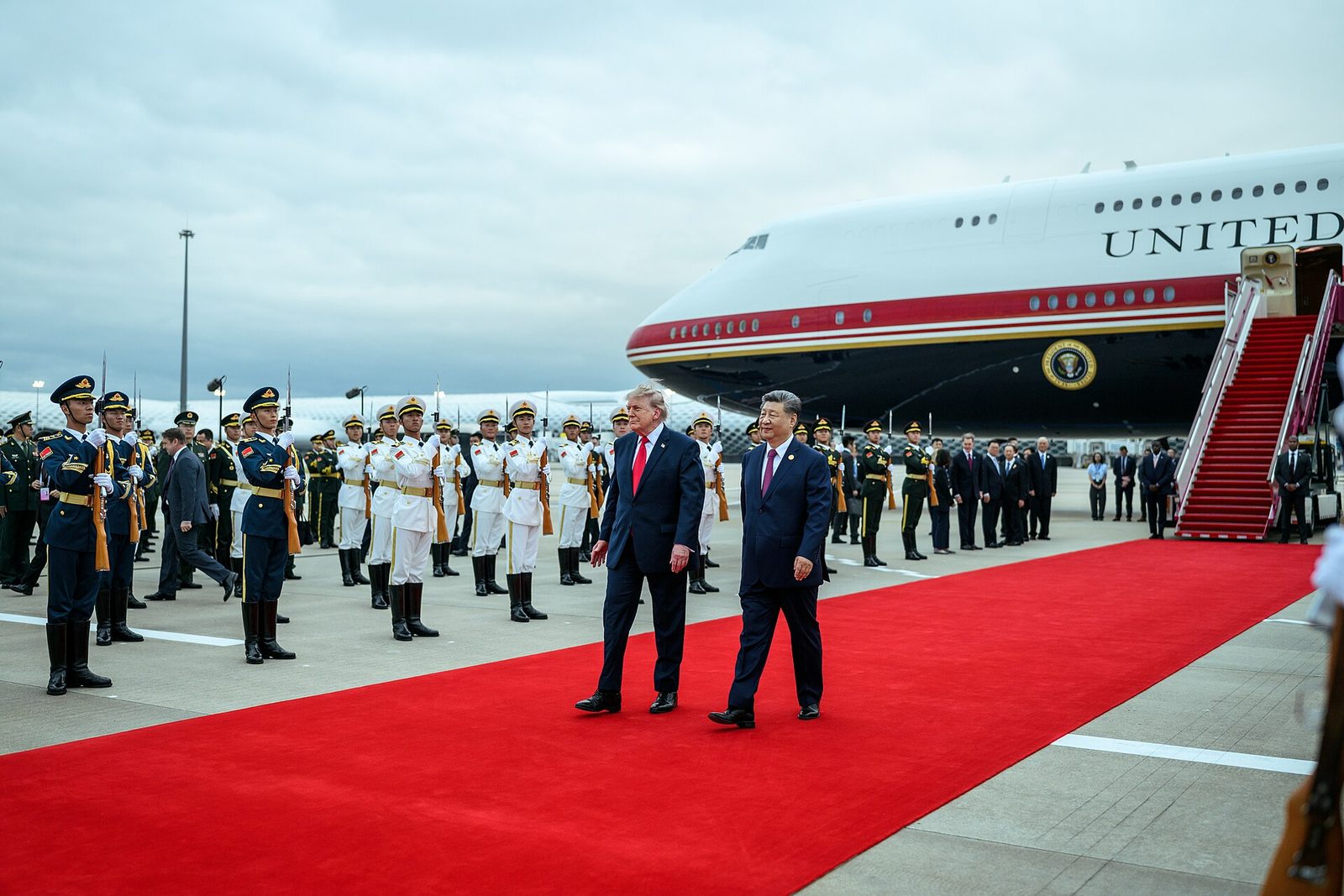
At the three-way meeting itself, hours earlier, Putin had spoken in the declaration’s register: the three countries, he said, were the victors of the Second World War, sharing responsibility for global peace, with a shared interest in resolving the conflict in Ukraine. The press conference, in the same city on the same afternoon, was conducted in a different one.
The Third Strike In A Week
Ukraine’s military confirmed it had struck the road and rail bridge again. The first attack of the week, on Tuesday, collapsed a section of the parallel road bridge into the Kerch Strait; Ukraine’s Security Service said a joint operation with the Defence Forces destroyed one of the bridge’s metal arches and the road span beneath it, and Russia suspended traffic and opened a terrorism case. Overnight into Thursday, Ukrainian forces hit the bridge’s railway section. Ukraine’s General Staff said early on Thursday that it was confident its forces had hit the bridge, and Ukrainian reports said Neptune missiles struck the rail section.
Tuesday’s strike, which led this site’s front page that day, destroyed one of the bridge’s metal arches; Ukraine’s Security Service released photographs showing the roadway lying in the Kerch Strait.
The Crimean Bridge, completed in 2018, is 19 kilometres long — the longest in Europe — and is the only fixed link between mainland Russia and Crimea, which Russia annexed in 2014. It carries a road and a railway side by side, and has been a symbol of Putin’s Russia since it opened. Ukraine has attacked it repeatedly since 2022, by truck bomb, by sea drone and by missile; each time, Russia has repaired it and traffic has resumed. It is Putin’s signature infrastructure project — he drove a truck across it at its opening in 2018 — and its loss, even temporary, is a political as well as a logistical blow.
Putin acknowledged that the road section of the bridge had suffered “serious damage”. “We will, of course, restore the bridge,” he said. Russian reports said rail services were set to resume, and Russian officials said a ferry service had been opened across the Kerch Strait to replace the crossing while repairs are made. The road span has been closed to traffic since Tuesday’s strike.
Putin said the bridge was used exclusively for civilian purposes, and had not been used to transport military equipment for a long time, or petroleum products — “as Kyiv has alleged”. Ukraine has long treated the bridge as a military target, saying it moves equipment and supplies to Russian forces in Crimea. The two claims cannot both be true; neither side published evidence with Thursday’s statements.
Ukraine has alleged throughout the war that the bridge moves military equipment and petroleum products into Crimea — the allegation Putin was answering on Thursday. Kyiv treats the crossing as a supply artery for the Russian forces occupying the peninsula, and has struck it again and again since 2022 to cut that artery.
The New York Post reported that Ukraine fired 1,441 drones as part of Tuesday’s barrage — a figure it described as the largest strike of any point in the war. The figure has not been confirmed by Ukraine’s military or by Russia.
A Vow Made Under A Peace Declaration
The vow was delivered on the same afternoon that Putin put his name to the Shenzhen peace declaration, whose four points — UN reform, oil supply, the immunity of state officials and a dialogue on reducing nuclear risks — do not mention Ukraine at all. In his remarks at the three-way meeting, Putin had said the three countries shared an interest in resolving the conflict in Ukraine. The press conference that followed was about the war, and about retaliation.
A moratorium on energy and Black Sea strikes was one of the few limited arrangements the two sides had been discussing. Reuters described the idea as a halt to attacks on each other’s energy sectors and shipping. Energy infrastructure and sea lanes have been central target sets of the war: Russian strikes on Ukraine’s power system, and Ukrainian strikes on Russian oil facilities and Black Sea shipping. Putin’s statement removes, for now, the prospect of either side standing down in either arena.
Trump is scheduled to hold a news conference at the White House on Friday, where the Shenzhen declaration — and the war it did not mention — are expected to feature. Putin did not say what form his response would take, or when it would come. He said only that it would be “far more painful” than the attacks on the bridge — and that the bridge itself would be rebuilt.
Sources: Reuters, November 19, 2026; DPA, November 19, 2026; Ukraine’s General Staff, November 19, 2026; New York Post, November 19, 2026.
Comments