
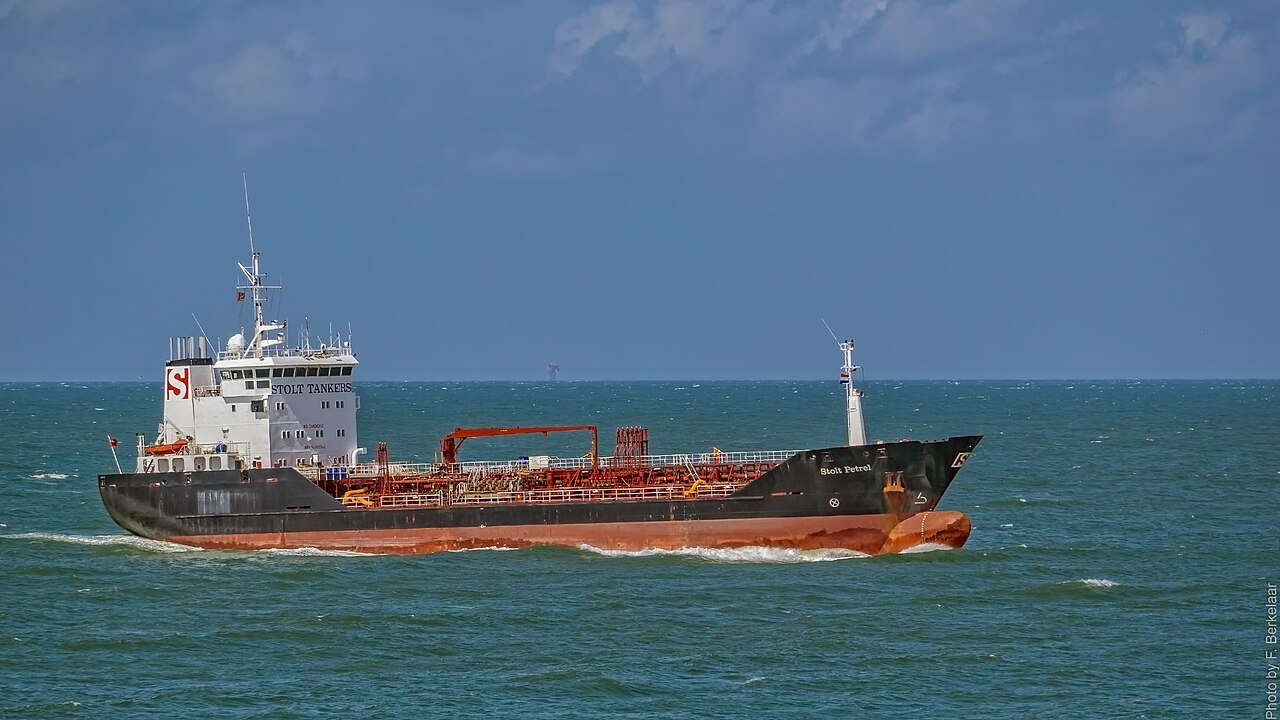
A tanker carrying Russian diesel is crossing the Atlantic toward New York, the first cargo of Russian petroleum products bound for the United States since imports were banned in 2022. The Malta-flagged Agioi Fanendes loaded ultra-low-sulfur diesel at Primorsk, Russia’s Baltic oil port, on Thursday, October 22, and shipping data from LSEG put its arrival in the United States on November 7 — four days after the midterm elections, according to Reuters.
The voyage is possible because of a license, not a change in the law. On October 9, the Treasury Department’s Office of Foreign Assets Control issued General License 135, which authorizes transactions involving Russian-origin diesel — its sale, transportation and importation into the United States — through April 7, 2027. The license names diesel only: it does not cover crude oil, gasoline or any other Russian product, and it leaves the rest of the sanctions structure in place. President Trump announced the arrangement the same day, writing on Truth Social that Russia would “immediately supply over 300,000 tons of diesel fuel to the American and global marketplace,” with another 500,000 tons during November and 1 million tons “immediately thereafter.”
How Big Is The Cargo? The Published Figures
- 40,000 metric tons of ultra-low-sulfur diesel — LSEG shipping data, reported by Reuters.
- 326,800 barrels of petroleum products — the Russian Embassy in South Africa, in an October 23 post.
- About 300,000 barrels — the analysts’ figure: Energy Aspects told NBC it had confirmed 298,000 barrels with industry sources, and Kpler data published by The Wall Street Journal likewise put the load at roughly 300,000 barrels.
- Almost 43,000 metric tons — Bloomberg’s published figure for the load.
The tonnage and barrel totals are roughly equivalent at the standard conversion of about 7.4 barrels per ton, but the published numbers do not agree exactly. The buyer and the seller of the cargo have not been identified.
Even the destination has been reported two ways. LSEG’s data show the vessel signaling New York with a November 7 arrival. The Wall Street Journal reported that the tanker updated its destination to New York and then changed the signal to “for orders,” the designation a ship uses when its discharge port is not settled, and that Eastern Mediterranean Maritime, the Greek company managing the vessel’s owner, said the discharging port “is not confirmed yet.”
Three Tankers, One Confirmed Loading
The ship-tracking service TankerTrackers said it had identified three tankers carrying Russian diesel to the United States, all of them loaded at Russian petroleum berths and declaring U.S. destinations. Of the three, only the Agioi Fanendes has a loading confirmed in the shipping data reported so far. Kremlin spokesman Dmitry Peskov confirmed to Reuters on Friday that the first tanker under the arrangement had departed and said further deliveries would follow; Deputy Prime Minister Alexander Novak has said additional shipments are planned as Russian and U.S. companies finalize delivery contracts.
Why Diesel, And Why Now
Prices are the administration’s stated reason. The American Automobile Association put the national average price of diesel at $6.32 a gallon on Friday, up from $3.63 a year earlier; gasoline averaged about $4.29 a gallon. The United States uses roughly 3.6 to 3.8 million barrels of diesel a day, so one cargo of about 300,000 barrels covers a small fraction of a single day’s demand, and analysts said so in plain terms. “Additional diesel supply is welcome news for farmers, truckers, and families getting hammered at the pump, but one tanker isn’t going to solve our diesel supply problems,” Jason Isaac, chief executive of the American Energy Institute, told the Daily Caller News Foundation. Max Pyziur of the Energy Policy Research Foundation called a 300,000-barrel shipment “minute” beside daily consumption. In Kyiv, Vladyslav Vlasyuk, Ukraine’s presidential commissioner for sanctions policy, calculated the cargo at less than two hours of American diesel use.
The Legal Objection
The license has drawn a bipartisan objection on Capitol Hill. Senators Susan Collins of Maine, Thom Tillis of North Carolina and Jeanne Shaheen of New Hampshire said in an October 11 statement that the imports run counter to the 2022 law — the Ending Importation of Russian Oil Act, passed after Russia’s full-scale invasion of Ukraine — which bans Russian energy imports. The Treasury license does not repeal that law; it authorizes specified transactions under the sanctions regulations for a limited period. Ukraine’s President Volodymyr Zelensky, who has pressed for stronger sanctions on Russian oil products, also objected to the decision.
A Second Track: Refineries
On the same day the Agioi Fanendes was loading at Primorsk, the administration moved on domestic supply. On October 22, President Trump signed a presidential memorandum invoking Section 303 of the Defense Production Act and announced up to $150 million to expand American petroleum production, refining, storage and logistics. The Energy Department said the money, drawn from Defense Production Act funding, would expand output of gasoline, diesel, jet fuel and other products at refineries across the country, and Energy Secretary Chris Wright said it would bolster the nation’s existing energy infrastructure. The announcement named no individual projects, and the department has not said which refineries will receive funding.
One more disagreement sits in the record of what this cargo is the first of. Reuters and other outlets describe it as the first U.S. import of Russian petroleum products since the 2022 ban. The Associated Press, quoting the maritime data firm Kpler, has reported it would be the first Russian diesel delivery since July 2023. Both accounts agree on the ship, the port and the loading date; they differ on when the last cargo before this one arrived.
Sources: Reuters; The Wall Street Journal; Bloomberg; The Associated Press; Daily Caller News Foundation; U.S. Department of the Treasury; U.S. Department of Energy.
Comments
Loading comments…