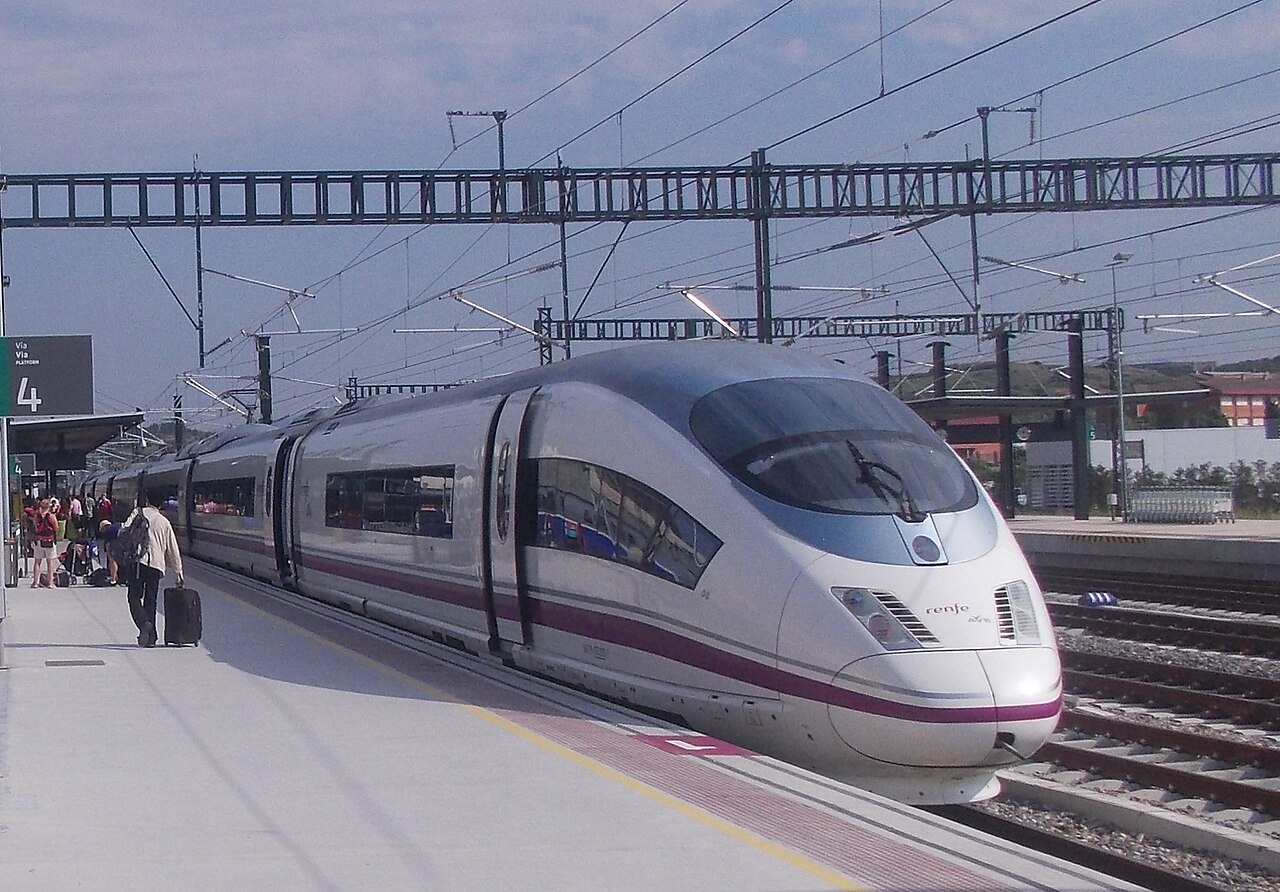
URDA, Spain — One Spanish high-speed train slammed into another that had stopped on the tracks in Toledo province on Wednesday morning, killing at least 68 people and shredding carriages in the country’s second deadly rail collision this year, the Associated Press reported.
The Crash
The crash happened shortly before 9 a.m. local time on the Madrid–Seville high-speed line, on a flat stretch surrounded by fields between the towns of Urda and Los Yébenes, about 150 kilometres south of Madrid. Esther Padilla, spokeswoman for the Castilla-La Mancha regional government, told state broadcaster TVE that the two trains were carrying hundreds of passengers and heading in the same direction, from Madrid to Seville in the southwest. One ran into the tail of the other, which had stopped, knocking two of its cars off the track. A person briefed on the disaster told Reuters the Iryo train had stopped near Toledo on instructions from the infrastructure manager, Adif, because of a signal fault, and that the Renfe train then struck the stationary train at high speed. The scene, in footage aired by regional television, showed one carriage left on a raised section of the line and twisted metal and broken panels strewn across the embankment below; the AP described one car shredded into bits of metal and material, scattering debris down a gravel slope.
The Toll
The regional government confirmed a death toll of at least 68, the AP reported, and said another 58 people needed medical treatment in hospital. The figure rose all day — the first official toll was at least 10 dead, then 30, then 64 — and regional president Emiliano García-Page warned it was likely to grow further as rescue workers searched the wreckage. Padilla said 397 passengers were in the Renfe train and 147 in the Iryo train, 544 people in all. Health Minister Mónica García told TVE that emergency workers were focusing on rescuing survivors and recovering bodies from the two most damaged train cars, and that the injured were being sent to hospitals across the area. “It was a high-speed impact, so we are expecting this to be a tragedy,” she said. A passenger named Miguel told Cope Radio he heard a huge roar and a heavy thud that lasted about ten seconds, and through the window saw a wrecked train.
The Response
A military emergency brigade was deployed to help emergency services, firefighters and police, and drones, helicopters and forensic teams worked at the site. The mayor of Urda, Manuel Galán, told TVE that civil protection authorities had asked the town hall to prepare a sports pavilion to attend to injured passengers. Adif suspended rail service between Madrid, Ciudad Real and Andalusia. Prime Minister Pedro Sánchez cancelled his agenda and travelled to the scene. “Shocked by the serious train accident in Toledo,” he wrote on X. “Emergency services are working on the ground to assist those affected and ensure their safety, in coordination with all the administrations involved. My affection, solidarity and support to all the victims and their families.” King Felipe VI and Queen Letizia said they were “deeply saddened and concerned by the train accident in Urda,” adding: “We share in the grief of the families and loved ones of those who lost their lives, and we send our heartfelt support to the injured and all those affected.” European Commission President Ursula von der Leyen wrote: “My heart goes out to the victims’ families and loved ones. Today, Europe mourns with you.” Spain’s football federation postponed all 24 Copa del Rey first-round matches scheduled for Wednesday “as a sign of respect and solidarity with all the victims.”
What Went Wrong Is Not Yet Known
Padilla said the cause of the crash was not known. The detail reported by Reuters — that the Iryo train had been stopped on Adif’s instructions over a signal fault before the Renfe train reached it — is the first account of the sequence, and it is not an official finding. The railway union’s spokesman, Rafael Escudero, told Antena 3 the accident was “very strange,” pointing out that there is no commercial stop in that area and that a train carries real-time information that should stop it if there is an obstacle ahead, such as another train. Iryo, the Italian-owned private operator, said it had “activated its security protocols and is closely working with authorities.”
The Second Disaster This Year
Trains from the same two companies were involved in the deadly crash in January, when 45 people died in southern Spain after an Iryo train jumped the track and hit an oncoming Renfe train near Adamuz, the AP reported. Wednesday’s toll already passes that disaster. The deadliest crash in modern Spanish history remains the 2013 Santiago de Compostela derailment, which killed 80 people. Spain has invested heavily in high-speed rail for three decades: it has laid some 3,900 kilometres (2,400 miles) of high-speed track, more than any country except China, according to the International Union of Railways. Only recently did Spain open its network to private companies to compete against state-owned Renfe; Iryo began operating in 2022. The crash also lands in the middle of a general election campaign — Spain votes on November 29 — and Sánchez faces that election next month with the safety of the country’s flagship rail network now the central question of the day.
The Crash — In Short
Two high-speed trains collided on Wednesday morning on the Madrid–Seville line near Urda, Toledo: a Renfe AVE carrying 397 people ran into the rear of an Iryo train carrying 147 that had stopped on the line, reportedly after a signal fault. At least 68 people are dead and 58 were treated in hospital; the toll rose through the day and officials expect it to rise further. Services between Madrid and Andalusia are suspended, the Copa del Rey’s 24 Wednesday matches are postponed, and no official cause has been given. It is Spain’s second deadly rail crash this year, after January’s Adamuz collision killed 45.
Sources: The Associated Press; Reuters; USA Today — reporting of October 28, 2026.
Comments
Loading comments…