
President Trump said Thursday that he had spoken with Elon Musk about the new speed limits on Ukraine’s use of the Starshield satellite network — and that the limits were lifted. “I don’t want to comment on it, whether I called, or whether somebody else called,” he said. “The bottom line, he put it back.” On Friday, Ukraine’s president said otherwise. “The speed limits on Starlink and Starshield are still there, and the speed has not been restored,” Volodymyr Zelenskyy told the Hudson Institute in a remote address. Ukrainian drone units testing the system Friday reported the same: connections still dropped above roughly 160 km/h (100 mph), though some runs near the Black Sea reached 200 km/h.
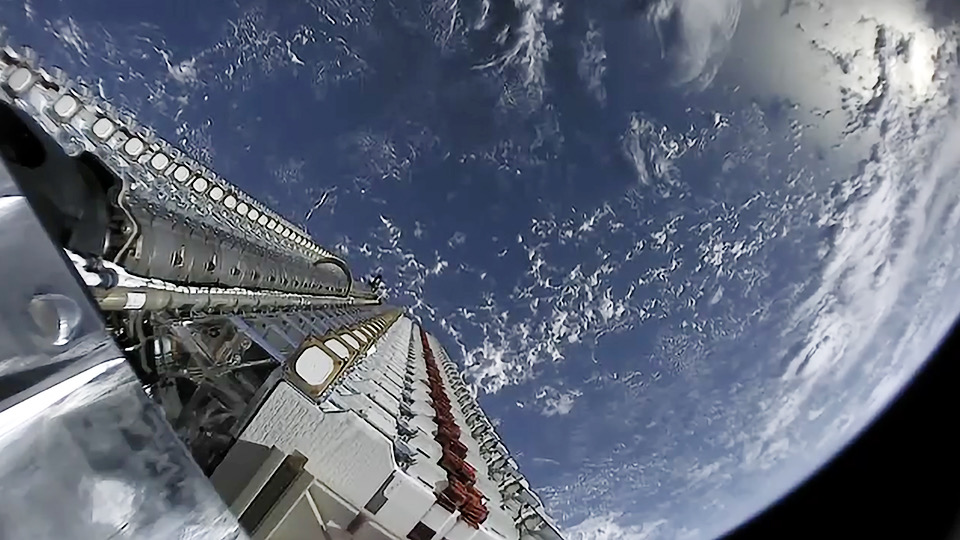
Starlink is SpaceX’s commercial satellite broadband service; Starshield is its military arm — secure communications with enhanced encryption and dedicated terminals, running on the Starlink constellation as its backbone. It is the backbone of Ukraine’s battlefield communications and, critically, of its drone operations, from strike drones to the jet-powered interceptors flown against Russian Shahed attacks. Ukraine’s access runs through the Pentagon, which is Starshield’s largest customer; a U.S. purchase extended service to some 3,000 terminals in Ukraine, per Bloomberg’s reporting of the contracts. The service is one of the few remaining forms of American support for Ukraine’s defense.
The Dispute, In Short
- The cap: from overnight October 13–14, Starshield terminals in Ukraine moving faster than ~160 km/h (100 mph) lost connection — mid-mission, for drone pilots (WSJ; Ukrainian officials).
- Who ordered it: unsettled. WSJ: Musk ordered it. Musk on X: limits are “decided by the US military and ultimately POTUS.” Hegseth: the U.S. directed nothing; SpaceX enforces its terms of service. Rubio: no U.S. foreknowledge.
- The call: Wednesday, October 21 — Trump asked Musk to lift the restriction, per U.S. officials (WSJ; NYT). Trump Thursday: “The bottom line: He put it back.”
- The status Friday: Ukrainian units still lose connection above ~160 km/h. Zelenskyy: the limits “are still there, and the speed has not been restored.” Trump: “I’ve heard it was fixed but if it’s not I’ll speak to him.”
- Also outstanding: Patriot interceptors Zelenskyy says were “already agreed on” have not been delivered.
The restrictions arrived overnight on October 13–14, with no warning: terminals moving faster than about 160 km/h lost their connection, and drone missions failed as pilots lost video feeds and steering control. Ukrainian presidential adviser Serhiy Beskrestnov disclosed the cap on October 14, saying it “arrived overnight with no warning and disrupted several combat missions.” The same day, Musk posted on X: “Any limits on speed or usage are decided by the US military and ultimately POTUS.” The Wall Street Journal later reported that Musk himself ordered the slowdown.
Washington’s account has not been one account. On October 20, Defense Secretary Pete Hegseth said the United States had ordered nothing: “We haven’t pulled anything back. There are terms of service that ultimately need to be complied to, and that’s where Starlink has the option to make those decisions.” He did not say which terms Ukraine is alleged to have breached. On October 21, Secretary of State Marco Rubio, traveling in India, said Washington had no foreknowledge and that “the president doesn’t run that company and can’t direct that company to do anything” — while also drawing the distinction that Starshield is a U.S. military product and Starlink a commercial service. The Associated Press noted Friday that the administration has given mixed messages about who is responsible for the slowdown.
Per U.S. officials cited by the Journal, Trump called Musk on Wednesday, October 21, frustrated that the cap — around 100 mph — had rendered some of Ukraine’s offensive drones and interceptors powerless against Russian attacks. The New York Times, reporting the call late Thursday, said the restrictions cost Ukraine numerous drones and suspended combat missions for several days, per an unnamed Ukrainian commander. Ukraine’s 7th Air Assault Corps reported drones losing connection for 10–20 seconds at only 110–120 km/h, and at least one unit was forced to cancel missions. A pilot with the Magyar’s Birds unit described Friday’s tests to Politico: “We accelerate above 180 km/h, fly for a couple of minutes, the connection drops. It falls to 140–150 km/h and then is re-established — but the situation is better … So it works better, but with constant connection interruptions.”
Zelenskyy paired the satellite dispute with a second undelivered item: “The delivery of interceptors to protect us against Russian ballistic missiles is still delayed. We are waiting for interceptors that were already agreed on, but they are still not coming.” Trump, asked Friday about Kyiv’s statement that the cap remains, said: “I’ve heard it was fixed but if it’s not I’ll speak to him,” and called Musk “a very good person” who would “never do anything wrong.”
Who ordered the cap, and why, remains unsettled in the public record: the Journal reports Musk ordered it, and that he and Trump had discussed the matter beforehand, while one official told the Journal he acted without presidential orders; Reuters’ sources have said the White House requested the slowdown; the Telegraph reported Musk proposed it. No party has produced documentary evidence publicly, the intended duration of the limits is not known, and Musk has not publicly confirmed the call or any restoration. What happens next is measurable: Kyiv’s test flights, and whether the agreed interceptors arrive.
Sources: The New York Times; The Wall Street Journal as reported by Reuters and other outlets; The Associated Press; Politico.
Comments