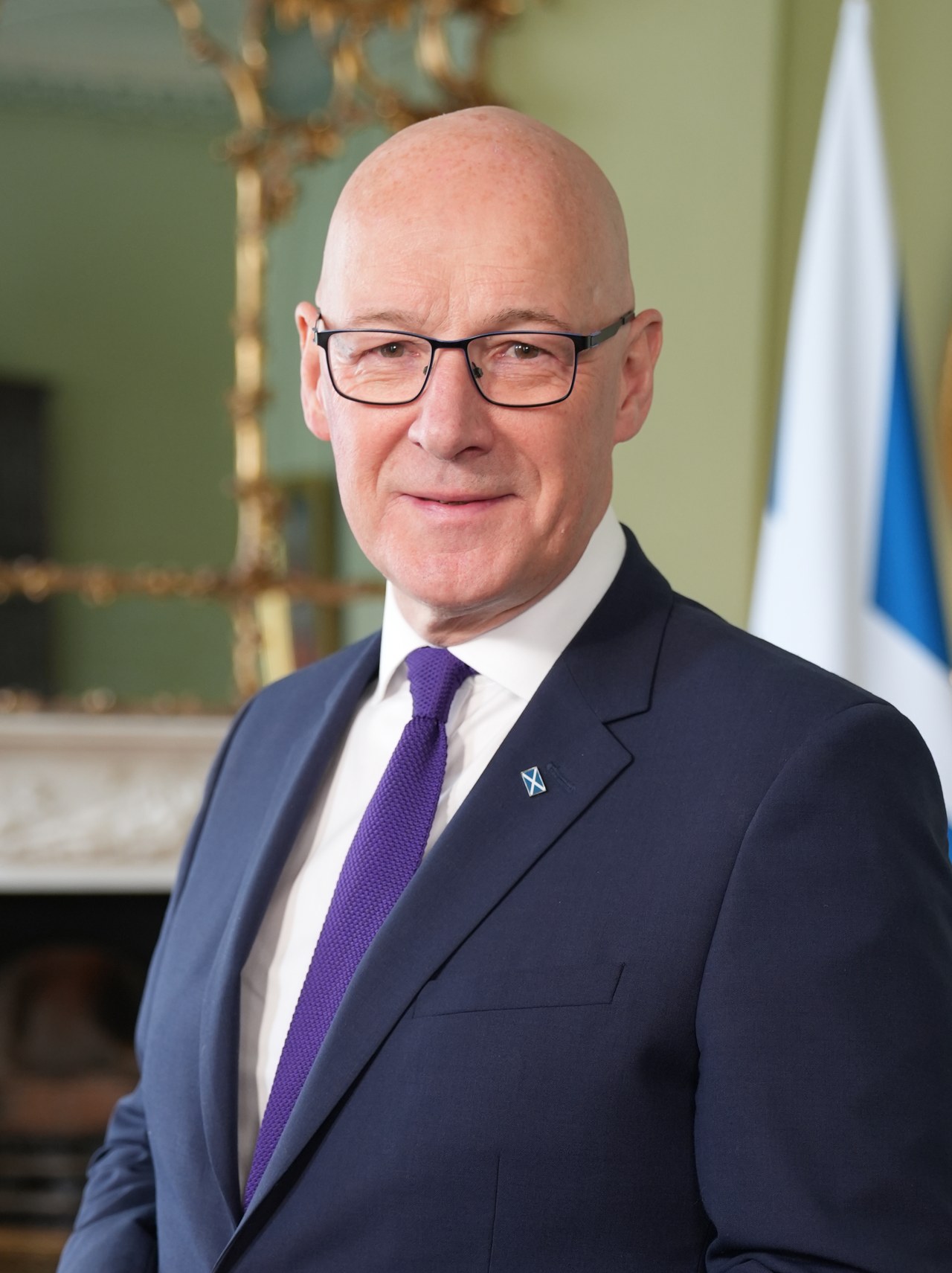
Scotland's First Minister John Swinney told the Scottish Parliament on Thursday that his government does not support the UK government's plan to ban new North Sea oil and gas exploration — putting Edinburgh and London publicly on opposite sides of the biggest energy question in British politics, in the middle of an energy-price crisis.
Speaking at First Minister's Questions, Swinney made the argument on carbon grounds of a particular kind: "because we are going to be using oil and gas for years to come there is a rational basis for considering oil and gas developments within our own jurisdiction if they offer lower carbon emissions than imported oil and gas."
The UK government's Energy Independence Bill, introduced at Westminster on Wednesday, would remove the North Sea Transition Authority's power to grant fresh exploration licences — delivering Labour's manifesto pledge. The bill does not affect Rosebank, the UK's largest untapped field off Shetland, which was approved in 2022 and remains legally challenged; Swinney again declined to state a position on Rosebank itself.
A Reversal, Stated Plainly
The SNP's position is a reversal of the party's own recent doctrine. Scotland's 2023 draft energy strategy, under Nicola Sturgeon, set a presumption against new drilling. Swinney's formulation on Thursday — domestic production judged against imports on emissions — is the argument the industry has made for a decade, now adopted by an SNP First Minister.
The SNP will seek to remove the ban from the bill and will oppose the legislation if it stays, despite supporting other measures in it. That sets up a parliamentary fight in London and a constitutional one in public: energy licensing is reserved to Westminster, but the First Minister of Scotland has now told his own parliament that the reserved power is being used wrongly.
The timing is not incidental. Thursday was also the day the Bank of England raised interest rates on war-driven energy inflation — the same price shock that has made "drill at home" an argument with a household bill attached to it. Swinney's break is with Westminster. Its cause is in the Strait of Hormuz.
The exchange at First Minister's Questions matters beyond the bill's fate because of who holds which power. Licensing rounds for the North Sea are run from London; the Scottish Government cannot issue a licence itself, and Swinney's intervention is therefore political rather than administrative — a First Minister telling his own parliament, on the record, that the UK government's flagship energy bill is wrong on its central measure. The SNP's plan to amend the ban out of the bill will fail or succeed on Westminster votes, but the party's support for the bill's other measures gives it a second lever: opposition to the whole legislation if the ban stays.
Rosebank hangs over the argument as the unspoken test case. The field — the largest untapped discovery in UK waters — was approved in 2022 and has been legally challenged since; it is untouched by the new bill either way. Swinney's refusal, again on Thursday, to state a position on Rosebank itself was noticed in the chamber precisely because his new general principle — judge domestic projects against imports on carbon — is the principle on which Rosebank's defenders rest their case. He has adopted the argument while declining, so far, to apply it to the field that would test it.
The Facts
- Swinney told MSPs Thursday the Scottish Government does not support the UK plan to ban new North Sea exploration.
- The Energy Independence Bill (introduced Wed) would strip the NSTA of licensing power; Rosebank is unaffected (approved 2022).
- The position reverses the SNP's 2023 Sturgeon-era presumption against new drilling.
Sources: BBC (First Minister's Questions, the bill, party positions); PA Media via Messenger Newspapers.
Comments