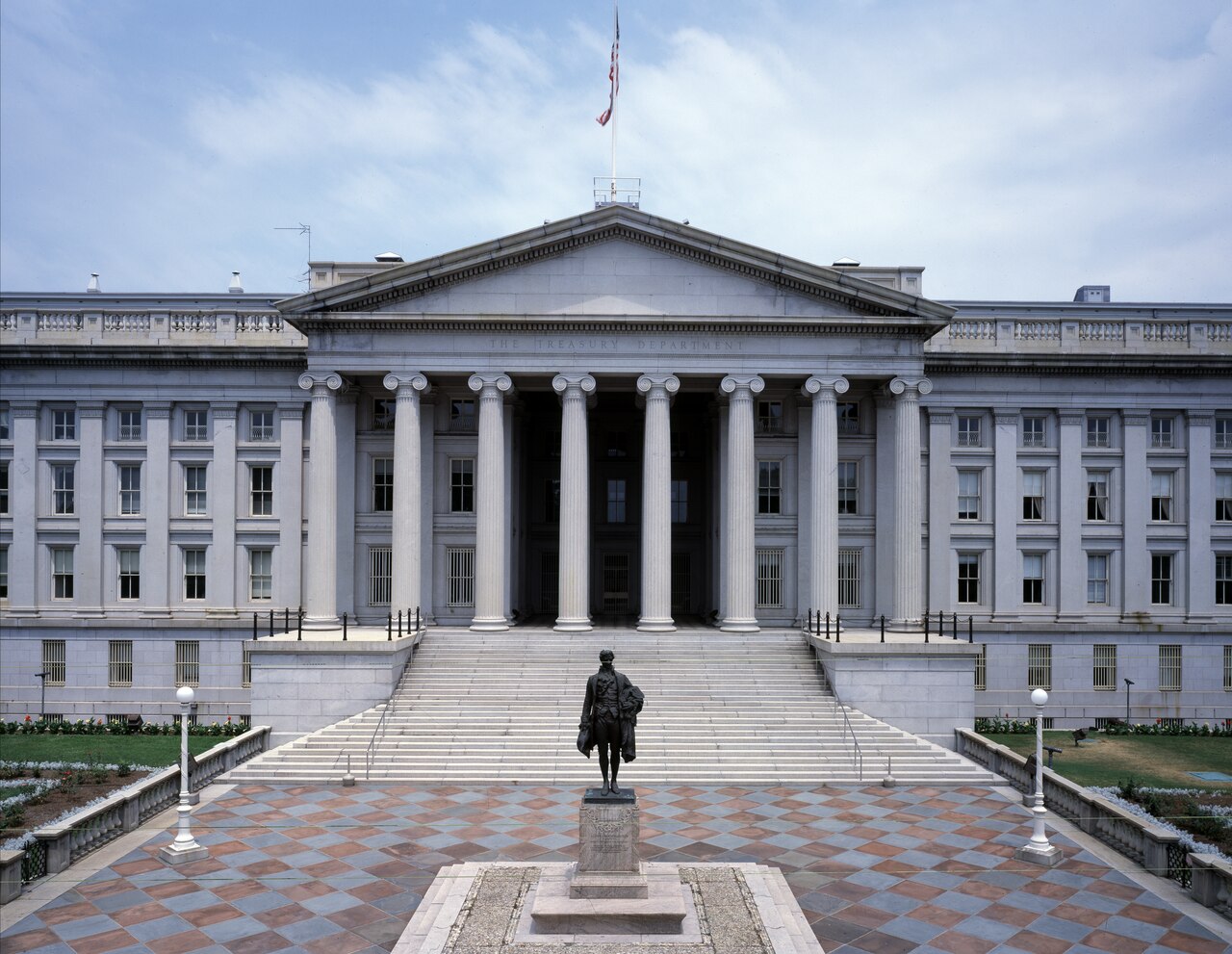
The Treasury Department proposed a rule on Thursday that would widen the screening of American investment in foreign technology, adding high-performance computing and supercomputing, hypersonic systems and biotechnology to the program’s covered sectors, and extending it beyond China to Cuba, Iran, North Korea and Russia. The proposal implements the COINS Act, which Congress enacted on December 18, 2025, as part of the fiscal 2026 defense authorization. It keeps the program’s two tiers — some transactions prohibited outright, others to be notified to Treasury — and would apply to investments over $50,000, while excluding many purely financial investments, including stock purchases.
The Proposal, In Short
- What: a notice of proposed rulemaking (October 22) implementing the COINS Act, enacted December 18, 2025, in the fiscal 2026 defense authorization.
- New sectors: high-performance computing and supercomputing; hypersonic systems; biotechnology — added to semiconductors, quantum information technologies and AI (styled “superintelligence” in the rule).
- Countries: China (including Hong Kong and Macau), Cuba, Iran, North Korea, Russia.
- Mechanics: two tiers — prohibited transactions, and transactions that must be notified to Treasury; applies to investments over $50,000; stock purchases and many purely financial investments are excluded.
- Next: public comments due December 7, 2026; final regulations due by March 13, 2027; the existing program stays in force, and produced its first penalty on October 7 — $200,000 against Amidi LLC.
“The proposed regulations would strengthen the existing Outbound Investment Security Program to prevent our adversaries from using U.S. investment to develop critical technologies that threaten U.S. national security,” Treasury Secretary Scott Bessent said. He added that the step “helps promote our commitment to an open investment environment by providing clarity to U.S. and foreign investors” and a chance to comment. The covered countries are China, including Hong Kong and Macau, plus Cuba, Iran, North Korea and Russia; covered transactions include equity investments, convertible debt, joint ventures and greenfield projects. In the proposed rule, Treasury styles the artificial-intelligence category “superintelligence.” The biotech scope in Treasury’s fact sheet reaches certain bio-derived compounds, brain-computer interfaces, biomanufacturing, and tools for biological design and sequencing; the hypersonics category covers systems traveling at five times the speed of sound or more.
The lineage runs across two administrations. In August 2023, President Biden’s executive order restricted outbound investment in semiconductors, quantum computing and artificial intelligence going into China; Treasury’s implementing program took effect January 2, 2025. The COINS Act codified it and expanded it to more technologies and more countries, and Congress gave Treasury until March 13, 2027, to complete the regulations. Enforcement of the existing rules is already live: on October 7, Treasury announced a $200,000 civil penalty against Amidi LLC, whose Chinese subsidiary had invested about $92,478 in a Shanghai artificial-intelligence and robotics company in a transaction that required notification and was never notified. Public comments on the new proposal are due December 7; the existing rules remain in force meanwhile.
Reaction split along familiar lines. Craig Singleton of the Foundation for Defense of Democracies said the rule “sends an important signal to markets that Washington is tracking where U.S. capital is flowing and what capabilities it is helping build,” adding that screening “recognizes that capital can accelerate military-relevant capabilities just as surely as technology transfer can.” Jason Chipman, a WilmerHale partner and former Justice Department lawyer, said the rule “will require more substantial compliance programs to manage risk.” The biotech industry urged narrow targeting: MassBio’s chief executive, Kendalle Burlin O’Connell, said efforts on national security “must be carefully targeted to avoid undermining the innovation ecosystem that has made the United States a global leader in developing new medicines,” and the American Biosecurity Initiative said the restrictions must address specific risks “without unnecessarily dampening investment.” China’s Foreign Ministry said Beijing “consistently opposes overstretching the concept of national security and politicizing tech and trade issues,” and its Commerce Ministry accused the United States of suppressing China under “the guise of national security” and said China would take necessary measures to defend its interests.
Russia’s place on the list arrives in a particular fortnight. On October 9, President Trump announced a diesel deal with Vladimir Putin, and Treasury temporarily lifted Russian oil sanctions through April 7, 2027, to enable the trade. On October 16, Trump waived the sanctions and tariffs required by the Graham Sanctioning Russia and Iran Act of 2026 — including a 500 percent tariff on Russian goods — two days before they were to take effect. On October 22, the same day the investment rule was proposed, the first cargo under the deal — 40,000 tonnes of ultra-low-sulfur diesel loaded at Primorsk, bound for New York and expected November 7 — was reported at sea, set to be the first U.S. import of Russian petroleum products since the 2022 ban.
Sources: U.S. Department of the Treasury (announcement and fact sheet); The Associated Press; The Hill; Reuters.
Comments