
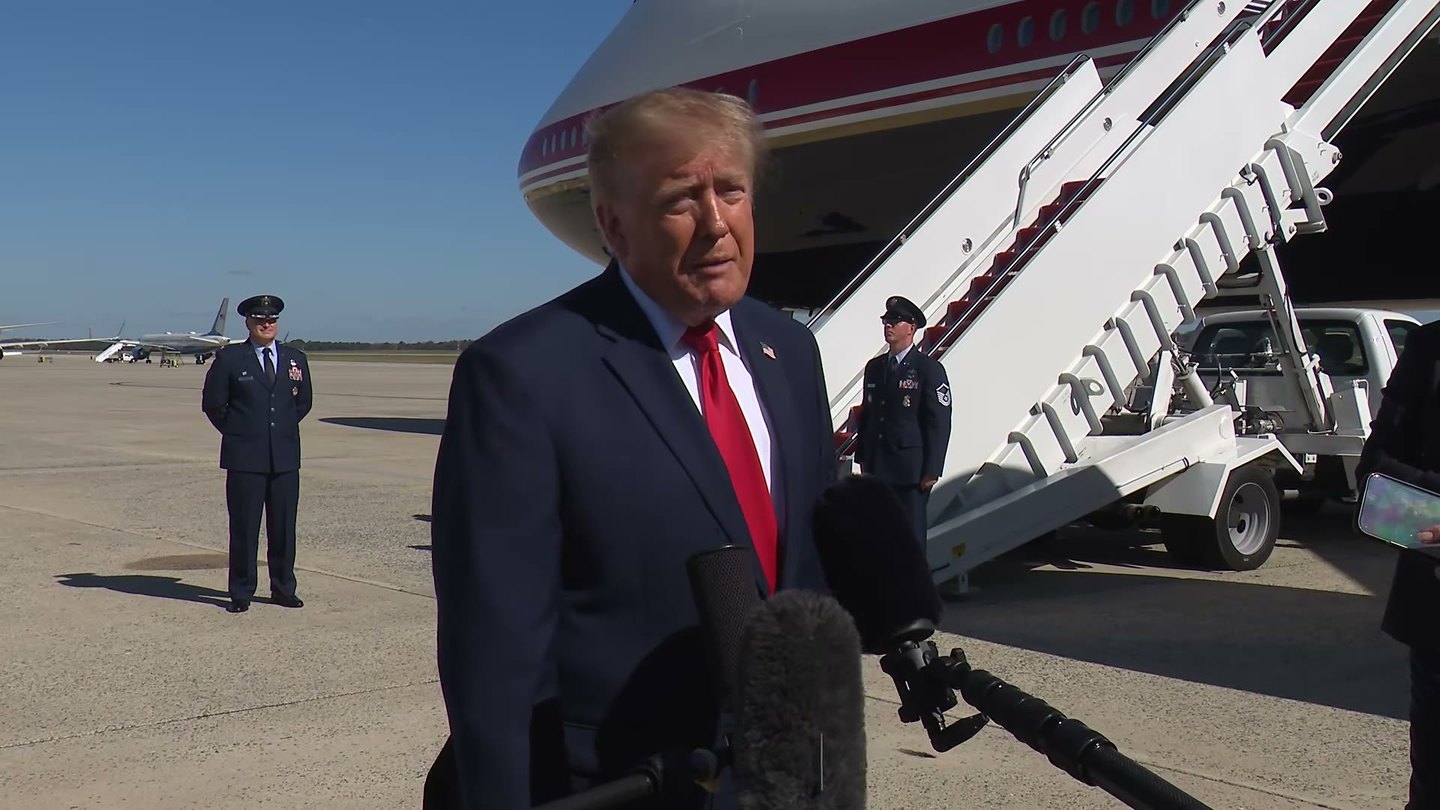
President Trump left the White House on Sunday with one firm line on Iran and everything else left open. Asked whether the United States would strike Iran that day, he said: “The answer is no. There will not be a strike today.” The sentence closed a weekend that began with an intelligence warning about Iranian plots against Americans, ran through the drawdown of four American embassies and a presidential choice between a deal and “finish them off,” and ended, for the moment, with mediators in Tehran and oil prices easing off six-month highs. No strike had been announced by Monday morning, and the president has not ruled one out.
The Warning
U.S. officials told The New York Times on Friday that intelligence shows Iran is in the advanced stage of planning attacks against U.S. citizens, and that American personnel across the Middle East have been put on heightened alert. The warning reached the top of the government in writing: Director of National Intelligence Jay Clayton raised the alarm in a memo to Secretary of State Marco Rubio, obtained by Axios. The Daily reported the warning itself on Friday, in “US Intelligence Chief Warns Iran’s Plots Against Americans Have Reached ‘Advanced Stages.’” What has changed since is everything around it.
Asked about the reported memo at Joint Base Andrews on Sunday, Trump did not confirm its contents. “There are two very different sets of intelligence reports — I have them both,” he said, adding that the United States has “very advanced sets of intelligence on Iran.” He did not say what the second set of reports concludes.
Four Embassies Draw Down
The State Department has moved to reduce staffing at the U.S. embassies in Jordan, Lebanon, Qatar and the United Arab Emirates. U.S. officials told The Associated Press that threats from Yemen’s Houthi movement are the stated reason, that threats from Iran are also a factor, and that the drawdowns are not tied to possible American strikes. The cuts come as the administration weighs whether to resume the air campaign against Iran that the June interim agreement — brokered by Pakistan — had paused.
The President’s Weekend
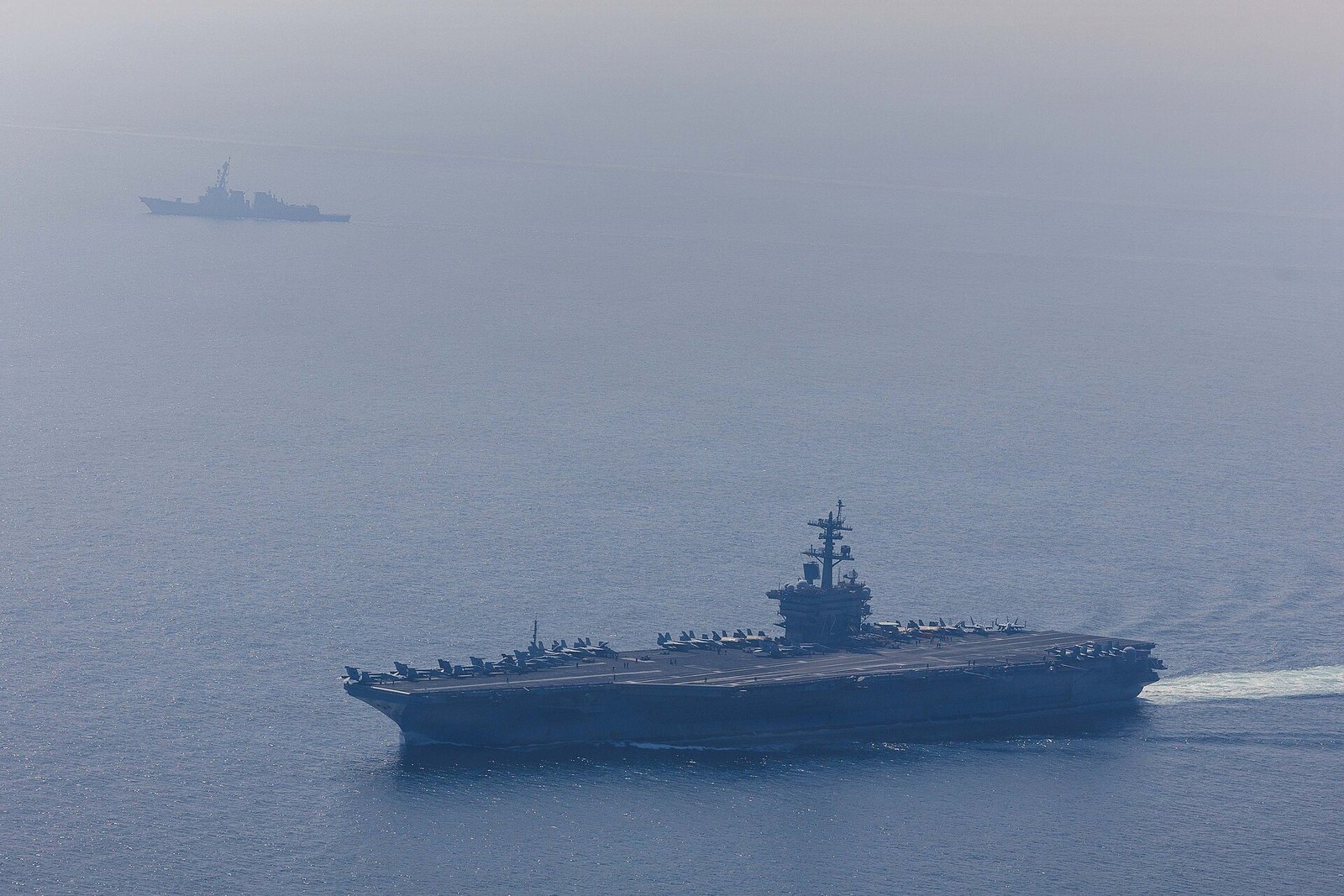
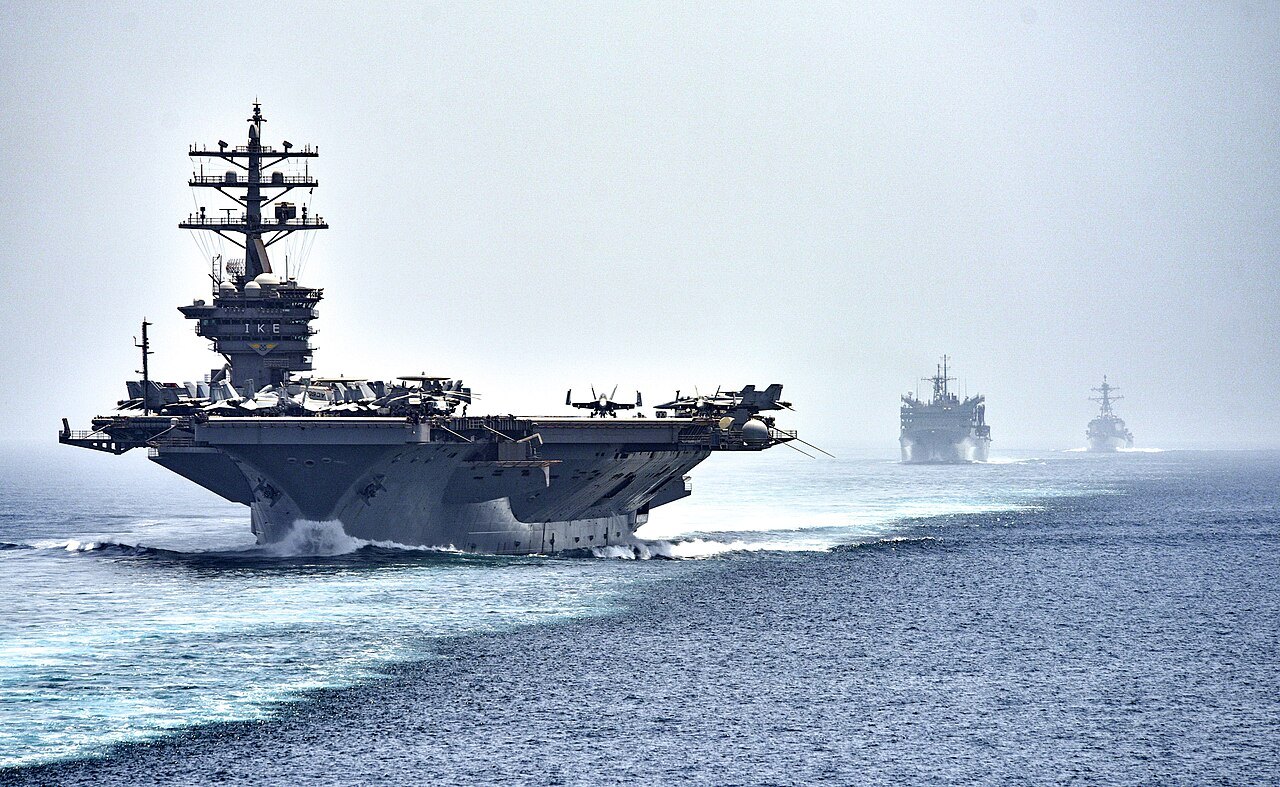
Trump spoke about Iran at every stop. On Saturday, after casting his midterm ballot in Florida, he said the United States could strike Iran “maybe tomorrow,” and that a “nice big beautiful agreement” with Tehran was also possible. The Wall Street Journal and The Hill reported American military preparations for possible renewed strikes, including around the USS George Washington carrier strike group; no strike order has been confirmed.
On Sunday, in a phone interview on Fox News’s “Sunday Morning Futures,” he put the choice in his own terms: “Do I make a deal with them, or do I finish them off? That’s the only question.” He said the United States now controls the Strait of Hormuz — “We get everything, they get nothing” — and that the U.S. is watching Iran’s Pickaxe Mountain nuclear site and sees little activity there. Hours later came the departure answer: no strike today. Trump traveled on to a campaign rally in Port Huron, Michigan.
Fighting On The Edges
While Washington talked, the region’s shooting war continued. On Monday the Iran-aligned Houthis said they had attacked Saudi Arabia’s East-West crude oil pumping stations and Riyadh’s airport. Saudi Arabia did not immediately confirm those claims. The Saudi-led coalition in Yemen said it had destroyed two ballistic missile launchers in the capital, Sana’a, including one used to fire a missile toward Riyadh that the coalition said it intercepted, and Saudi authorities reported intercepting additional missiles and drones on Sunday.
The East-West pipeline carries Saudi crude across the kingdom to the Red Sea, bypassing the Strait of Hormuz — the waterway at the center of the standoff. Attacks on Saudi energy sites pushed oil prices up nearly $3 on Friday.
The Mediators In Tehran
Diplomacy moved on a parallel track. Qatari mediators traveled to Tehran on Sunday in an effort an official described to Reuters as coordinated with Washington to lower regional tensions. On Monday, senior officials from Saudi Arabia, Turkey and Pakistan — the partners in the Mecca Pact — were scheduled to meet Iran’s leaders in Tehran, the first high-level talks of their kind since the Houthi attacks on Saudi Arabia.
Iran’s ambassador to Pakistan, Reza Amiri Moghadam, said Saturday that Tehran had recently conveyed through Pakistan that it was prepared to reopen the Strait of Hormuz if the United States lifted its naval blockade, and accused Trump of rejecting the proposal by insisting the blockade would continue. Iranian President Masoud Pezeshkian blamed Washington for the collapse of the interim deal but urged a new attempt at one; the IRGC-linked Tasnim news agency denied Iran had made any new offer. Foreign Ministry spokesman Esmaeil Baqaei told the German broadcaster ARD: “Iran has never left the negotiating table. The problem lies in America’s insistence on its unilateral demands and its attempts to impose them.” Baqaei said the Strait of Hormuz was “not safe” and held the United States and Israel responsible.
Oil Eases Off Six-Month Highs
Oil markets, which had priced in a wider war all last week, took part of the premium back on Monday. By 0744 GMT, Brent crude futures were down $1.49, or 1.28 percent, at $115.23 a barrel, and U.S. West Texas Intermediate was down $1.76, or 1.7 percent, at $101.51. Both benchmarks stayed near six-month highs: Brent gained about 6 percent last week and WTI 2.3 percent.
“Fears regarding renewed military conflicts in the Middle East, which largely fueled last week’s crude price surge, have lessened this morning, but this calm may be short-lived,” Vandana Hari, founder of Vanda Insights, said. She noted that Trump has not ruled out strikes on Iran following the November 3 midterm elections: “We anticipate continued volatility, with risks still leaning upward.”
The Standoff, In Short
The warning: U.S. intelligence says Iran is in the advanced stage of planning attacks against U.S. citizens (officials to The New York Times, Friday). DNI Jay Clayton’s memo to Secretary of State Marco Rubio was obtained by Axios.
The drawdown: the State Department is reducing staff at the embassies in Jordan, Lebanon, Qatar and the United Arab Emirates; officials cite Houthi threats, call Iran a factor, and say the moves are not tied to possible strikes (The Associated Press).
The president: Saturday — a strike could come “maybe tomorrow,” or a deal. Sunday — “make a deal with them, or finish them off”; then, “There will not be a strike today.”
The fighting: the Houthis claim strikes on Saudi Arabia’s East-West pipeline pumping stations and Riyadh airport (Monday; not confirmed by Riyadh). The Saudi-led coalition says it destroyed two missile launchers in Sana’a and intercepted a missile bound for Riyadh (Reuters).
The talks: Qatari mediators were in Tehran on Sunday; Saudi, Turkish and Pakistani officials meet Iranian leaders on Monday. Iran says it offered to reopen Hormuz in exchange for an end to the blockade.
Not settled: no U.S. strike has been announced, no new agreement has been signed, the June interim deal is in dispute, and the blockade of the Strait of Hormuz remains in place.
Reported Monday: A 96-Hour Posture, And A Request From Netanyahu
Two further accounts of the American position were reported on Monday. CNN, citing two U.S. officials, reported that U.S. forces in the Middle East are prepared to launch new, potentially major operations against Iran “within 96 hours of receiving” an order from the president, that sufficient forces are now deployed in the region to carry them out, and that the scope would likely go beyond striking radar sites, launchers and other assets Iran can quickly rebuild. “It will be a big effort,” one of the officials told CNN. Other current and former officials familiar with the planning told the network they regard an order as a question of when, not if, and most likely after the November 3 midterm elections.
Israeli media reported Monday that Prime Minister Benjamin Netanyahu pressed the Trump administration over the past week to approve a joint U.S.–Israeli strike on Iran before Israel’s October 27 election, and that Trump told him to wait until the United States was ready. The Israel Defense Forces spokesperson’s office denied any Israeli intention to initiate an attack on Iran before the elections. No joint operation has been announced by either government.
What Has Not Happened
For all the movement, the central facts on Monday morning are negative ones. No American strike on Iran has been ordered or announced. No new agreement has been signed, and the June interim deal that ended the last round of fighting sits in dispute, with Tehran and Washington accusing each other of breaking it. The embassies are thinner, the carriers are at sea, the mediators are in Tehran — and the president’s own deadline, such as it is, was only ever one day long.
The Daily’s Earlier Coverage
US Intelligence Chief Warns Iran’s Plots Against Americans Have Reached “Advanced Stages” · Trump Says US May Do ‘Another Little Epic Fury’ Against Iran
Sources: The New York Times; The Associated Press; Reuters; Axios; The Wall Street Journal; The Hill; Fox News; ARD; Vanda Insights; CNN and Israeli media reports (Ynet) — reporting of October 23–26, 2026.
Comments
From the readers of the Daily.