

UPDATE — Sunday: France’s foreign minister, Jean-Noël Barrot, said on RTL on Sunday that European officials will take part in this week’s U.S.-mediated talks between Russia and Ukraine in Abu Dhabi — days after the Kremlin had insisted there could be no European role. “The Europeans will be represented and France will be in Abu Dhabi to participate in these talks,” Barrot said.
Kremlin spokesman Dmitry Peskov had earlier ruled out a European role, saying the trilateral format — Washington, Moscow and Kyiv — had already been agreed. Barrot said he did not know what President Trump had in mind in predicting a “very big” deal that could cover “all of Europe,” and stressed that no agreement with “consequences for the European security architecture” could be “designed, or even discussed” without the Europeans. The Abu Dhabi meetings, on Tuesday and Wednesday, are the fourth round of U.S.-brokered talks between the two sides and the first since Geneva in February. U.S. envoy Steve Witkoff has said the agenda covers postwar security arrangements, de-escalation and humanitarian issues, and Jared Kushner joined a preparatory meeting of U.S., European, Ukrainian and NATO officials in Brussels on Thursday by videolink to outline what he called a broader European security architecture. What follows is the Davies Daily’s Friday report, with Saturday’s update.
UPDATE — Saturday: Hours after the president called a settlement “very close,” Russia launched one of its largest overnight attacks of the war on the capital. President Volodymyr Zelenskiy said Russia fired 36 ballistic missiles and 172 drones at Kyiv and other regions overnight on November 6–7; Ukraine’s air force intercepted only four of the ballistic missiles, some of which were North Korean-made and hit an important energy facility, he said. “Russia is preparing for trilateral talks by launching ballistic missiles at Ukraine’s critical infrastructure,” Zelenskiy said.
Mayor Vitali Klitschko said several missiles hit and damaged the Northern Bridge across the Dnipro River. The energy ministry said strikes on facilities outside Kyiv — including systems carrying power from two nuclear plants to the capital and central regions — caused serious damage, and substations in five other regions were also hit. “The capital is facing serious difficulties with its electricity, water, and heat supplies,” Zelenskiy said on X. At least two people were killed and around a dozen wounded across Ukraine, authorities said, with homes and businesses damaged. Russia’s defence ministry said it struck military-industrial, energy and transport targets in and around Kyiv; Russian authorities said Ukrainian drone and missile attacks on several Russian regions caused minor damage and no casualties.
The delegations for Abu Dhabi are now named. Kremlin spokesman Dmitry Peskov told Interfax that Russia’s team will be headed by Kremlin aide Vladimir Medinsky and will include Deputy Foreign Ministers Sergei Ryabkov and Mikhail Galuzin, military intelligence chief Igor Kostyukov and senior General Staff officer Yuri Zhigarlovsky. Kyiv’s team will be led by Rustem Umerov, Ukraine’s foreign intelligence chief and a former defence minister. The talks, on November 10–11, remain scheduled. “We are counting on the US Congress to give more attention to Ukraine, because Russia keeps increasing the number of its attacks,” Zelenskiy added. What follows is the original Davies Daily report from Friday.
WASHINGTON — President Trump said on Friday that an agreement to end the war in Ukraine is “very close,” after a meeting with Kirill Dmitriev, the Russian envoy who has become one of the Kremlin’s main channels to the White House. Speaking to journalists, the president described what is taking shape as “a big agreement” — one that, in his telling, would not stop at Ukraine’s borders but would settle questions of security across Europe.
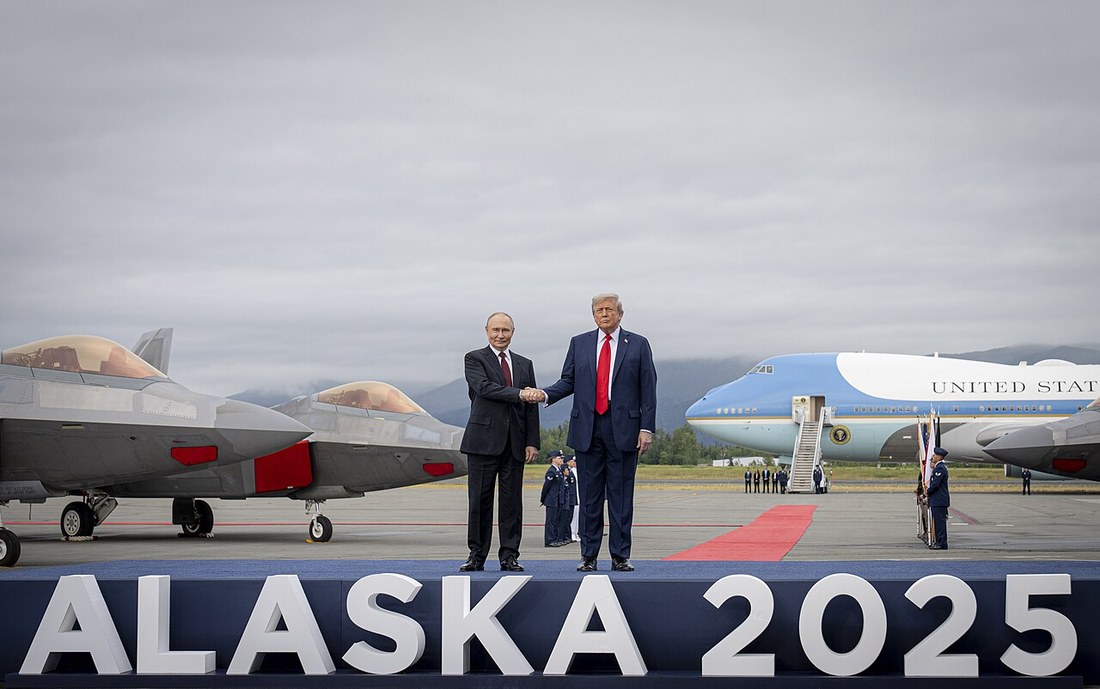
The remarks are the strongest signal yet from the White House that the slow, mostly private diplomacy of the past month is approaching a document. Dmitriev, who runs Russia’s sovereign wealth fund and has known the president’s circle for years, is not a foreign-ministry negotiator; his presence in the process is a sign that the talks are being run at the level of leaders, not officials. A photograph of the two presidents at their Alaska summit in August — the meeting that restarted direct contact — has become the defining image of the track.
Abu Dhabi, November 10–11
The next formal step is already on the calendar. Kremlin spokesman Dmitry Peskov, cited by the TASS news agency, has said a Russian delegation will travel to Abu Dhabi for trilateral talks with the United States and Ukraine on November 10 and 11. Ukrainian officials have given the same dates. The talks are expected to be at technical level — the working-out of terms rather than a signing — and would be the first three-way meeting since the last US-mediated round in February produced no agreement.
What is on the table, by the accounts of officials around the process, is broader than a ceasefire line. Ukraine presented new proposals at a meeting in Oslo on October 20. The American side, through the president’s son-in-law and envoy Jared Kushner, has repeated the demand that Ukraine stop attacking Russian oil refineries — strikes Kyiv regards as one of its few sources of leverage. Envoy Steve Witkoff met President Putin in St Petersburg in late October. Each of those threads is expected to converge in Abu Dhabi.
Zelenskiy’s condition: Europe in the room
President Volodymyr Zelenskiy has said publicly that Kyiv wants Europe involved in any talks on ending the war — a condition that cuts to the heart of the president’s “big agreement” framing, since a settlement that rearranges European security would be negotiated, in the current format, without the Europeans. Zelenskiy travels to Istanbul on Saturday for talks with President Recep Tayyip Erdogan, whose government has hosted Ukrainian and Russian delegations before and has again offered to facilitate. Turkey’s communications director, Burhanettin Duran, confirmed the meeting.
The Ukrainian president said last week that he hoped the trilateral format would move the process toward the formats “under discussion for such a long time” — an acknowledgment that the endgame, whenever it comes, will be a leaders’ meeting, not a negotiators’ one.
The friction underneath
The optimism in Washington sits on top of a visibly strained relationship. Reuters has reported how Ukraine’s strikes on Russian energy sites deepened a rift with the president, who on October 9 announced a deal to buy Russian diesel and issued a temporary license allowing it to reach global markets — a step Kyiv read as rewarding the country bombing its cities. That tension has not disappeared; it is the backdrop against which the Abu Dhabi delegation will work.
There is also the question of what “close” means. The president has described agreements as imminent at several points in the war’s diplomacy without a signature following. What is different this time, officials say, is the calendar: a dated, three-sided meeting, a named venue, and both Moscow and Kyiv confirming their attendance in advance. By Wednesday night, the claim will be testable.
The Facts
- France’s foreign minister said on Sunday that European officials, including France, will take part in the Abu Dhabi talks, despite the Kremlin having ruled out a European role
- The Abu Dhabi round, on November 10–11, is the fourth round of U.S.-brokered talks and the first since Geneva in February
- Overnight November 6–7, Russia launched 36 ballistic missiles and 172 drones at Kyiv and other regions; only four ballistic missiles were intercepted, Zelenskiy said
- The strikes damaged the Northern Bridge over the Dnipro and Kyiv’s power, water and heating systems; at least two people were killed across Ukraine
- Russia’s Abu Dhabi delegation will be headed by Vladimir Medinsky and include Ryabkov, Galuzin, Kostyukov and Zhigarlovsky; Kyiv’s will be led by Rustem Umerov
- Trump met Kirill Dmitriev, Putin’s special envoy, and said a Ukraine agreement is ‘very close’
- The president described the expected settlement as a ‘big agreement’ involving Ukraine and Europe
- US, Russian and Ukrainian negotiators are scheduled to meet in Abu Dhabi on November 10–11
- Zelenskiy wants European governments involved in the talks and meets Erdogan in Istanbul on Saturday
- The last US-mediated round of talks between the three sides took place in February
Sources: Reuters reporting on the Abu Dhabi talks and Zelenskiy’s Turkey visit; Voice of America Ukrainian service and the Jerusalem Post on the president’s remarks after the Dmitriev meeting; TASS via Kremlin spokesman Dmitry Peskov on the November 10–11 dates. Reuters reporting on the overnight strikes on Kyiv and the Abu Dhabi delegations, November 7, 2026. NPR and Associated Press reporting on France’s announcement and the Kremlin’s response, November 8, 2026.
Comments