

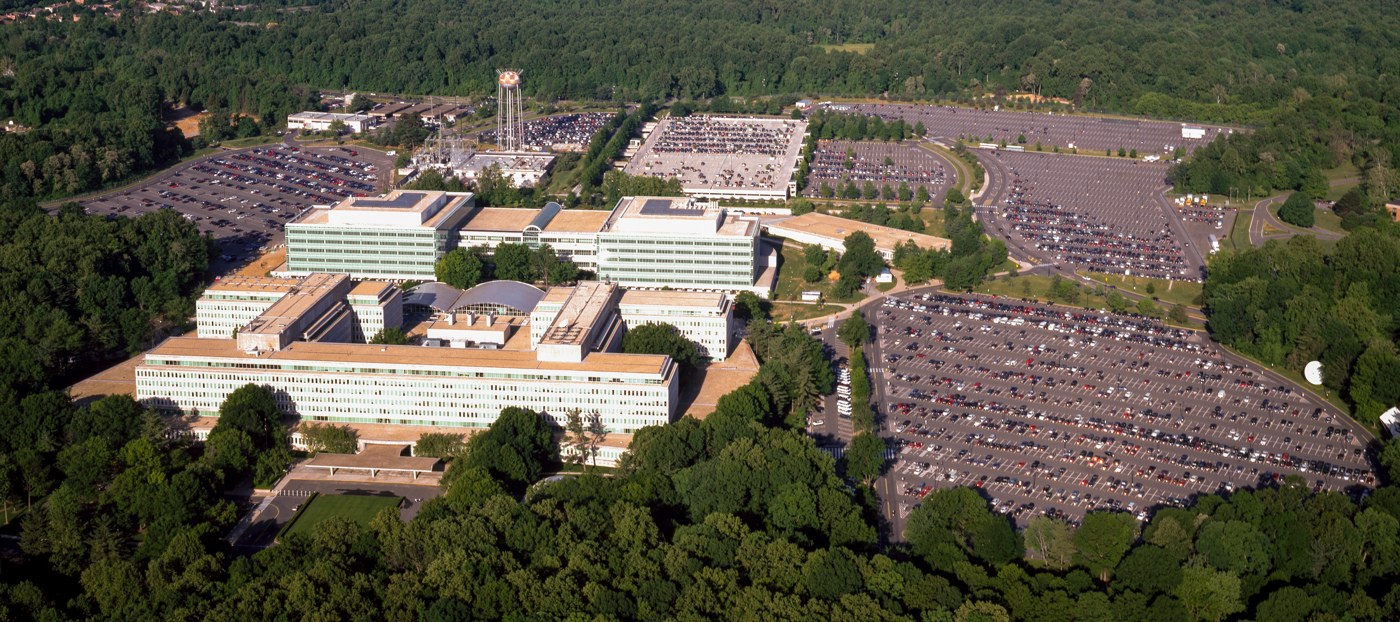
Hackers breached an unclassified computer system used by the Central Intelligence Agency and the Office of the Director of National Intelligence to analyse open-source intelligence — the news reports, social media posts, commercial satellite imagery and brokered data that America’s spy agencies mine for clues about the world — in an intrusion the agencies discovered recently and say has now been resolved.
The breach was first reported by The New York Times on Tuesday and confirmed to The Associated Press by a person familiar with the incident, who spoke on condition of anonymity because they were not authorised to discuss it publicly. The person told AP the breach did not involve any classified information and that the issue has been resolved. CNN, citing four sources familiar with the matter, also confirmed the intrusion.
An official at the Office of the Director of National Intelligence — the office that oversees all 17 US intelligence agencies, including the CIA — gave the same assurance in the agencies’ only on-the-record words so far: ‘There have been no disruptions to critical capabilities or classified systems.’ The CIA declined to comment.
The System That Was Breached
The affected system supports open-source intelligence, known in the trade as OSINT: the collection and analysis of information that is publicly or commercially available rather than stolen or classified. Its raw material is the modern information flood — news reports, social media content, satellite imagery bought from commercial providers and data sets purchased from private data brokers.
It is the fastest-growing side of American intelligence work. The ODNI has in recent years invested heavily in open-source analysis, on the logic that a great deal of what governments once needed spies to learn can now be read off the open record by analysts who know where to look — troop movements visible in commercial satellite passes, official thinking readable in state media, public sentiment measurable in social feeds.
Because the material itself is unclassified, the system that handles it sits outside the agencies’ classified networks. That is the boundary officials are leaning on: the intruders got into the reading room, they say, not the vault.
What Officials Say — And What They Don’t
Almost everything else about the incident remains undisclosed. It is not known who carried out the intrusion, when it began, when exactly it was discovered, or what specific material was exposed. The Times reported that information held by other government agencies was also believed to have been exposed, and that the National Geospatial-Intelligence Agency — the agency responsible for satellite imagery analysis — was concurrently affected alongside the CIA and the ODNI.
A second person familiar with the matter told reporters the intrusion disrupted an unclassified network used by the agencies; both sources stressed that classified systems were not affected. No agency has said whether data was taken, as opposed to merely accessed, and investigators have not publicly named a suspect or a country.
The Tool Named In The Reporting
One detail in the reporting points to how the intrusion may have been carried out. According to Nextgov, which covered the Times’ reporting, an artificial-intelligence tool called ARTEX — developed by a Chinese cybersecurity engineer known as ‘Autumn-27’, which automatically finds and breaks into computer systems — is believed to have been used in the breach. The tool has recently become a favourite of criminal hackers, the report said.
Hackers recently used the same tool to assist in an intrusion into the Defense Department’s Cyber Defense Command, according to two people familiar with that matter, though one of them described that breach as low-impact. Neither report attributes the CIA intrusion to a named government, and the ARTEX detail has not been confirmed by any agency on the record.
Why An Unclassified Breach Still Matters
Security specialists say the word ‘unclassified’ should not be read as ‘harmless’. What an open-source system holds is not only public material but the record of what America’s analysts did with it — the searches they ran, the subjects they tracked, the questions they were trying to answer.
‘If you can see what analysts are searching for and what topics they’re tracking, you get a solid look at U.S. intelligence priorities and blind spots without ever touching a classified file,’ Ben Bernstein, a manager at the cybersecurity firm Huntress, told Nextgov.
Aleksandr Yampolskiy, co-founder and chief executive of SecurityScorecard, made the same point: depending on what was exposed, an adversary could learn not only what the agencies know, but where their investigative priorities lie and where the gaps in their intelligence may be. For a foreign service deciding what to hide — or what to feed into the open record for American analysts to find — that map of attention is itself valuable intelligence.
A Week Of Incidents
The breach is the latest in a string of cybersecurity incidents and technology failures that have hit the US government and major companies in the past week. CNN reported on Friday that the FBI is investigating a breach of its nationwide criminal information database; two sources told CNN the CIA incident does not appear to be related to that one. NBC News reported the same day that the Department of Agriculture had been targeted in a cyberattack earlier last week, with hackers gaining access to the system the department uses to facilitate payments to farmers.
Separately, the National Security Agency’s highly classified internal communications network went down for multiple days last week. Officials said that outage was not a cyberattack: the nation’s spy chief, Director of National Intelligence Jay Clayton, attributed it to a software update gone wrong. A critical facility in Georgia that supports signals intelligence and cybersecurity operations focused on the Middle East was also affected; the NSA’s most sensitive collection systems were not, and the outage was resolved by Friday.
The Trump administration says the series of outages is not part of a coordinated cyberattack, and it dispatched Clayton to the Sunday morning news shows to calm Americans. Officials have likewise said the wider spate of disruptions — which has also hit Microsoft, major US banks and the aviation industry — did not appear to be the result of a cyberattack.
What remains is a short list of hard facts and a long list of open questions. A system at the heart of America’s fastest-growing intelligence discipline was broken into. The agencies say nothing classified was touched and the hole is closed. Who was inside, how long they were there, and what they learned about what America is watching — on those questions, the record is still blank.
Sources: The Associated Press, November 24, 2026; CNN, November 24, 2026; The New York Times, November 24, 2026, as reported by Nextgov, the New York Post and Reuters; NBC News, November 24, 2026; Xinhua, November 24, 2026.



Comments