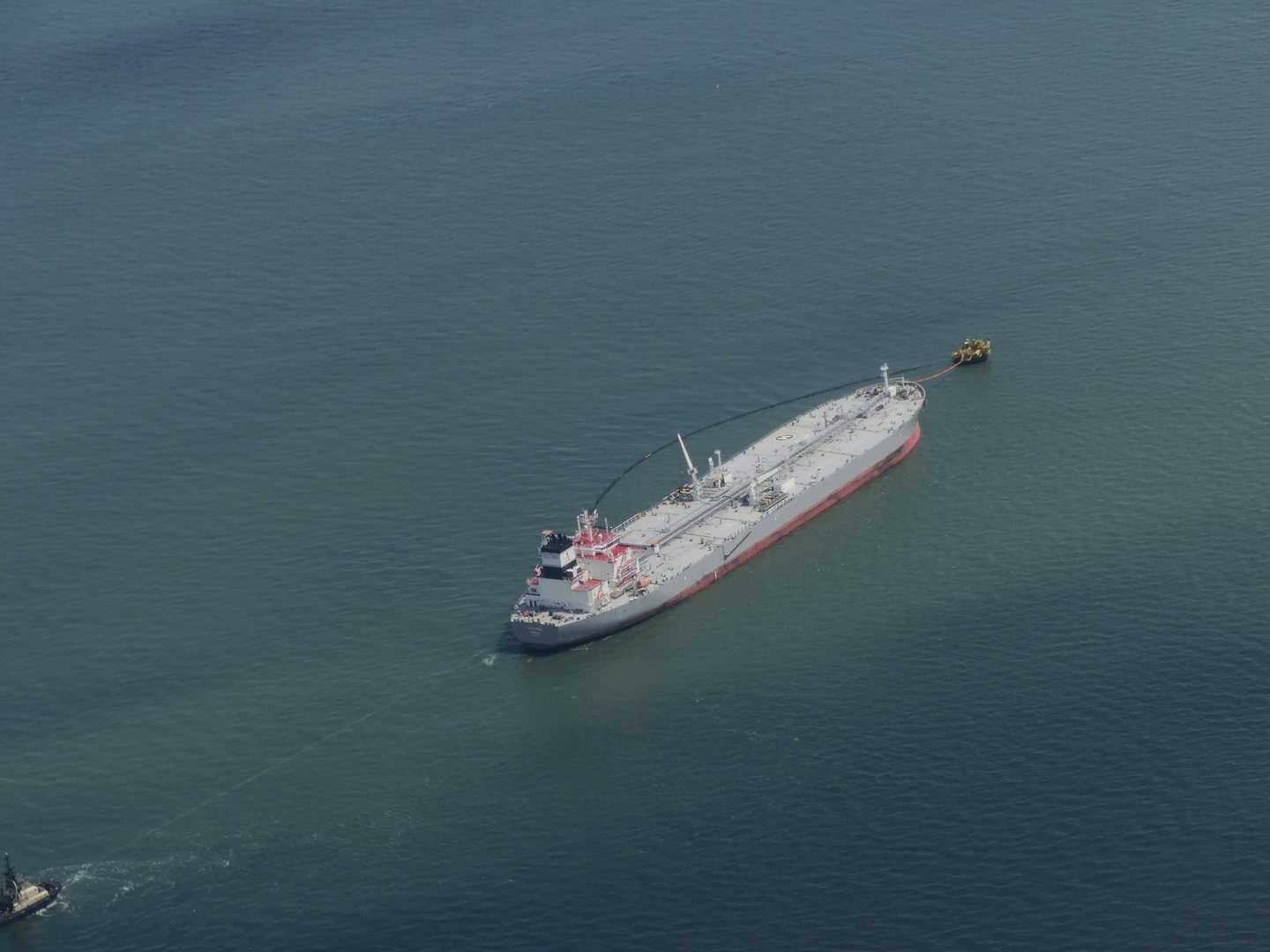
Iran’s Islamic Revolutionary Guard Corps said on Sunday that a supertanker carrying more than two million barrels of crude oil sank in the Persian Gulf after striking a naval mine in the Strait of Hormuz — a claim that, if confirmed, would be the first sinking of a laden carrier in the nine-month war over the waterway. The Guards’ navy said two tankers travelling on what it called an unauthorised route in the southern part of the strait hit mines “over the past few hours,” causing massive explosions and fires. The supertanker went down in the Gulf’s southern waters; the second vessel was left burning.
Monday Update: Two Tankers Confirmed Struck — And A New Incident Off Oman
Updated Monday, November 16, 2026. What was an unverified claim by Iran’s Revolutionary Guards on Sunday has partly hardened into the record. The United Kingdom Maritime Trade Operations centre (UKMTO), citing a report from Indian shipping authorities, confirmed that a tanker was attacked in the Arabian Gulf as it approached the Strait of Hormuz on November 15, and that its crew were safe and accounted for. Maritime security firm Vanguard Tech identified the vessel as the Al Dhannah, a very large crude carrier managed by ADNOC Logistics & Services: she was struck in the steering gear room at the stern and subsequently headed back towards Dubai port. The Al Dhannah is on the non-compliant list of Iran’s Persian Gulf Strait Authority (PGSA).
A second incident followed on Monday morning. UKMTO issued an alert on November 16 that a vessel had been struck by an unknown projectile while on an outbound transit of the strait: the attack, at 05:58 UTC, caused an engine-room fire, and the company security officer reported the crew all accounted for with no casualties. Vanguard identified that tanker as the Panama-flagged On Phoenix, owned by Onex, struck around three nautical miles off the coast of Oman. She has been on the PGSA blacklist since September 14.
The sinking claim itself remains unverified. The Guards said two tankers suffered “massive explosions” after hitting mines during what they described as “unauthorised” transits of the strait’s southern corridor, and that a supertanker carrying over two million barrels of crude oil sank in the southern Arabian Gulf. The video the Guards posted of the supposed sinking shows a large fire and smoke billowing on the water, with no discernible vessel in the footage. Iran did not identify either vessel it said was struck, and there has been no independent verification of the claimed mine strikes or the sinking. In a report on the Tasnim news agency, the Guards’ navy warned tanker owners, shipping company managers and crews not to approach the “restricted area” of the strait. Iran is targeting commercial vessels in the southern corridor that receive guided transits from U.S. forces; it claims the northern corridor through Iranian waters is the only allowable route and requires PGSA authorisation.
The statement, carried by Iranian state television, named neither vessel and gave no flag, owner or position. No shipowner, flag state or naval force had confirmed a sinking by Sunday evening, and Reuters said it could not independently verify the reports. What the Guards described losing is roughly the full load of a very large crude carrier, in the world’s most important oil chokepoint.
What The Guards Said
In their statement, the Guards said the two tankers had switched off all identification and positioning systems in an attempt to pass through the strait covertly, alleging “deception and support from the criminal US military.” The force warned fishermen to keep clear of the sunken tanker’s wreckage, and warned tanker owners, shipping companies and crews against entering what it called the prohibited zone in the strait, which it described as contaminated. Iran declared the strait closed after the United States and Israel opened their offensive in February, and the Guards’ navy declared it unsafe and closed on November 5 to any vessel that does not coordinate its passage with Tehran; Tehran treats only routes authorised by its armed forces as safe. Israel’s Ynet news site reported that Iran had released video said to show two tankers hitting mines; the footage has not been verified, and the Guards’ statement came with no imagery of a sinking.
What Maritime Authorities Have On Record
The only maritime authority to report an incident on Sunday was the United Kingdom Maritime Trade Operations centre, the Royal Navy-run shipping reporting point. In its warning 205-26, UKMTO said it was aware of a report, received from Indian shipping authorities, of an attack on a tanker sailing eastbound through the Gulf before it entered the strait. All of that vessel’s crew were accounted for and safe, UKMTO said; the extent of the damage and any environmental impact were unknown. The centre said it was unclear whether the report concerned the same incident the Guards had announced, and it advised vessels to transit with caution and report any suspicious activity.
That narrower record fits the pattern of the past month. Iran’s forces said at least twelve tankers struck mines between October 31 and November 5 without a single vessel being named, and UKMTO’s weekly overview counted at least seven tankers attacked in the week to November 11 — none of them sunk. The only tanker confirmed sunk in the war remains the Iranian vessel Kylo, destroyed by US forces on September 5, by US Central Command’s account.
Bahrain: Interceptions Over Manama, And A Claimed Radar Strike
The tanker claim capped a morning that had already brought the war back to Bahrain, home to the headquarters of the US Navy’s Fifth Fleet. The Bahrain Defence Force said its air defences “intercepted and destroyed several Iranian aerial attacks” on Sunday before they reached their targets — the first such interceptions Bahrain has announced since September. The kingdom’s Interior Ministry had earlier sent residents two threat alerts, at 4:32 a.m. and 6:50 a.m. local time, urging them to seek shelter, and explosions were heard in the capital, Manama. Bahrain accused Tehran of continuing its “systematic hostile approach” towards the kingdom.
The Revolutionary Guards said the operation was theirs, and that it was aimed at the United States: six drones of the Guards’ Aerospace Force targeted the US air-defence radar system at the Al-Rifaa helicopter base, Iranian state media reported, in retaliation for what Tehran called hostile US actions. Neither US nor Bahraini authorities confirmed that the radar had been hit, and no damage or casualties were reported. It was the second such exchange in three days. On Friday the Guards claimed an attack on a US early-warning radar facility in Bahrain; US Central Command denied it, saying American forces had intercepted two Iranian attack drones with no damage or injuries — the interception the Daily reported on Friday.
A Week Of Claims In A Nearly Empty Strait
Sunday’s claim is the largest yet in a drumbeat of reported mine strikes. By Friday, five tankers had been reported hit in the strait in the preceding days; on Saturday, Iran’s navy and the Guards said three more tankers struck mines and caught fire, one of them east of the strait. US Central Command dismissed the recent mine claims as false and said American forces had cleared the main shipping lanes of mines; Admiral Brad Cooper, the CENTCOM commander, said on October 30 that the strait’s primary transit routes “remain free and clear of Iranian sea mines.” Neither side’s account of the mine war has been independently established.
What is established is the effect on shipping. Traffic through the strait has fallen by roughly two-thirds or more from pre-war levels — about 36 passages a day against the 129 to 140 the waterway handled before the war, on UN trade figures cited by Al Jazeera — and ship-tracking data recorded an average of about one tanker a day in the week to November 8. The International Maritime Organization had tracked 136 security incidents involving vessels in and around the strait between March 1 and November 11, and the United Nations said on Saturday that 25 seafarers have been killed in and around Hormuz since February.
Oil, And What Is Not Yet Known
The oil market had not priced the claim by Sunday: Brent crude last settled on Friday at $95.84 a barrel, up two cents, after a second straight weekly fall of about 2.5 per cent, and futures were due to reopen on Sunday evening. A confirmed loss of a laden supertanker would put more than two million barrels of crude on the floor of the Gulf, with an environmental impact that UKMTO, reporting its separate incident, said was unknown. Treasury Secretary Scott Bessent has predicted that Iran’s economy will shrink by 25 per cent within a year under US pressure.
For now, the central facts of Sunday’s claim remain unestablished. Iran has not named the sunken ship, its flag, its owner or its crew, and has given no position for the wreck. It is not known whether the tanker in UKMTO’s report is either of the two vessels the Guards described, whether any oil has spilled, or how the United States — which denied Tehran’s radar claim on Friday and had not commented on Sunday’s by Sunday evening — will answer the sinking claim. What is confirmed is that the statements were made, that Bahrain’s air defences fired on Sunday morning for the first time since September, and that the strait the world’s oil depends on remains nearly empty.
Sources: Reuters, “Bahrain intercepts Iranian aerial attacks as Tehran says it attacked US base,” November 15, 2026, and Reuters reporting of the Revolutionary Guards’ tanker statements, November 13–15, 2026; the Associated Press, November 15, 2026; Agence France-Presse, November 14–15, 2026; Press TV and Fars News Agency, IRGC Navy and IRGC Aerospace Force statements, November 15, 2026; UK Maritime Trade Operations, warning 205-26, November 15, 2026; Al Jazeera, shipping and seafarer figures, November 14–15, 2026; Ynet, November 15, 2026. Monday update reporting: Seatrade Maritime News, November 16, 2026 (UKMTO and Vanguard Tech).

Comments