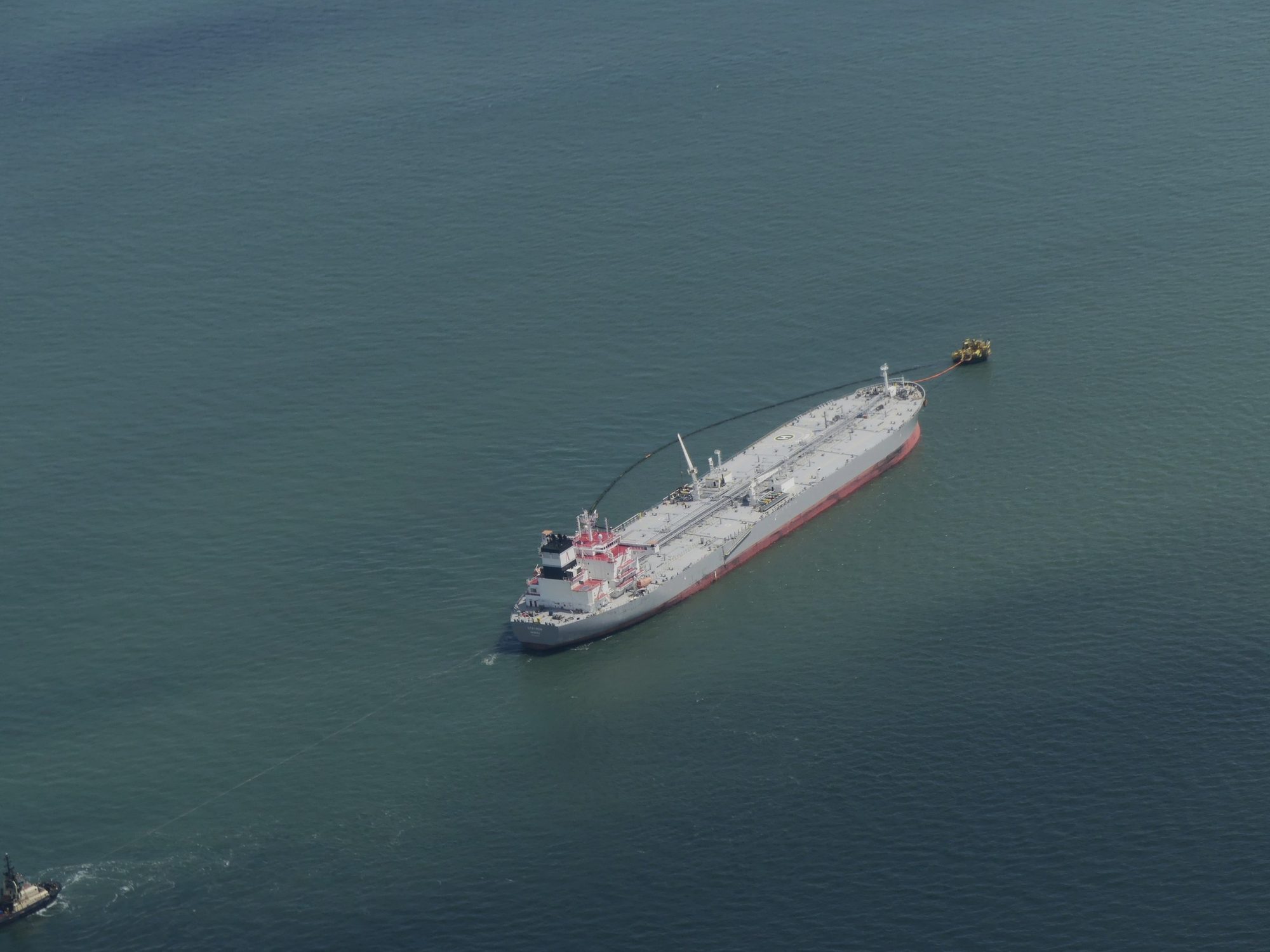
Iran’s Revolutionary Guards Navy said on Thursday that two oil supertankers were disabled by massive explosions in the Strait of Hormuz on Wednesday night, after ignoring repeated warnings against using a southern shipping route that Tehran has declared unauthorised. The Guards said the two vessels were carrying more than four million barrels of oil between them and were left burning.
“Last night, two violating oil tankers — which had ignored repeated warnings from the Strait of Hormuz traffic control center of the IRGC Navy regarding the unauthorized and unsafe nature of the southern route — faced an incident while transiting through this unauthorized path in the Strait of Hormuz, and stopped sailing following a massive explosion,” the Guards’ public relations office said in a statement.
Iranian state media reported that the tankers had exploded after hitting naval mines. The Guards’ own statement did not say what caused the explosions. The names, flags and operators of the two ships were not disclosed, and there was no independently confirmed account of the state of their crews or the extent of the damage. In earlier incidents in the strait this year, the United Kingdom Maritime Trade Operations agency has said tankers were struck by unknown projectiles, and the United States military has maintained that mines in the waterway have been cleared.
The announcement was the third of its kind in eight days. On November 5, the Guards reported that two oil tankers and a tugboat had caught fire in separate incidents in the strait, and on November 10 they said three more tankers had caught fire after using unauthorised routes. The International Maritime Organization said on Wednesday that it has verified more than 130 attacks on commercial vessels in the Strait of Hormuz since the war began on February 28. The Joint Maritime Information Center, which monitors shipping threats in the region, rated the threat level severe in its November 8 advisory. The strait, between Iran and Oman, carries roughly a fifth of the world’s seaborne oil.
The tanker announcement came hours after Iran’s top security official widened, in public, the map of what Iran says it will strike if the war resumes. Mohsen Rezaei, the secretary of Iran’s Supreme National Security Council, told the Lebanon-based Al Mayadeen television channel on Wednesday that a renewed American attack would no longer be answered only in the Gulf.
“If American aircraft take off from an American military base, even one located in a European country or some other distant region, to bomb Iran, we will strike those bases as well,” Rezaei said. “We may even strike certain islands that they assume are beyond the reach of our missiles.” He named no bases and no islands.
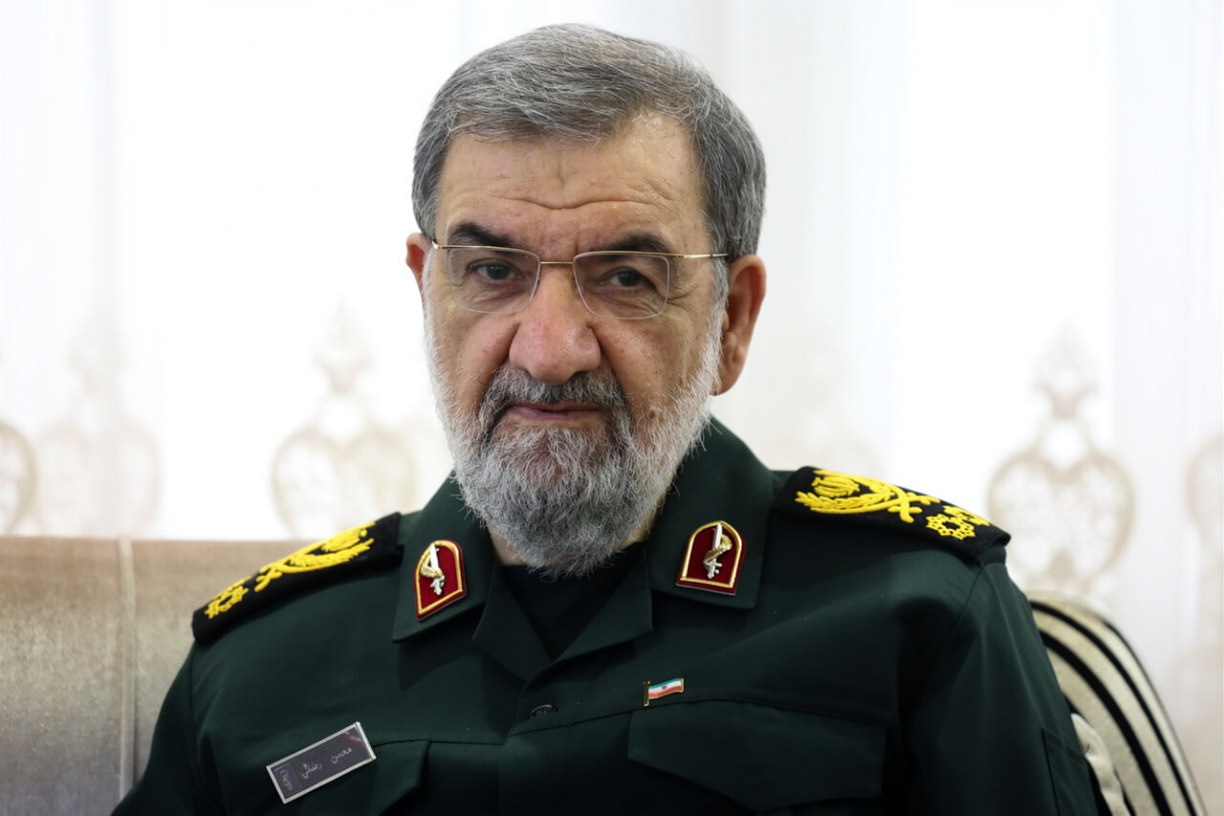
In a post on X the same day, Rezaei wrote that in a new war every American military base involved in the aggression would be a legitimate target, “from West Asia to Europe,” adding: “No safe distance, no safe haven, no immunity.” Rezaei commanded the Revolutionary Guards from 1981 to 1997 and became secretary of the Supreme National Security Council in August, by decree of Supreme Leader Mojtaba Khamenei.
Rezaei also set out Tehran’s terms. Iran, he said, will not let a single particle of its enriched uranium leave the country, and he tied any reopening of the Strait of Hormuz to ending the war on all fronts, naming Lebanon in particular. Iran’s parliament speaker, Mohammad Bagher Ghalibaf, told Al Jazeera the strait will “never return” to its pre-war status. A Qatari proposal under discussion would reopen the strait on the second day of a package of confidence-building measures. Tehran has rejected an American proposal to transfer its stockpile of uranium enriched to 60 percent to a third country. The International Atomic Energy Agency estimated that stockpile at 440.9 kilograms when Israel and the United States struck Iran’s nuclear facilities in June 2025.
The threat was answered in Britain, whose bases host American forces. Defence Secretary Wes Streeting, speaking in Oslo on Wednesday, said Britain is investing £470 million over the next four years in the security of its bases, and said he took Rezaei’s threat as “an admission of guilt after the event” — a reference to the alleged September plot against RAF Fairford in Gloucestershire, for which American prosecutors unsealed an indictment on Tuesday. The Associated Press has reported that the US Air Force moved aircraft from RAF Mildenhall in eastern England “because of a threat,” less than two months after American bombers were withdrawn from Fairford.
In Israel, the security cabinet on Wednesday evening ordered the military to step up its preparations for a possible attack on Iran, the public broadcaster KAN reported. KAN said the directives “could lead it to carry out activities that could trigger a war.” The cabinet is chaired by Prime Minister Benjamin Netanyahu, who is governing in a caretaker capacity after his coalition lost its parliamentary majority in October. It had not met since October 5 and is to convene on Sunday for the first time since then.
The order became public after Gadi Eisenkot, the opposition leader asked by President Isaac Herzog to try to form a new government, told Netanyahu not to deploy the military “without a direct and immediate threat” until that government is in place. Netanyahu has said the war against Iran will continue until the government in Tehran collapses. Neither the prime minister’s office nor the Israeli military has confirmed that a strike is imminent.
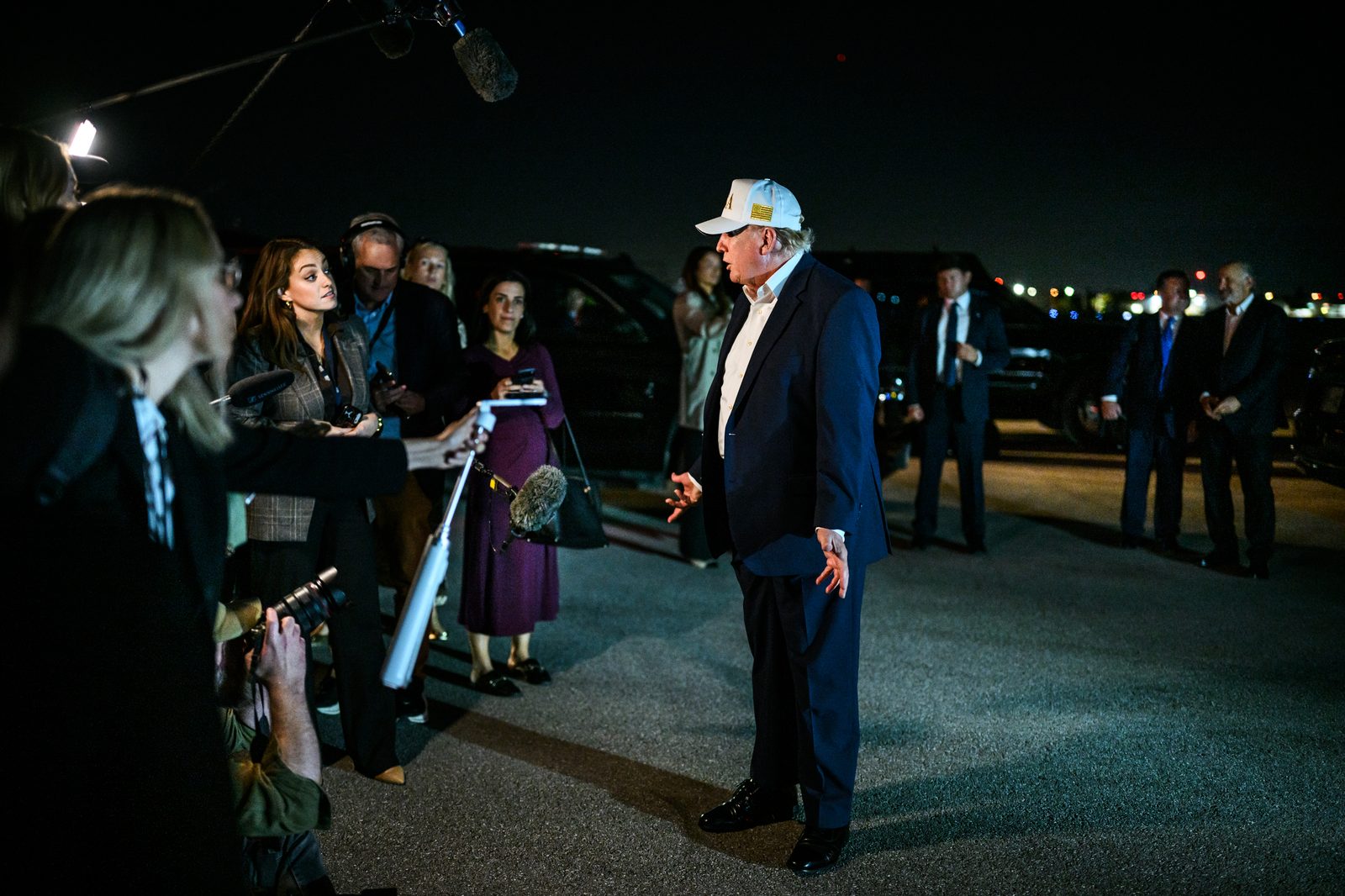
In Washington, President Donald Trump dismissed the diplomacy outright on Thursday. “We don’t need a deal with Iran. Those days have long since passed. We’ve got their money, hundreds of billions of dollars, and we’ve got their Strait!” he wrote on Truth Social. In the same post, he said he was pulling Vice President JD Vance off the Iran file to focus on domestic matters.
Vance had been considering face-to-face talks with Rezaei, according to The Wall Street Journal, and the president has confirmed that Vance wrote to Rezaei in October asking for a meeting. Rezaei has called reports of talks “fake news,” and no meeting has been announced. Secretary of State Marco Rubio said on November 10 that there is “no need for major combat operations” because the campaign of economic pressure is working, and he has called the seven conditions Tehran has set for negotiations unacceptable.
Oil markets moved on the president’s words. Brent crude, which had fallen toward two-month lows on hopes of a negotiated end to the war, reversed and rose 1.6 percent to $94.25 a barrel after the post, touching $94.40 before easing back to trade between $93 and $94. West Texas Intermediate rose 1.3 percent to $87.62. The Associated Press noted that Brent has traded between roughly $70 and $150 a barrel since the war began. OCBC bank maintains a year-end Brent forecast of $100, citing tanker attacks, longer shipping routes and scarce vessel capacity. The US Energy Information Administration’s weekly petroleum report is due later on Thursday, delayed a day by Veterans Day, and the International Energy Agency publishes its monthly oil-market report on Friday.
Bahrain has asked for an urgent meeting of the United Nations Security Council under the agenda item “the situation in the Middle East.” What caused Wednesday night’s explosions, which ships were hit and what has become of their crews remained unconfirmed on Thursday, and the United States had issued no statement on the tanker incident in the reports available by Thursday morning.
Thursday Afternoon: Two More Tankers
Iran’s army said later on Thursday that two other tankers had hit mines on Thursday afternoon while sailing through the eastern Strait of Hormuz, state television reported. The army said the two ships had ignored warnings and disabled their radar systems, entered a restricted area and subsequently caught fire. With the two supertankers the Guards reported on Wednesday night, Iran’s military was now describing four tankers struck by explosions in the strait in the space of a day. Reuters said it could not immediately verify the Iranian account; none of the four ships has been named, and there was still no independently confirmed account of their crews or of the damage.
The United Kingdom Maritime Trade Operations agency added a separate incident of its own. In reports on Thursday, the UKMTO said a vessel was hit by an unidentified projectile on Wednesday about 14 nautical miles northwest of Ras Al-Khaimah, in the United Arab Emirates, while exiting the strait. The strike caused a fire in the ship’s engine room; firefighting efforts were under way and all crew had been evacuated, the agency said. In several earlier cases in the strait, the UKMTO has reported vessels struck by unknown projectiles while Iran has reported ships catching fire on mines — and the United States military has maintained that the mines in the waterway have been cleared.
The tempo is rising. At least 10 ships were hit in the first 10 days of November, after 37 attacks in October — the highest monthly tally since the conflict began in late February — according to data from the Washington Institute for Near East Policy reported by Reuters. Earlier in the war the Guards’ navy announced its own attacks on tankers; more recently it has instead reported vessels catching fire after hitting naval mines on the southern route it has declared unauthorised.
Friday: Drones Over Bahrain, And A Claim Against A US Radar
Iran’s Revolutionary Guards said on Friday that they had targeted a US early-warning radar in Bahrain — the first claim of an attack on American military assets in a Gulf country since early September — in retaliation, they said, for an air attack on a telecommunications tower in Iran’s southern Sirik county, in Hormozgan province, according to Iranian state media. The US military said it had intercepted two Iranian attack drones headed toward Bahrain; the United States denied any damage or injuries, and the Guards’ claim of a strike on the radar could not be independently verified. When Reuters first reported the claim, there had been no comment from the US or Bahrain.
A Fifth Tanker In Two Days
The Guards’ navy said separately on Friday that a tanker carrying liquefied natural gas struck a naval mine and suffered an explosion in the Strait of Hormuz while using what they described as an “unauthorised and dangerous route,” state media reported. No details of the tanker — its name, flag, owner or crew — were available, and there was no confirmation from the UK Maritime Trade Operations agency or any shipowner; some regional reporting described the cargo as liquefied petroleum gas rather than LNG. The claim makes five tankers Iran says have been struck in the strait in two days, after the four reported on Thursday. Oil prices were mixed on Friday but set for a second weekly decline: Reuters reported that Washington plans to continue its blockade of Iranian ports, reducing the chance of renewed large-scale fighting, and President Trump said on Truth Social that a deal with Iran was “not necessary” to end the war. Yemen’s Iran-aligned Houthis said on Thursday that they had attacked a pumping station on the Saudi East-West oil pipeline, an oil facility in the Red Sea city of Yanbu and an Aramco building in Riyadh. In Tehran, thousands attended funeral ceremonies for 350 unidentified soldiers of the Iran-Iraq war, and Iran told the United Nations’ nuclear watchdog that discussions on nuclear monitoring cannot proceed while the country is facing military threats.
Saturday: Another Tanker Ablaze, And Trump Weighs Holding Off
Iran’s navy said an oil tanker caught fire on Saturday morning after hitting a naval mine in the eastern Strait of Hormuz, Iranian state media reported — a further tanker struck a day after the five reported on Thursday and Friday. Reuters said it could not immediately verify the report. Separately on Saturday, Reuters reported that President Trump has told senior advisers in recent days that he may hold off on attacking Iran if the United States faces no new provocations from Tehran or the Iran-backed Houthis in Yemen, according to three people familiar with the matter. In phone calls over the past two weeks, Saudi Crown Prince Mohammed bin Salman and Turkish President Tayyip Erdogan both urged him not to resume attacks, arguing that sanctions were working; US intelligence agencies have assessed that the naval blockade and sanctions are hurting Iran’s economy. A third aircraft carrier is moving into the Middle East in the coming days to replace one of the two currently operating there, though all three could stay if needed, the people said. In a Reuters/Ipsos poll taken shortly before the November 3 elections, 55 per cent of Americans said the war was not worth the cost.
Sources: Reuters; The Times; Al Jazeera; KAN; the Associated Press; The Wall Street Journal; Press TV; the International Maritime Organization; Reuters, “Four tankers struck by explosions in Strait of Hormuz, Iran says,” November 12, 2026; UK Maritime Trade Operations incident reports, November 12, 2026; Reuters, “Iran’s Guards say they targeted a US early-warning radar in Bahrain,” and “Iran says tanker carrying LNG hit mine, suffered explosion in Hormuz,” November 13, 2026; the Associated Press News Summary, November 13, 2026; Reuters oil market report, November 13, 2026; Reuters, “Iran’s navy says oil tanker on fire after hitting mine in Hormuz,” and “Trump tells advisers he may hold off on Iran attacks barring new provocations,” November 14, 2026.


Comments