Protests against war and rising living costs took place in major Italian cities on Saturday, with some incidents of violence, a week after unrest erupted across the country. The demonstrations were violent in Turin, Rome and Bologna, with clashes between officers and demonstrators. They were largely peaceful in Milan. Authorities deployed a heavy police presence, and many shops closed as a precaution against possible damage. Reuters witnesses did not observe any shops being looted or property vandalised.
Earlier on Saturday, Italian police detained a person allegedly linked to organising the “October 17 Movement” — the name taken by last weekend’s protests — and took them to police headquarters in Milan for questioning. Interior Minister Matteo Piantedosi announced the arrest of a 30-year-old man described as the suspected mastermind of the movement, which had called Saturday’s mobilisation. El País named him as Youssef Siher, a freelance journalist and analyst of Italian and Moroccan origin who has written for national newspapers, and reported that he is accused of inciting crime with aggravating circumstances of terrorist purpose and use of computer means. Police say he wrote the group’s messages on social media. The movement had threatened mobilisation in eight cities; according to reports in Spain, the arrest did not halt the protests.
The day’s marches carried different causes from city to city. In Rome, demonstrators gathered for a national demonstration under the slogan “Keep Italy out of the war,” opposing military involvement and increased defence spending. In Turin, students and activist groups called a march against rearmament, rising fuel prices and the cost of living, demanding better access to housing, education and healthcare. In Naples, demonstrators mobilised against economic hardship and rising prices, and thousands were expected in Castel Volturno, near Naples, to march against plans to establish a migrant detention and repatriation centre. Other demonstrations were planned in Genoa, Bologna, Florence, Padua and Verona.
Tension rose in the early evening. In Turin, scuffles broke out with riot police from 5:30 p.m. during an authorised march, and protesters burned a large photograph of Prime Minister Giorgia Meloni. In Bologna, a gathering that began peacefully turned violent shortly before 6 p.m., when protesters threw stones and bottles at officers, who answered with water cannon. In Rome, small groups tried to enter the Colosseum and were pushed back by site security.
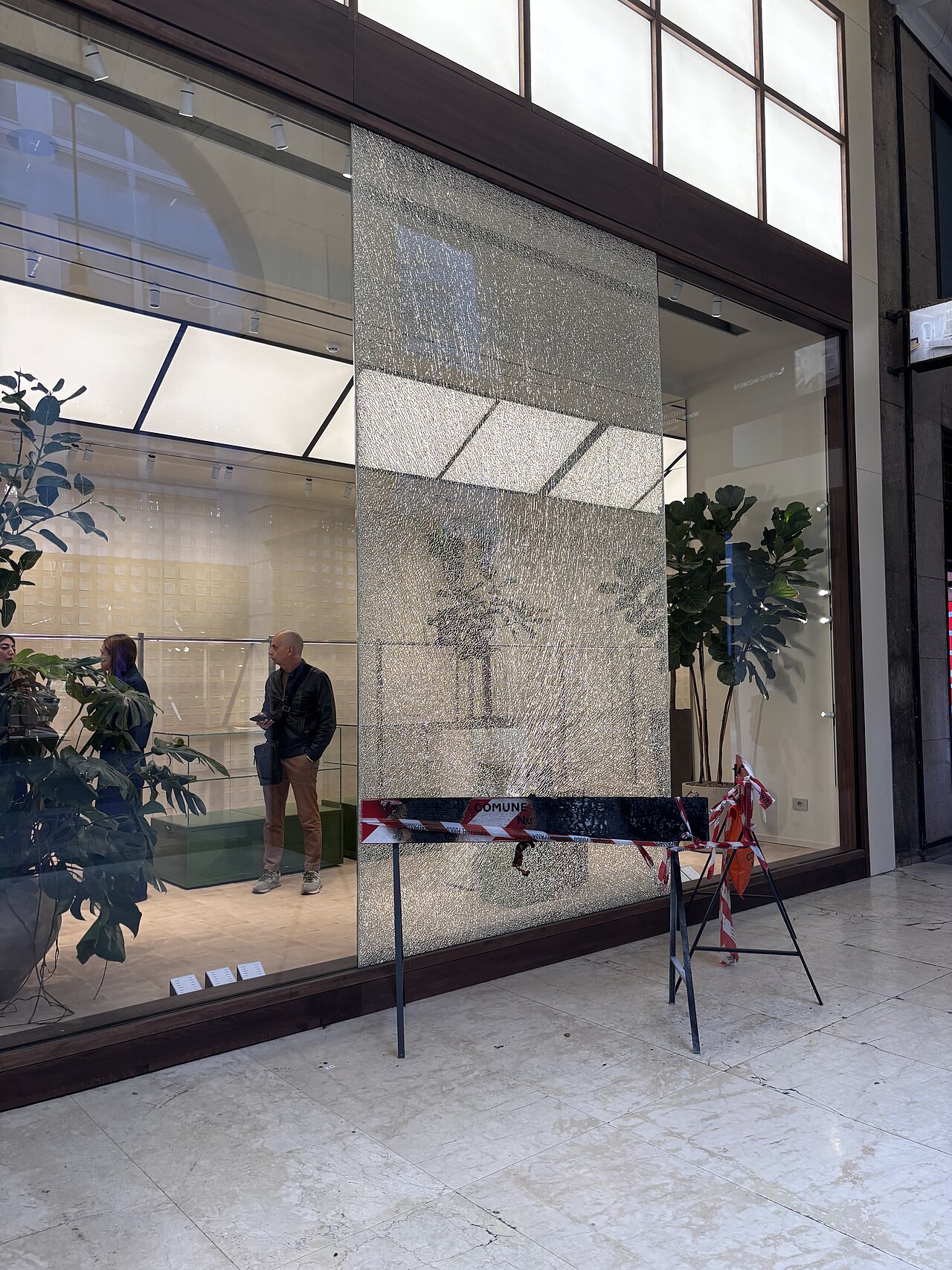
The government had sent 500 soldiers to Milan, where luxury stores stood boarded up — among them a Saint Laurent shop in Milan and a Bottega Veneta shop in Rome, photographed ahead of the marches. Valter Mazzetti, secretary general of the Fsp police union, told The Associated Press that soldiers could provide immediate reinforcements but could not resolve police staffing shortages, noting that managing demonstrations requires specialised police training. Defense Minister Guido Crosetto said in a social media post that the troops lacked key tools available for public-order operations, that soldiers were only recently allowed to use plastic restraint ties, and only in areas around train stations — and that they are not authorised to carry pepper spray or tasers.
A Week Ago: The October 17 Weekend
The unrest began on Saturday, October 17, with demonstrations promoted through social media under the name Italia in Piazza, against the rising cost of living, taxation, fuel prices and deteriorating public services. In Milan, groups of young people, many masked, confronted police, erected barricades, attacked commercial premises and looted shops around Piazza del Duomo and Via Torino — sports retailers Decathlon and Arc’teryx and a Vodafone phone store among them — while police fired tear gas and water cannon. Disturbances continued on Sunday. Clashes also erupted on the Saturday in Bologna, Brescia, Bergamo and Turin, where police arrested 28 demonstrators.
On the Sunday in Milan, police took 271 young people to headquarters. Of those, 32 were arrested, including 23 minors and 13 foreign nationals, and a further 28 people were reported to judicial authorities. Police said about 2,000 young people took part in Milan’s violence across the two days, and 45 people were arrested in all, 34 of them minors. Fourteen law-enforcement officers were injured in Sunday’s clashes, and the Confcommercio business group provisionally put the damage to Milanese commercial premises at more than one million euros.
Prime Minister Giorgia Meloni condemned the violence and announced a government meeting for Monday, October 19. Her government then approved a security decree imposing up to five years in jail for riot offences, making parents financially liable for damage caused by their children, and extending preventive measures to minors. Deputy Prime Minister Matteo Salvini announced the troop deployment in those terms: “500 more soldiers to defend Milan. A victory for the League.” Last week, Interior Minister Piantedosi said early findings ruled out structured links to antagonist groups and that no organiser had been identified — a position Saturday’s arrest announcement moved beyond. Milan’s welfare councilor Lamberto Bertolé, of the center-left Democratic Party, told The Associated Press that more investigation is needed into the young people who joined the looting: “Many young people increasingly lack a sense of belonging and prospects for the future. Part of our society feels excluded, amid social and economic inequalities.”
Italy’s marches are one front of a month of unrest across Europe over living costs and public services. In France, where hundreds of thousands marched on October 17 in some of the country’s most violent protests in years, the government put 70,000 police on the streets for Saturday’s demonstrations and closed the Louvre and other Paris museums. Demonstrations over housing and pensions have also been held in Spain and Portugal.
Saturday In Italy, In Short
- The marches: protests against the war and the cost of living in Turin, Rome, Bologna, Milan, Naples and other cities; clashes in Turin, Rome and Bologna; Milan largely peaceful; no looting observed by Reuters witnesses.
- The arrest: police detained a 30-year-old man they describe as the suspected organiser of the October 17 Movement, named by El País as freelance journalist Youssef Siher.
- The security: 500 soldiers sent to Milan; luxury shops boarded up in Milan and Rome; police on heavy deployment nationwide.
- The backdrop: last weekend’s Milan riots — 271 taken to police stations on the Sunday, 32 arrested including 23 minors, damage put at more than €1 million — and the government’s answer, a decree with up to five years’ jail for riot offences and parents liable for their children’s damage.
Sources: Reuters; The Associated Press; El País.
Comments
Loading comments…