
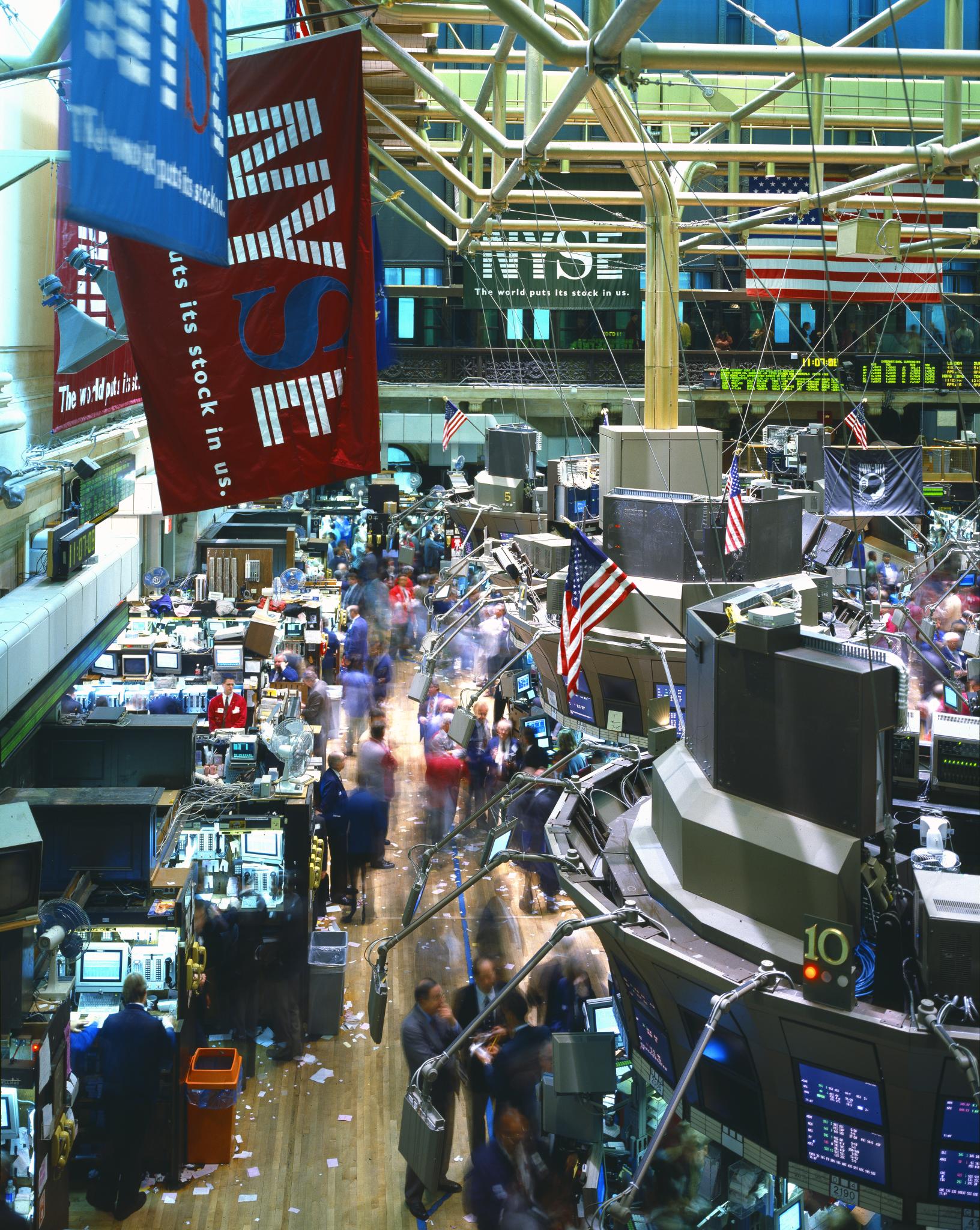
Wall Street took its heaviest blow of the autumn on Wednesday, as three separate pressures — inflation that will not cool, a fresh round of American tariffs, and the accelerating collapse of the artificial-intelligence trade — landed on the market in a single morning. By late morning the Nasdaq Composite was down about 4 per cent, the S&P 500 had fallen 2.8 per cent to 7,001.59, and the Dow Jones Industrial Average had shed more than 850 points, in the last full trading session before the Thanksgiving holiday.
The selling extended a rout that began on Tuesday, when Nvidia slipped 5.9 per cent and the Philadelphia Semiconductor Index dropped 7.9 per cent. Both the S&P 500 and the Nasdaq are now on pace for their worst November since 2008, and the S&P is down roughly 5 per cent for the month even after Monday’s brief, violent bounce.
The Inflation Print: 3.8 Per Cent
The first blow was the data. The Commerce Department reported on Wednesday that the personal consumption expenditures price index — the Federal Reserve’s preferred measure of inflation — rose 0.3 per cent in October and 3.8 per cent from a year earlier, up from September’s pace and nearly twice the Fed’s 2 per cent target. Core PCE, which strips out food and energy, rose 3.3 per cent year over year, slightly above what economists surveyed by Dow Jones had expected.
It was the last inflation reading the Fed will see before its December 8–9 meeting, and traders treated it as decisive. Futures markets priced a 94 to 97 per cent probability that the central bank, chaired by Kevin Warsh, will raise its benchmark rate by a quarter point next month, according to the CME Group’s FedWatch tool — with Fox Business reporting a further 63 per cent chance of another increase in January.
Tariffs On 14 Partners
The second blow came from the White House. The administration announced on Wednesday a new round of tariffs on 14 trading partners, among them China, Japan, India and the European Union, following a months-long investigation led by US Trade Representative Jamieson Greer into foreign governments’ industrial subsidies and what Washington calls excess production capacity. Reuters reporting ahead of the announcement had put the number of targeted partners as high as 16.
Tariffs are not an abstraction in this inflation cycle: economists cited in Wednesday’s coverage noted that duties have fed directly into the price pressures the PCE index is now measuring, alongside energy costs still elevated since the attacks on Iran earlier this year. New duties threaten to keep inflation higher for longer — the exact condition forcing the Fed’s hand.
The AI Trade Unwinds
The third blow was the sector that built the year’s gains. Nvidia, the chipmaker at the centre of the AI boom, fell more than 7 per cent in regular trading on Wednesday, extending Tuesday’s slide and continuing the reversal that began almost as soon as Monday’s euphoria faded. Micron Technology sank more than 10 per cent and Advanced Micro Devices more than 9 per cent, according to Benzinga data; Dell’s stock fell despite strong results and a raised outlook, and shares tied to Anthropic retreated as well.
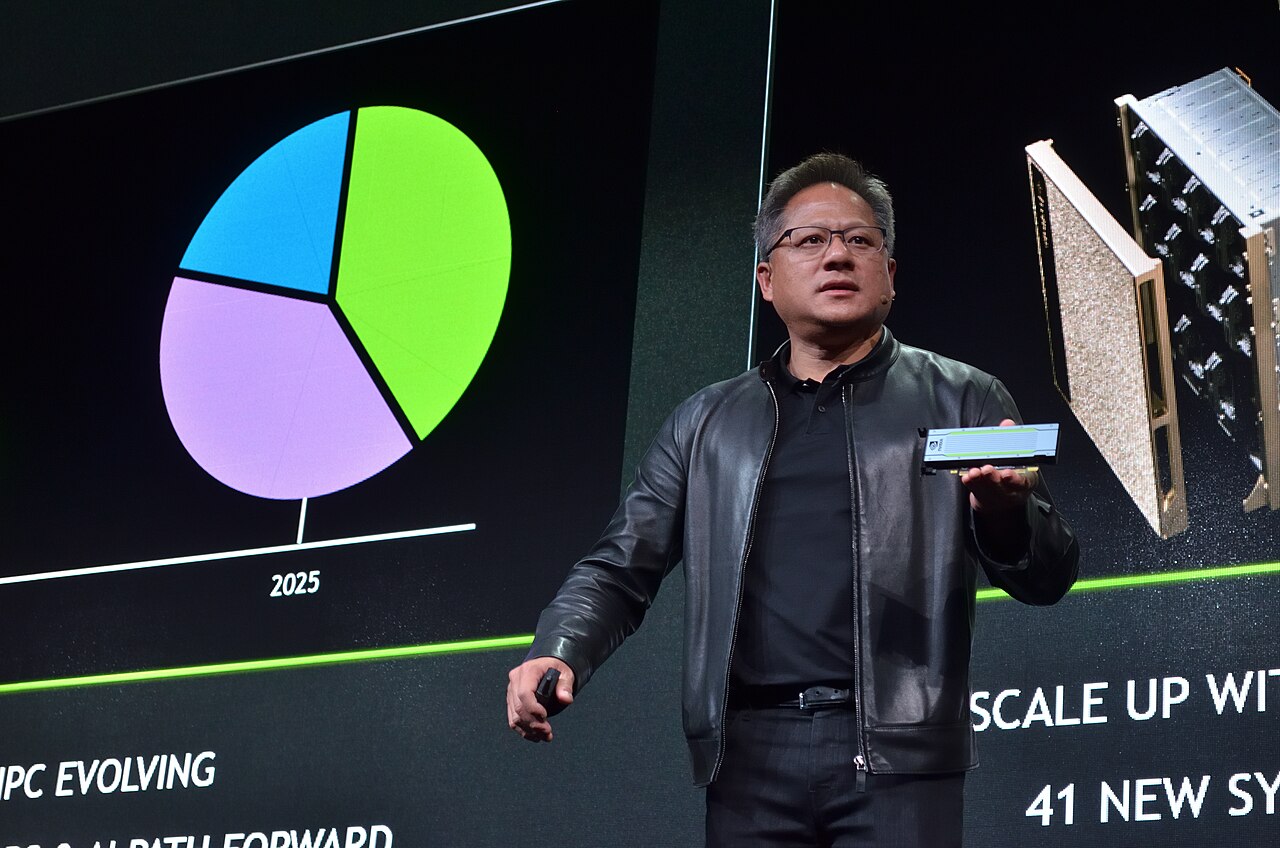
The speed of the turn is the story. On Monday, Nvidia’s board reinstated Jensen Huang as chief executive, 11 days after his resignation, and the stock posted its best day since 2003, adding $952 billion in market value. By Tuesday the shares were falling again; by Wednesday the bounce was a footnote, the enthusiasm over Mr Huang’s return fading under the same questions that drove him out: how much of the AI spending boom is real demand, and how much is debt.
Growth Says One Thing, Prices Say Another
What makes the Fed’s position genuinely difficult is that the economy underneath the market is not weak: separate figures on Wednesday put third-quarter GDP growth at an annual rate of 4.3 per cent. Strong growth with persistent inflation leaves a central bank no comfortable move: cut rates and feed prices, or raise them and squeeze borrowers, a rattled stock market, and households heading into a holiday season in which the Thanksgiving dinner itself costs more than it did a year ago.
The Afternoon Turn
Then the picture changed. The losses trimmed steadily from their worst levels — shortly after noon Eastern the S&P 500 was down 2.2 per cent, the Dow 472 points and the Nasdaq 3.2 per cent — and by 1:55pm Eastern, the AP reported, the S&P 500 was down just 0.2 per cent, the Dow had reversed to a gain of 324 points, or 0.7 per cent, and the Nasdaq was down 0.9 per cent, after falling as much as 4.6 per cent earlier. About three quarters of the stocks in the S&P 500 were rising; technology held the index in the red, with Nvidia down 4.9 per cent, Broadcom 3.2 per cent and Microsoft 1.3 per cent, while Anthropic bounced back to a gain of 2.8 per cent. Brent crude rose 1.5 per cent to $90.07. No one was calling a bottom: ‘At this point, between the AI angst and the newly announced tariffs, it doesn’t look like the Santa Claus Rally is in store for us this year,’ Chris Zaccarelli, chief investment officer at Northlight Asset Management, wrote in a research note.
What Happens Next
US markets are closed on Thursday for Thanksgiving and reopen Friday for a shortened session ending at 1pm Eastern. That leaves investors holding what is left of Wednesday’s losses through the holiday, with the December 8–9 Fed meeting as the next fixed point. A hike is priced as near-certain; the open questions are whether the Fed signals more to come in January, whether the tariff list grows when the full Section 301 findings are published, and whether the AI leaders can find a floor. The S&P 500 is down roughly 5.5 per cent for November — in the same week the government reported the economy growing at 4.3 per cent.
Sources: TradingView / Invezz market reporting, November 25, 2026; the New York Post, November 25, 2026; Fox Business, November 25, 2026; the Associated Press market reports via WFTV and WDBO (including the 1:55pm Eastern afternoon update), November 25, 2026; Investopedia, November 25, 2026; Benzinga via TradingView, November 25, 2026; the Bureau of Economic Analysis, November 25, 2026.
Comments