

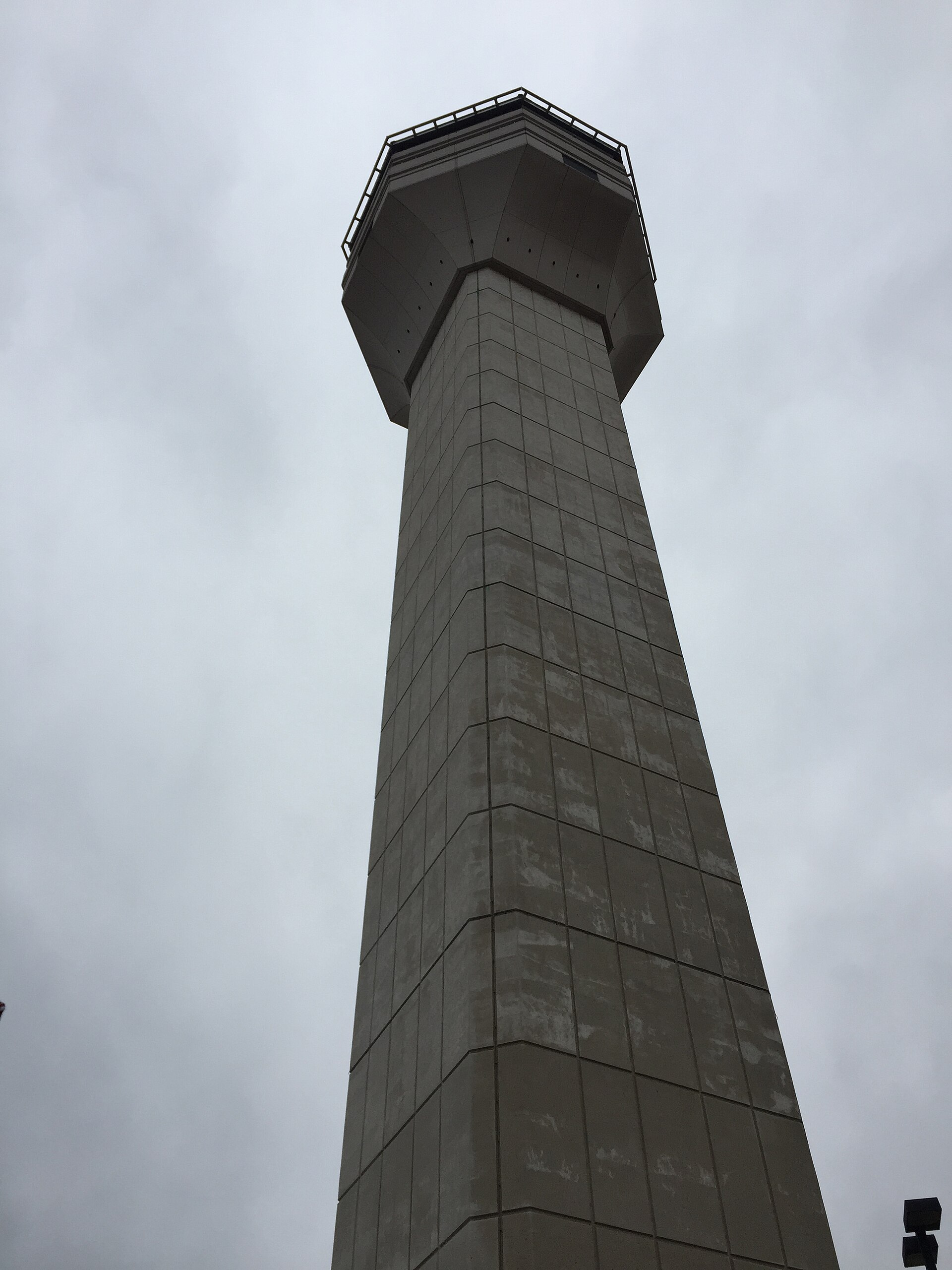
America’s air travel system spent Saturday digging out from the longest nationwide ground stop in 25 years, after the Federal Aviation Administration held every departing flight in the country for more than four hours on Friday afternoon — and the explanation offered at a Saturday morning news conference in Washington was not a cyberattack, a storm or a security scare, but a piece of routine maintenance on a stretch of old copper wire.
The ground stop was issued at 3:54 p.m. Eastern on Friday, November 13, and lifted at about 8:15 p.m., Transportation Secretary Sean Duffy said. It was the first nationwide stop since January 2023, when a pilot-notice system failed, and only the third of this century; the first was imposed on September 11, 2001. About 3,500 aircraft were already in the air when the order came down, and the stoppage affected roughly a quarter of the 45,000 flights the United States handles each day, the Associated Press reported. By Saturday the bill was still rising: more than 5,000 flights had been cancelled by 1 p.m. Eastern, according to FlightAware figures cited by CNN, on top of more than 9,000 cancelled on Friday — more than 13,000 departures scrubbed in all since the stop began.
A copper wire, a fibre upgrade and an overloaded system
Duffy told reporters that the trouble began at a remote FAA location where contractor L3Harris was doing what he called straightforward, routine work: replacing a section of the system’s old copper telecommunications wire with new fibre-optic cable, part of the modernisation programme Congress funded with $12.5 billion last year. Something in that work overloaded antiquated equipment, producing intermittent communications and radar gaps — switches and routers feeding controllers inconsistent data. Duffy said the government is investigating whether the cause was contractor “incompetence” or a faulty router, and he apologised to travellers. L3Harris told CNN it is working with the FAA to investigate and has been modernising the communications infrastructure supporting the national airspace system in close coordination with the agency.
FAA Administrator Bryan Bedford said as many as 17 of the agency’s 22 air traffic control centres were affected, with frequencies “going in and out” and controllers switching between primary and backup systems — but that none of the facilities “actually went dark.” Both men stressed there was no cyberattack and nothing nefarious: “We see zero evidence of anything nefarious, and zero evidence of anything AI-related,” Duffy said. Once officials isolated the work at the remote location, the systems came back online. The episode has put the age of the system itself at the centre of the story: the FAA has replaced about 68 per cent of its legacy copper network with fibre so far, Duffy said roughly 30 per cent is still to go, and the agency has promised to retire floppy disks still in use at some 400 sites by the end of 2028.
Recovery by Sunday, with Thanksgiving ahead
Bedford said Saturday that “I do think the worst is behind us,” and that full recovery could be expected on Sunday, as airlines repositioned aircraft and crews scattered by Friday’s halt and Saturday’s cancellations worked through the schedule. Airports including Minneapolis–St. Paul urged travellers to check their flight status before leaving for the airport, and cancellations had already reached into Sunday, with dozens of flights pre-emptively grounded. The timing could hardly be worse: the disruption lands at the start of the run-up to Thanksgiving, on November 26, one of the busiest travel weeks of the year. Duffy used his own social accounts on Saturday to argue the stop proved the system is running on decades-old analogue equipment that cannot meet modern demands — the case, in other words, for the modernisation programme whose own upgrade work brought the network down.
Sources: CNN, “What we know about the cause of the nationwide FAA ground stop,” November 14, 2026; the Associated Press, via the Glasgow Times, “Thousands of US flights cancelled after wire replacement causes system overload,” November 14, 2026; The Times, “Passengers face days of disruption after US flight ground stop,” November 14, 2026; TechCrunch, November 14, 2026; The Points Guy, FlightAware and Cirium figures, November 14, 2026; Minnesota News Network morning headlines, November 14, 2026.



Comments