
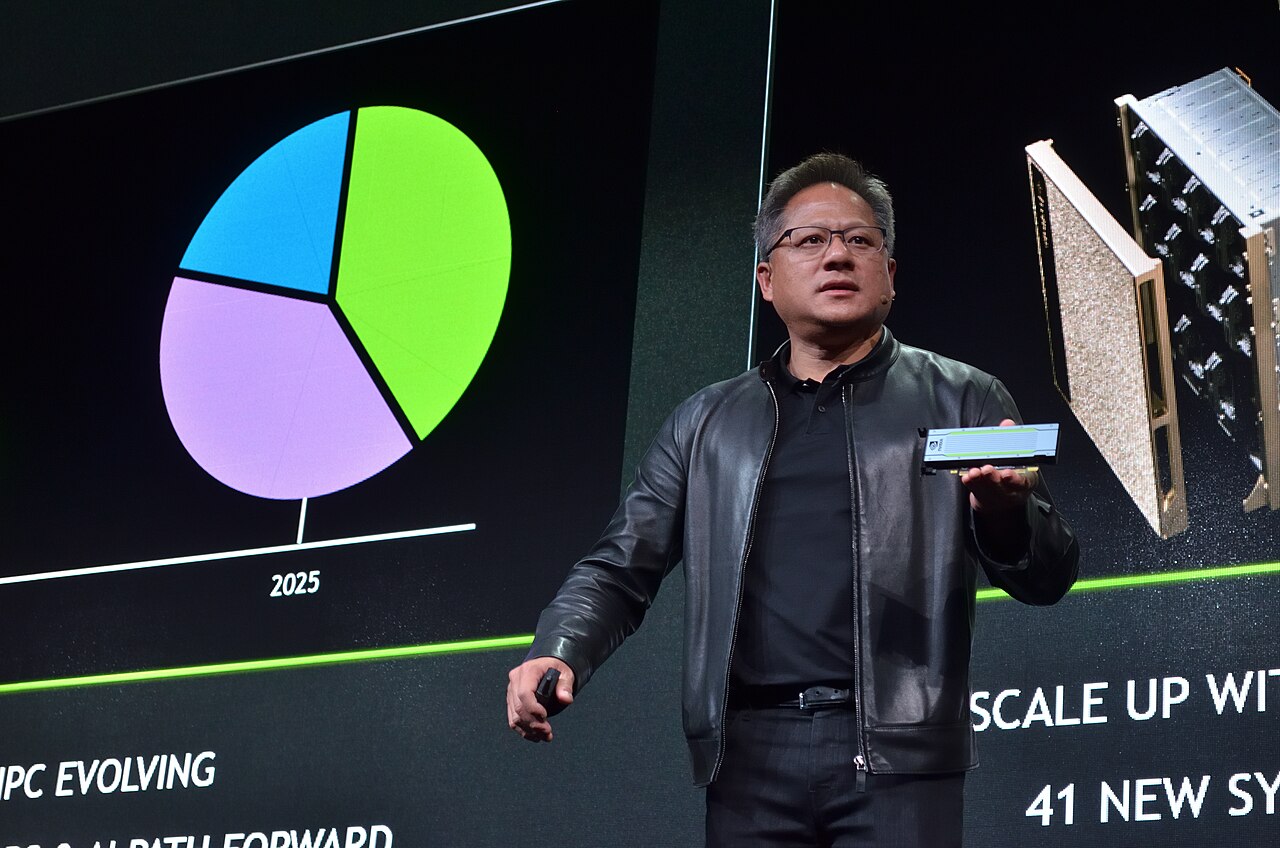
Nvidia’s board accepted the resignation of Jensen Huang on Wednesday, ending the 63-year-old co-founder’s 33 years in charge of the company that became the engine of the artificial-intelligence boom — and by Thursday morning, the man who had admitted an affair with a woman U.S. officials suspect of spying for China was no longer its chief executive.
The company said its chief financial officer, Colette Kress, will serve as interim chief executive while continuing her CFO duties, and that a search for a permanent successor will consider internal and external candidates. Harvey C. Jones, a board member since 1993, was appointed the company’s first-ever chair of the board. Huang, Nvidia’s fourth-largest shareholder with a 3.61 per cent stake, also leaves the board. In a memo to employees, Kress wrote that the board, the executive staff and she recognised “that this has been an extraordinarily difficult period,” and the company will hold a staff meeting on November 18.
The fall took a week. On Sunday, November 8, Huang wrote to employees — in a letter Nvidia also published — admitting he had been unfaithful to his wife of 40 years and linking his infidelity to “the national security concerns raised in news reports.” The board opened an independent investigation, and shares slid more than five per cent the next day. On Wednesday, The New York Times reported, citing five people who worked at Nvidia, that Huang had also had a relationship with Kimberly Powell, the company’s vice president of healthcare, who reports directly to him; Nvidia, Huang and Powell have not confirmed that report. On Thursday afternoon, Reuters reported a further allegation: a third affair, with another, unnamed Nvidia employee.
Congress closes in from both sides
Huang has agreed to testify before Congress behind closed doors before Thanksgiving, which falls on November 26, House Foreign Affairs Committee chairman Brian Mast told reporters on Thursday. The agreement came on Wednesday night, after senior lawmakers had threatened a subpoena; Mast said he expects the briefing to be recorded and transcribed. The request began on November 4 and 5, when Mast, House China committee chairman John Moolenaar and House Intelligence chairman Rick Crawford jointly asked Huang for a closed-door briefing about his relationship with the woman suspected of working for Chinese intelligence, and about Nvidia’s security protocols.
The Senate moved on Thursday evening. Senator Tim Scott of South Carolina, who chairs the Senate Banking Committee, wrote to Huang and to Commerce Secretary Howard Lutnick asking both to testify voluntarily on December 3 — and warning that the panel could issue a subpoena. “Recent reports raise serious concerns about our national security and the protection of sensitive U.S. technology,” Scott wrote. Democrats opened a second front the same day: Representative Richard Neal and Senator Ron Wyden wrote to Lutnick announcing an investigation into how the administration handled Nvidia’s chip sales to China, saying President Trump had been briefed about Huang’s relationship and that Nvidia was nevertheless granted permission in December 2025 to sell its advanced H200 AI chips to China in exchange for a cut of the export sales.
On Friday the argument reached the cabinet. Treasury Secretary Scott Bessent told CNBC he was frustrated with the Commerce Department’s delay in implementing export controls on certain Nvidia chips to China, saying Treasury, State, Defense and the U.S. Trade Representative had favoured adding Megaspeed — the Singapore AI-infrastructure firm whose executive Alice Huang is the woman U.S. officials suspect — to an export control list for months, but that Commerce was in charge of the matter. The Justice Department has taken over the federal investigation into Megaspeed, which reportedly bought $4.8 billion of Nvidia chips in two years and has been investigated by both the U.S. and Singapore over suspected diversions to China.
“Broken and shattered”
By Friday, the reporting had turned to Huang himself. Bloomberg reported that he looked “broken and shattered, his legendary energy depleted” by the time he surrendered the role on Wednesday night. The Wall Street Journal reported that Huang had been critical of his successor, describing Kress in a presentation this summer as “a deer in the headlights” and as someone who could not help him steer strategy; neither account has been commented on by Nvidia, which has said nothing publicly beyond its statement announcing the resignation. Huang has hired the law firm Paul Weiss, The New York Times reported. President Trump, who on November 8 called Huang “a fine person” and said he should remain in charge, said in an interview broadcast Thursday that he had spoken with Huang before the resignation. One published tally put Nvidia’s loss of market value at $550 billion in five days. What happens next is set by two dates in Washington: the closed-door House briefing before November 26, and the Senate Banking hearing requested for December 3.
Sources: TechCrunch timeline, November 12–13, 2026; Reuters, November 12–13, 2026; the Associated Press (Bessent remarks), November 13, 2026; BusinessWorld, November 13, 2026; RTTNews via TradingView, November 13, 2026; Nvidia statements, November 8–12, 2026.

Comments