
Florida’s Space Coast faced “dangerous and life-threatening” flooding on Thursday as a stalled storm system soaked Brevard County for a second day, emergency crews carried out water rescues by boat, and the St. Johns River near Cocoa climbed past a flood record that had stood since 1953, with schools across five counties shut and rescues under way by boat.
The heaviest rain bands crossed the Space Coast overnight. Melbourne, Cocoa, Merritt Island, Palm Bay and Rockledge were all under warnings through Thursday morning, with the Weather Service describing dangerous and life-threatening flash flooding under way across the county.
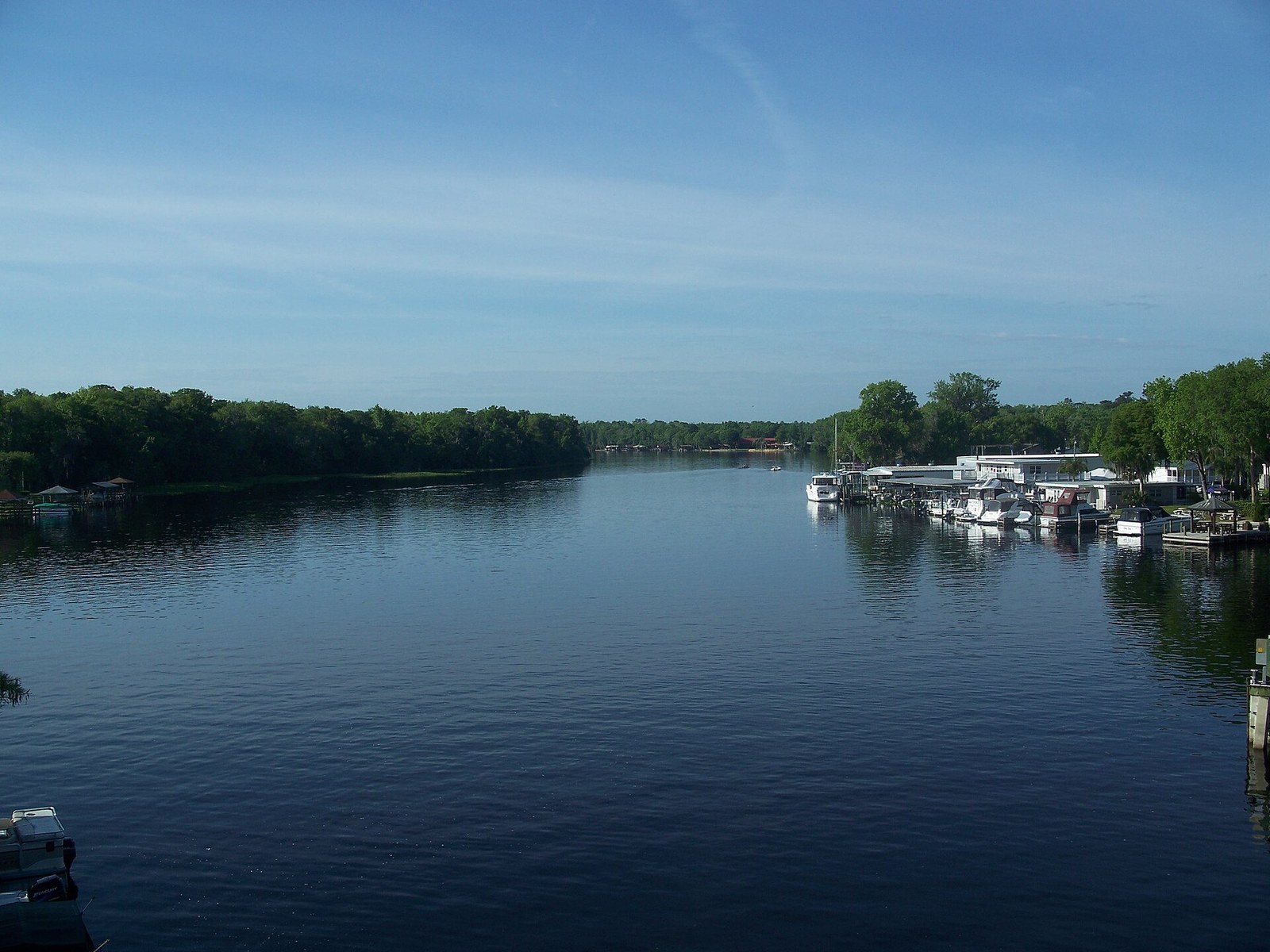
The National Weather Service said the St. Johns reached 17.85 feet just after 4 a.m. near Cocoa, passing the previous record — 17.55 feet, set in October 1953, in the Weather Service’s flood statement; local reporting rounds the old mark to 17.6 feet. By 5:15 a.m. the river stood at 18.0 feet, two feet above its 16-foot flood stage, and the Weather Service forecast a crest of 18.2 feet later on Thursday. The gauge sits on the river at State Road 520, west of Cocoa, where the St. Johns spreads across a wide, flat floodplain. Homes were expected to flood along the river near Rockledge and Cocoa.
The St. Johns is an unusual river. It flows north, it is 310 miles long, and it drops barely 30 feet along its whole length — which is why it drains so slowly, and why its floods linger. Around Cocoa and Rockledge it spreads across a flat floodplain of subdivisions and mobile-home parks built close to the water: the neighbourhoods that flood first. On Thursday, they did.
Flash flood warnings for the county were extended to 2:45 p.m. Cars were abandoned in flooded roadways. In Cocoa, a pregnant woman called for help at about 5:30 a.m. as floodwater came into her home, and emergency crews answered another call for a centenarian in a home taking on water; crews rescued residents from rising water in both Cocoa and Rockledge, according to USA Today.
The calls came from the river plain west of the Indian River lagoon — Rockledge and Cocoa in the north, Palm Bay in the south — as the rain bands kept training over the same ground. Roads that had drained after the November 1–2 flood were under water again by morning.
In Palm Bay, at the county’s southern end, police and fire crews used boats to evacuate residents of the Palm Bay Estates mobile home park as the water rose around their homes, Florida Today reported.
Palm Bay Estates sits in the south of the county, in the same ground that took the worst of the November 1–2 flood. Crews went through the park by boat on Thursday as the water rose around the mobile homes, taking residents to dry ground — the second time this month that rescue crews have taken to boats in the south of the county.
The Florida Fish and Wildlife Conservation Commission sent more than 200 officers into the flooded counties with all-terrain vehicles, shallow-draft boats, airboats and swamp buggies. In Broward County, two hours south, FWC officers helped at a flooded apartment complex where more than 90 residents were evacuated, rescued or taken for medical help. During one rescue there, responders trying to reach an infant who had stopped breathing had their own vehicle stuck in the floodwater. County sheriff’s deputies and fire crews were working the same rescues across the region.
The Storm That Would Not Move
The flooding came from a low-pressure system that started in Texas, moved through the Gulf of Mexico and stalled over Florida. The Weather Service’s Miami office estimated from radar that 8 to 15 inches of rain fell in about 12 hours on Wednesday over parts of Davie, Hollywood, Fort Lauderdale, Dania Beach and Plantation. Fort Lauderdale recorded 4.18 inches on Wednesday, a daily record that broke the mark set in 1959. In Plantation and Hollywood, 16 inches was reported.
Broward County declared a state of emergency. Water rescues were carried out in Fort Lauderdale, Hollywood and other parts of Broward and neighbouring Miami-Dade. Early on Wednesday, part of a roof collapsed at Temple Sinai in Hollywood; no one was inside and no one was injured.
The Weather Prediction Center placed Florida’s east-central coast under a Moderate Risk — level three of four on its scale — of excessive rainfall. The Melbourne Weather Service office kept a flood watch in effect through Friday evening for nine counties: Orange, Seminole, Osceola, Volusia, Brevard, Indian River, St. Lucie, Martin and Okeechobee. Another three to six inches of rain could fall through Friday, and forecasters warned that the river, once up, would come down slowly.
Schools Shut, And A Second Flood In A Month
Brevard County is the Space Coast: home to Cape Canaveral and the Kennedy Space Center, and to the beach towns and subdivisions strung along the Indian River lagoon. Schools closed on Thursday in Brevard, Volusia, Indian River and Miami-Dade counties; Broward’s were closed on Wednesday and Thursday. Brevard and Volusia will also be closed on Friday — Brevard’s students will not return until November 30, after the Thanksgiving break. Eastern Florida State College closed for Thursday and Friday, Florida Tech for Thursday, and the Kennedy Space Center Visitor Complex announced it would close on Friday.
For southern Brevard, this is the second flood in less than three weeks. On November 1 and 2, a storm officials called a one-in-1,000-year event killed two people and forced more than 150 floodwater rescues across the south of the county. Residents of Palm Bay were still cleaning up from that flood when this week’s water arrived — and when forecasters began warning, days out, that another system was stalling over the peninsula.
The National Hurricane Center said a non-tropical low is forecast to form off the coast by late Friday, which could become Tropical Storm Kyle. The St. Johns is one of the slowest-draining rivers in the country, and neighbourhoods around Lake Poinsett, Rockledge and Cocoa had not fully recovered from the flooding earlier this month.
Updated on Thursday afternoon — Brevard Public Schools announced that its schools will also stay closed on Friday, which means its students will not return until Monday, November 30, after the Thanksgiving break; Eastern Florida State College will also stay closed on Friday. The rescues continued through the day: Brevard County’s 911 dispatchers had fielded 60 calls asking for rescue or help since 9 a.m., a county government spokesperson, Don Walker, said, and Cocoa police evacuated more residents as floodwaters breached homes. In Palm Bay, the Port Malabar Boulevard bridge washed out again, days after reopening, and the city council cancelled the meeting it had scheduled for Thursday night. SpaceX helped residents in Cocoa Beach, and first responders worked the flooded streets in airboats and swamp buggies, Florida Today reported in its live coverage of the flooding.
Sources: Florida Today, November 19, 2026; USA Today, November 19, 2026; National Weather Service, Melbourne and Miami offices, November 18–19, 2026.; Florida Today, live coverage of the Brevard County flooding, November 19, 2026.


Comments